Showing posts with label films on demand. Show all posts

Tuesday, December 5, 2017

Bill of Rights Day

December is the month we celebrate a very important holiday. You guessed it, Bill of Rights Day is on December 15th! The Bill of Rights are the first 10 amendments to the US Constitution. They were ratified on December 15th, 1791. President Franklin D. Roosevelt proclaimed the first Bill of Rights day in 1941. These amendments guarantee our rights to speech, religion, bear arms, trial by jury, protection from unreasonable search and seizure, and more. 
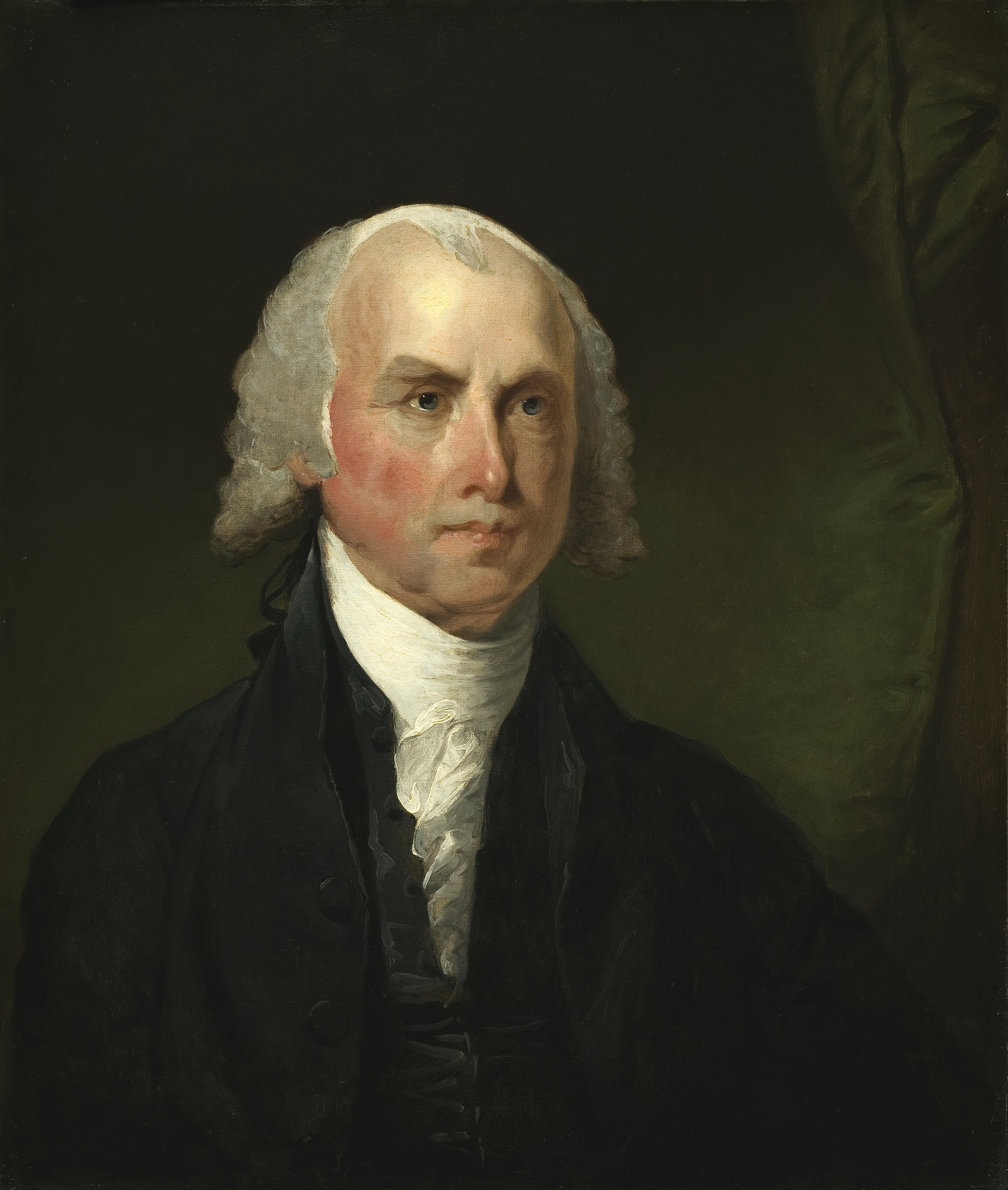
James Madison (who would later become the 4th President of the United States)
was the primary author of the Bill of Rights in the House of Representatives in 1789.
Gilbert Stuart [Public domain], via Wikimedia Commons.
Tarleton's Library has a wealth of resources about the Bill of Rights. Such as these titles: 

Digital films by Cambridge Educational available through the Films on Demand database: 
The Bill of Rights Primer: A Citizen's Guidebook to the American Bill of Rights by Akhil Reed Amar
The Birth of the Bill of Rights, 1776-1791 by Robert Allen Rutland 
Founding Rivals: Madison vs. Monroe, the Bill of Rights, and the Election that Saved a Nation by Chris DeRose 
The Future of the First Amendment by Kenneth Dautrich 
In Defense of Liberty: The Story of America's Bill of Rights by Russell Freedman
James Madison and the Struggle for the Bill of Rights by Richard E. Labunski 
Misreading the Bill of Rights: Top Ten Myths Concerning Your Rights and Liberties by Robert K. Goidel
Mobilizing the Press: Defending the First Amendment in the Supreme Court by Eric B. Easton
Origins of the Bill of Rights by Leonard W. Levy
Religious Freedom and the Constitution by Christopher L. Eisgruber
Sexual Rights in America: The Ninth Amendment and the Pursuit of Happiness by Paul R. Abramson
Unreasonable Searches and Seizures: Rights and Liberties under the Law by Otis H. Stephens, Jr. 
Whose Right to Bear Arms did the Second Amendment Protect? by Saul Cornell 

If you need assistance finding information about the Bill of Rights, or any other topic, then contact us at reference@tarleton.edu or 254-968-9249. 

Tuesday, September 19, 2017

Hispanic Heritage Month


September 15th through October 15th is National Hispanic Heritage month. This is the time to recognize the contributions and experiences of Americans of Hispanic heritage. According to the National Hispanic Heritage Month website, hosted by the Library of Congress, "September 15 is significant because it is the anniversary of the independence for Latin American countries Costa Rica, El Salvador, Guatemala, Honduras and Nicaragua. In addition, Mexico and Chile celebrate their Independence days on September 16th and 18th respectively."

2010 US Census Hispanic Population by County
Percentage of Hispanic or Latino population by county in 2010 census.
By United States Census Bureau [Public domain], via Wikimedia Commons.
Hispanic Americans are a large and quickly growing segment of the US population. In 2003, Hispanics became the largest minority group in the United States. The 2010 census counted 50,477,594 Americans of Hispanic or Latino origin. That's 16.3% of the total US population and a 43% increase from the 2000 census count.

Timeline of Hispanic-American History
Click on the links below to find relevant library resources on each topic.

1493: Christopher Columbus began Spanish colonization of Puerto Rico.
1513: Juan Ponce de León led first expedition to Florida.
1528 – 1536: Alvar Núñez Cabeza de Vaca survived an ill-fated expedition and explored portions of Texas. His book was the first written account of Texas Indians.
1539 – 1542: Hernando de Soto explored Southeast US including portions of Florida, Georgia, South Carolina, North Carolina, Tennessee, Alabama, and Mississippi. The Hernando de Soto Expedition by Jerald T. Milanich. Francisco Vásquez de Coronado explored Southwest US including portions of Arizona, New Mexico, Texas, Oklahoma, and Kansas. Documents of the Coronado Expedition, 1539 – 1542 by Richard and Shirley Cushing Flint.
1565: Pedro Menéndez de Avilés established a colony at Saint Augustine, Florida.
·         America’s Ancient City: Spanish St. Augustine, 1565 – 1763 by Kathleen A. Deagan
1598: Juan de Oñate led Spanish colonization of New Mexico.
1610: Santa Fe established as capital of New Mexico.
·         Santa Fe: History of an Ancient City by David Grant Noble
1718: Spanish colonists founded San Antonio, Texas.  
·         San Antonio de Béxar: a Community on New Spain’s Northern Frontier by Jesús F. de la Teja
·         Spanish Texas, 1519 – 1821 by Donald E. Chipman
      1748 - 1755: José de Escandón led the Spanish colonization of Nuevo Santander (which today includes the Mexican state of Tamaulipas and portions of southern Texas). He established several settlements in the region including Laredo, TX. 
·            De León: a Tejano Family History by A. Carolina Castillo Crimm
    Notable Men and Women of Spanish Texas by Donald E. Chipman and Harriet Denise Joseph 
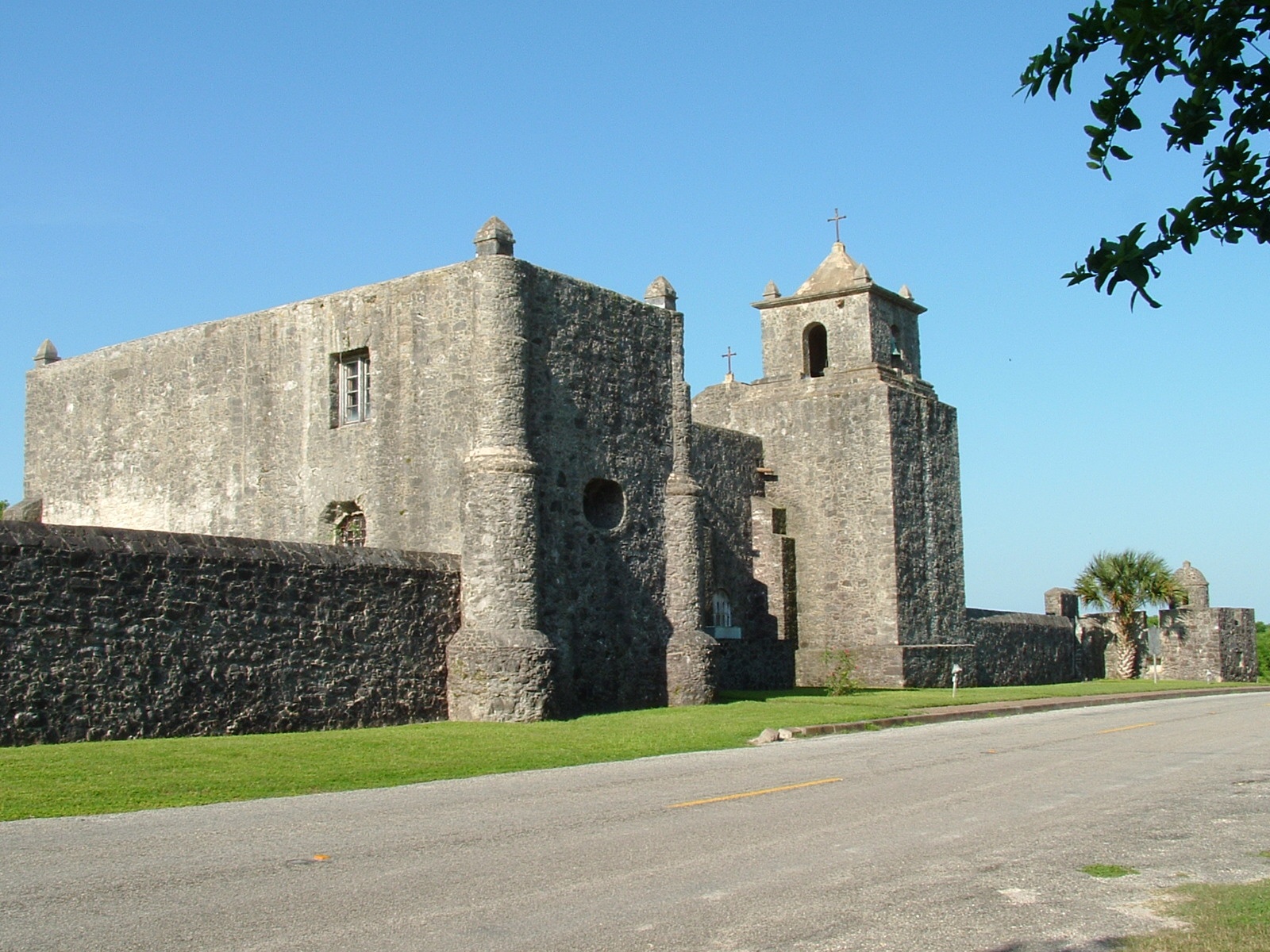
Presidio La Bahía near Goliad, TX. Originally built by the Spanish in 1721, and later rebuilt in 1771.
 Photo by Ernest Mettendorf - Public Domain, https://commons.wikimedia.org/w/index.php?curid=4208460
1769 – 1819: Spain established multiple settlements in California including San Diego (1769), San Francisco (1776), and Los Angeles (1781).
·         A History of California: the Spanish Period by Charles E. Chapman
1821: United States purchased Florida from Spain.
·         Diplomacy and the Borderlands: the Adams-Onís Treaty of 1819 by Philip Coolidge Brooks  
 Mexico won independence from Spain.
·         The Hidalgo Revolt: Prelude to Mexican Independence by Hugh M. Hamill
1822: Joseph Marion Hernández became first Hispanic to serve in the US Congress. He was a delegate from the Florida Territory.
1836: Texas declared independence from Mexico.
1845: United States annexed Texas.
·         The Annexation of Texas by Justin Harvey Smith
1848: Treaty of Guadalupe Hidalgo ended the Mexican-American War. Mexico ceded territory to US including: California, Arizona, New Mexico, Nevada, Utah, and portions of Colorado, Kansas, Oklahoma, and Wyoming. 
   The Border Crossed Us: Rhetorics of Borders, Citizenship, and Latino/a Identity by Josue David Cisneros. 
·         Border Visions: Mexican Cultures of the Southwest United States by Carlos G. Vélez-Ibañez
·         The Treaty of Guadalupe Hidalgo: a Legacy of Conflict by Richard Griswold del Castillo
1859: Juan Cortina seized control of Brownsville, TX in retaliation for town marshal’s assault on one of his employees.
·         Cortina: Defending the Mexican Name in Texas by Jerry D. Thompson
·         Juan N. Cortina: Two Interpretations by Charles William Goldfinch
1875: Romualdo Pacheco became the first Hispanic governor of a US state (California). 
1877: A white mob killed approximately 40 Mexican-Americans in Nueces County, Texas.
          Forgotten Dead: Mob Violence against Mexicans in the United States, 1848-1928 by William D. Carrigan and Clive Webb.   
1889: The Herrera brothers (Pablo, Nicanor, and Juan Jose) formed a resistance movement known as Las Gorras Blancas to protect Hispanic land from Anglo squatters in New Mexico.
1898: Spain ceded control of Puerto Rico to the United States at the conclusion of Spanish-American War.
·         Spanish-American War by Michael Golay
1910 – 1920: Revolution in Mexico resulted in increased Mexican immigration to US.
·         Pancho Villa at Columbus by Haldeen Braddy
1917: Puerto Ricans granted US citizenship.
1928: Octaviano Larrazolo, from New Mexico, became first Hispanic to serve in the US Senate.
1929: League of United Latin American Citizens (LULAC), which advocates for Latino civil rights, founded in Corpus Christi, TX.
·         LULAC, Mexican Americans, and National Policy by Craig Allen Kaplowitz
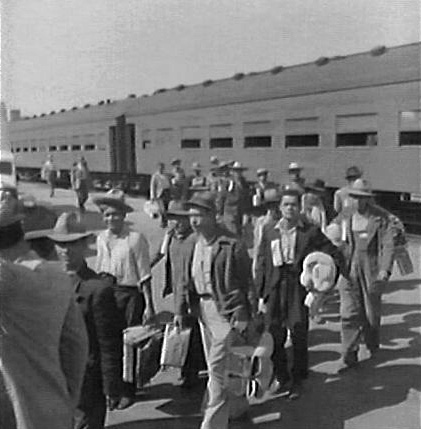
1942:  Due to labor shortage caused by World War II, US entered into an agreement with Mexico (known as the Bracero Program) to import Mexican laborers into the US.
   Harvest of Loneliness: The Bracero Program – documentary film.

The first Braceros arriving by train in Los Angeles, CA in 1942.
By Dorothea Lange, working for the US Government. [Public domain], via Wikimedia Commons. 
1943: Zoot Suit Riots in Los Angeles, CA.
·         Murder at the Sleepy Lagoon: Zoot Suits, Race, and Riot in Wartime L.A. by Eduardo Obregón Pagán
1945: Marcario García became first Mexican immigrant to be awarded the US Congressional Medal of Honor.
1948: Dr. Hector P. García founded the American G.I. Forum in Corpus Christi, TX to advocate for the civil rights of Hispanic veterans. The group gained national attention advocating on behalf of the family of Felix Longoria after a funeral home in Three Rivers, TX refused to bury him. 
1954 – 1958: US government implemented “Operation Wetback” and deported millions of people of Mexican descent.
1959: Fidel Castro’s successful revolution in Cuba resulted in increased Cuban immigration to US.
·         The Cuban Revolution: Origins, Course, and Legacy by Marifeli Pérez-Stable
1962: César Chávez and Dolores Huerta founded the United Farm Workers to advocate for the rights of migrant farm workers.
·         The Moral Vision of César Chávez by Fredrick John Dalton
·         Dolores Huerta: A Hero to Migrant Workers by Sarah E. Warren and Robert Casilla
1964: Bracero Program ended.
1965 – 1970: United Farm Workers conducted a successful strike on behalf of grape pickers in California.
·         Delano, the Story of the California Grape Strike by John Gregory Dunne
1968: Thousands of Hispanic students walkout of schools in Los Angeles, CA to protest unequal educational opportunities. Walkouts spread to hundreds of schools in multiple states.
1988: Lauro Cavazos became the first Hispanic to serve in the United States Cabinet. He served as Secretary of Education.
2003: Hispanics became largest minority group in the United States.
2009Sonia Sotomayor became the first Hispanic to serve on the Supreme Court of the United States. 
President Obama and Sonia Sotomayor meeting in the Oval Office in 2009.
By Official White House photo by Pete Souza from Washington, DC (Flickr) [Public domain], via Wikimedia Commons

The Dick Smith Library has a large collection of books and other resources on topics relevant to the Hispanic American experience. Such as these titles: 
The Mexican Americans by Alma M. García
The Spanish Americans of New Mexico: a Heritage of Pride by Nancie L. Solien Gonzalez. 

Let us know if you need assistance finding additional information by calling 254-968-9249 or emailing at reference@tarleton.edu

Tuesday, May 9, 2017

Asian/Pacific American Heritage Month

May is the month to recognize the experiences and contributions of Americans of Asian or Pacific Islander heritage. Originally established as a heritage week in 1978, it was upgraded to a month in 1990. According to the Library of Congress' Asia Pacific Heritage Month website, "May was chosen to commemorate the immigration of the first Japanese to the United States on May 7, 1843, and to mark the anniversary of the completion of the transcontinental railroad on May 10, 1869. The majority of the workers who laid the tracks were Chinese immigrants."


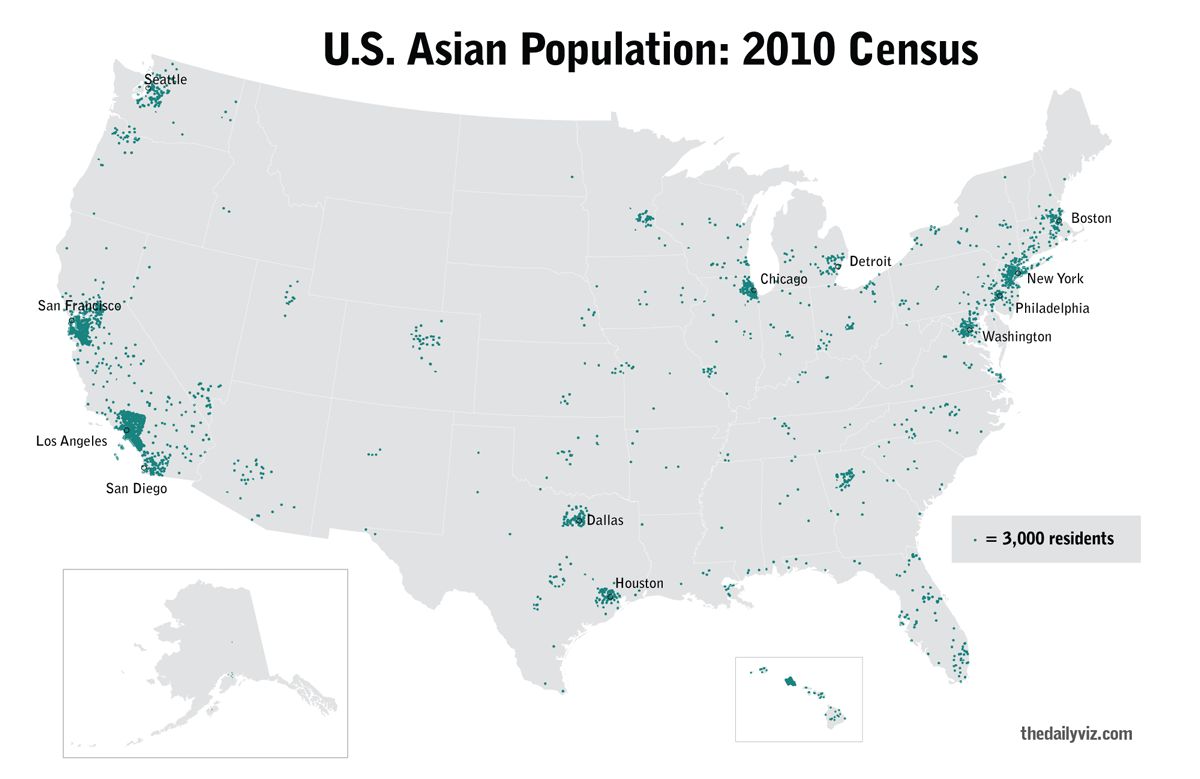
 Each green dot on the map above represents 3000 Asian Americans. By United States Census [CC BY-SA 1.0 (http://creativecommons.org/licenses/by-sa/1.0)], via Wikimedia Commons.
Asian and Pacific Islander Americans are a quickly growing segment of the population. According to the 2010 Census, there are 17,320,856 Asian Americans in the US. That is 5.6% of the total population, and is a 45.6% increase from the 2000 Census. In 2010, the Census counted 1,225,195 Americans of Hawaiian or other Pacific Islander heritage. That represents only 0.4% of the total population, however, it is a 40.1% increase from 2000.


Chronology of Asian/Pacific American History with Relevant Library Resources


1849 - California Gold Rush encouraged large numbers of Chinese to immigrate to US. 

Riches for all: the California Gold Rush and the World ed. by Kenneth N. Owens.
Gold Mountain Dreams (video available through Films on Demand database). 

1869 - Transcontinental Railroad completed, many of the workers were Chinese immigrants. 

A Great & Shining Road: the Epic Story of the Transcontinental Railroad by John Hoyt Williams

1882 - Chinese Exclusion Act severely limited Chinese immigration to the US. 

At America's GatesChinese Immigration During the Exclusion Era, 1882-1943 by Erica Lee

1885 - A mob of white miners massacred approximately 28 Chinese people in Rock Springs, Wyoming. 

"When Coal Miners Burned: The Rock Springs Massacre" in Wild West by Eric Niderost and Luc Nettleton. 

1887 - A white gang massacred over thirty Chinese gold miners along the Snake River Canyon in Oregon. 

1898 - Spain ceded control of Guam and the Philippines to the US. 

Guam and its Peoplea Study of Culture Change and Colonial Education by Laura Thompson.
A War of Frontier and Empire: the Philippine-American War, 1899-1902 by David J. Silbey           

1898 - US annexed Hawaii. 

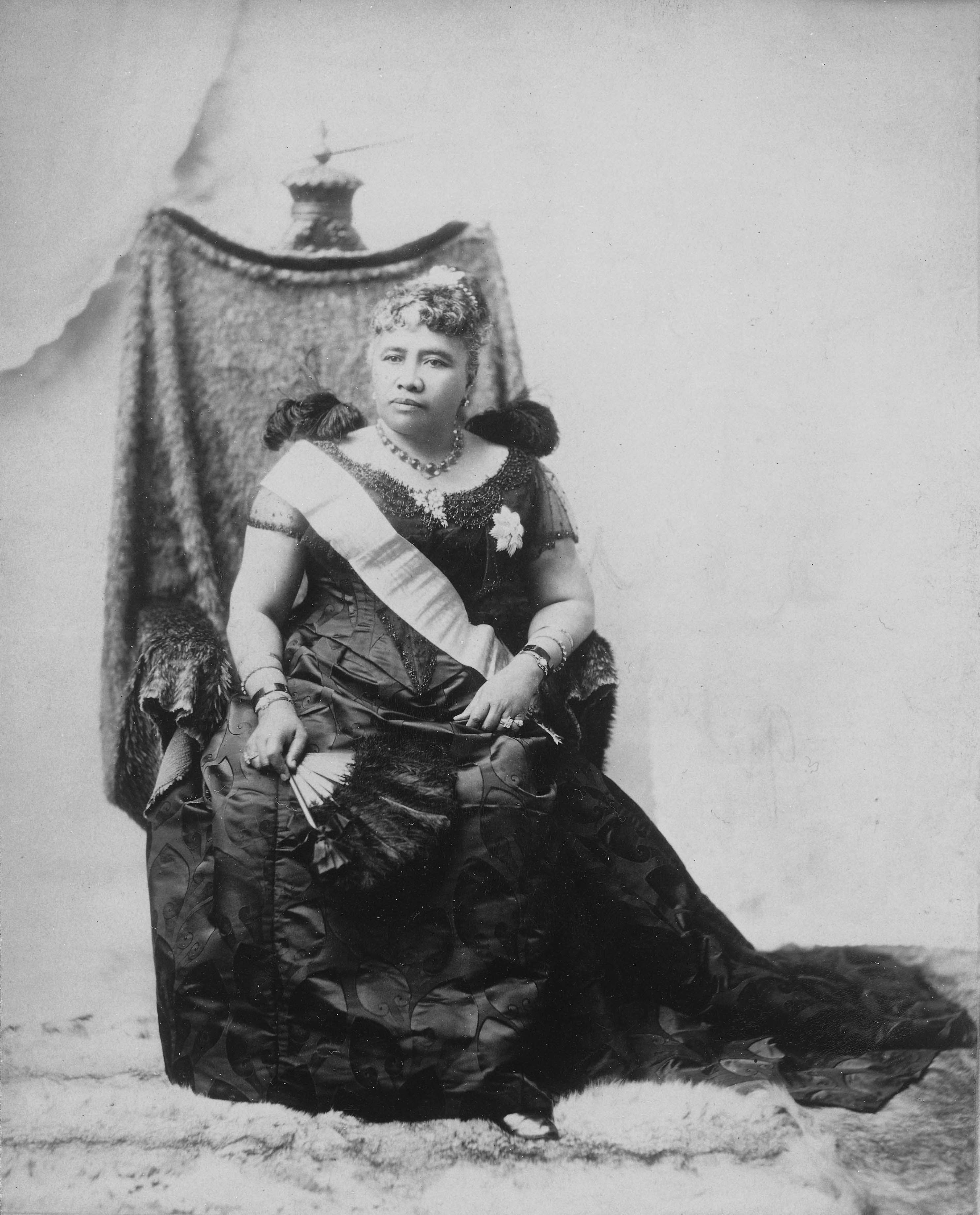
The Betrayal of Liliuokalani, last Queen of Hawaii, 1838-1917 by Helena G. Allen.

Queen Liliuokalani in 1891. James J. Williams [Public domain], via Wikimedia Commons.

1899 - US gained control of American Samoa (eastern half of the Samoan archipelago). Learn more about American Samoa here

1910 - Angel Island Immigration Station created in San Francisco Bay.  

Angel Island: gateway to Gold Mountain by Russell Freedman.
Angel Island: A Story of Chinese Immigration (video available through Films on Demand database). 

1924 - Immigration Act severely limited immigrants from most Asian countries. Read more about the Act here

1940 - Angel Island Immigration Station closed.  

1942 - President Roosevelt issued Executive Order 9066, which authorized the confinement of Japanese-Americans into internment camps. 

Looking like the enemy: My Story of Imprisonment in Japanese American Internment Camps by Mary Matsuda Gruenewald.

Arcadia, CA April, 1942. Japanese-Americans registering before being transferred to War Relocation Authority centers. By Clem Albers, Photographer (NARA record: 8452194) (U.S. National Archives and Records Administration) [Public domain], via Wikimedia Commons.

1943 - Chinese Exclusion Act was repealed. 

1944 - US gained control of Northern Mariana Islands. Learn more about the Northern Mariana Islands here

1946 - The Philippines gained independence from the US. 


1957 - Dalip Singh Saund, of California, became the first Asian American to serve in the US Congress. 

1959 - Hiram Fong, of Hawaii, became the first Asian American to serve in the US Senate. 

1965 - Immigration Act ended racial quotas, which increased immigration from Asian countries. Read more about the Act here

Korean Americans (video available through Films on Demand database).
Suburban Sahibs: Three Immigrant Families and Their Passage From India to America by Mitra S. Kalita. 

1973 - George Ariyoshi, of Hawaii, became the first Asian American governor of a US state.

1988 - Civil Liberties Act granted reparations to Japanese-Americans who had been interned during World War II. Read full text of the act here

2000 - Norman Mineta became the first Asian American to serve on the US Cabinet.

The Dick Smith Library has a large collection of resources relevant to the Asian-American and Pacific Islander-American experience. Let us know if we can help you find some information on the topic via email at reference@tarleton.edu or phone at 254-968-9249.

Monday, January 23, 2017

Chinese New Year - January 28th

The biggest holiday of the year for Chinese families will soon be upon us: Chinese New Year (also known as Spring Festival) is happening this Saturday January 28th (New Year's Eve is the 27th). To compare the significance of this holiday for the American context, it would be like combining Christmas, Thanksgiving, and New Year's all in one. Click here to learn more about Chinese New Year. 

There are many different foods that are typically eaten on this occasion, and they are often symbolic of  increasing your chances of long life or wealth. One favorite is dumplings (like the ones pictured below), eating them on New Year's is supposed to bring increased wealth.
Dumplings (shui jiao 水餃) - Joshua Wallace, photographer and copyright holder, 2015.
Chinese New Year is based on a lunar calendar, and therefore doesn't happen on the same day every year on the solar calendar that we use. It fluctuates between mid-January to mid-February. According to the Chinese zodiac the new year will be the year of the chicken, and we are leaving the year of the monkey.  The Chinese zodiac consists of twelve animals, so the same animal reoccurs every twelve years. Click here to learn more about the Chinese zodiac. 


A common part of the Chinese New Year holiday is for the adults of the family to give red envelopes full of money to the children of the family. 
A Red Envelope (hong bao 紅包) - Joshua Wallace, photographer and copyright holder, 2017.
Roughly translated the words on the envelope mean "wish you prosperity, money is coming your way" (gong xi fa cai, gun gun er lai). 
A legend associated with the Chinese New Year is that of the Nian monster (nian shou 年獸). This creature comes out of hiding on New Year's Eve to eat people. Luckily, this monster is afraid of firecrackers and the color red, and that's why you see plenty of both this time of year. Typically, families will stay up late into the night to guard against the nian shou. According to some, this monster can eat a whole village in one bite. 

Some Chinese phrases for New Year's: 

  • Xin nian kuai le (新年快樂) - "Happy New Year"
  • Gong xi fa cai (恭禧發財) - A common expression heard during Chinese New Year, roughly translates to "Wishing you increased prosperity." A comical reply to this phrase is hong bao na lai (紅包拿來) which means "hand over the red envelope." 
If you want to learn Chinese or another language, then you should check out the Mango Languages database. It's available on the library website's A-Z database page. 

The library has several books about Chinese New Year in the Curriculum Collection, which is located on the lower level at our Stephenville location: 

Click here to listen to some Chinese New Year's music. That link takes you to the library's catalog, from there click on the "Online Access Click Here" link. 

Click here to watch a documentary about how modern Beijing families celebrate New Year's. 


International Programs will be hosting a Chinese New Year celebration on Friday January 27th from 6PM - 8PM at the Thompson Student Center. There will be food and activities. Click here for more details.