Showing posts with label History. Show all posts

Friday, June 5, 2020

Diverse Summer Reading Challenge!


Available now on OverDrive!


Books have the unique ability to transport us to a different time, different place, or a completely different perspective. Many reading lists are circulating for books that deal with racism and disparities among minority groups. Here is our list of reading recommendations available now  through OverDrive.

Whether you love poetry, space travel, historical fiction, or something in between., there's a book for everyone. Looking for a title we don't have on OverDrive? Let us know by clicking "Recommend" at the bottom of the title image.

Check out these classics by Toni Morrison! Morrison was a critically acclaimed writer, winning the Pulitzer Prize for Beloved in 1987. She then went on win a Nobel Prize in Literature in 1993.  
God Help the Child - ebook
Beloved - ebook


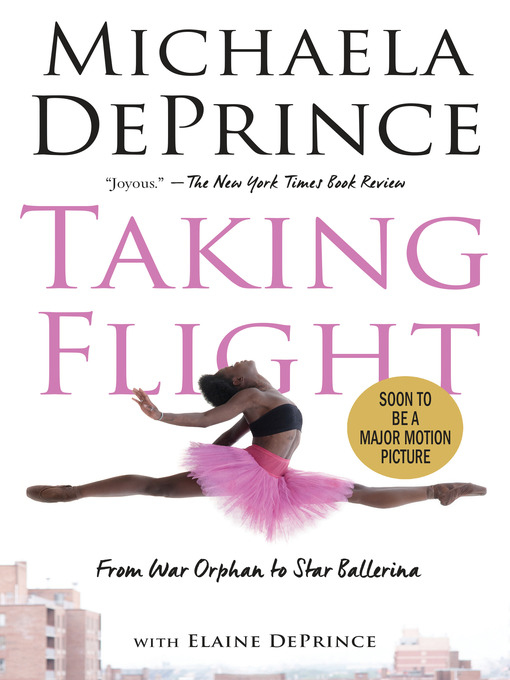
Title details for Taking Flight by Michaela DePrince - Available Michaela DePrince was born in Sierra Leone and adopted by an American couple at the age of four. She has appeared on Dancing with the Stars, Good Morning America, Nightline, and Beyonce's Lemonade music video.
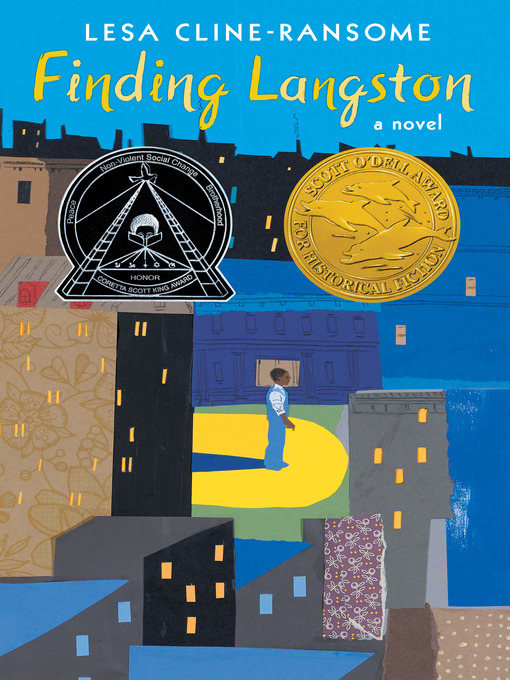
Title details for Finding Langston by Lesa Cline-Ransome - AvailableFinding Langston has won multiple awards for historical fiction, children's literature and library awards. Taking place in 1946, follow Langston as he moves from the countryside in Alabama to the busy city of Chicago.


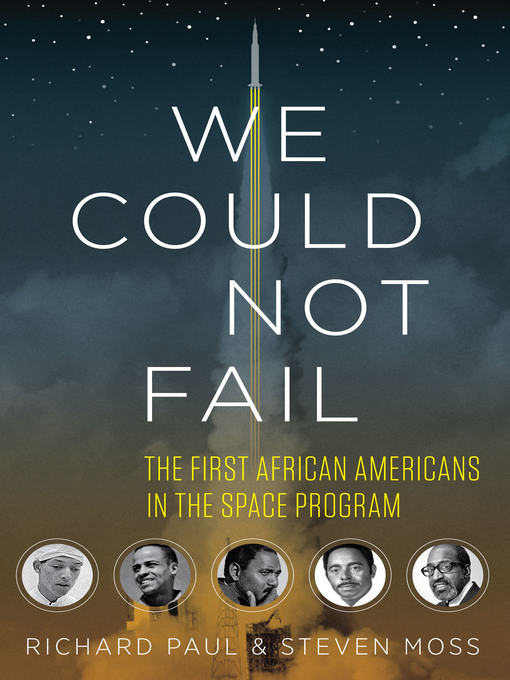
Title details for We Could Not Fail by Richard Paul - AvailableDid you love Hidden Figures? Are you a nerd for space exploration? Learn about some of the first African Americans to  join the space program!
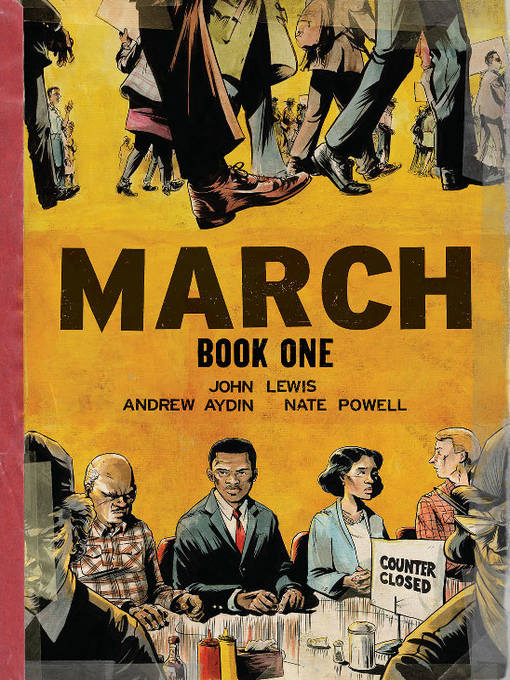
Into Graphic Novels? Learn about Congressman John Lewis and his part in the Civil Rights movement. Illustrated by award winning artist Nate Powell and co-written by New York Times bestseller, Andrew Aydin, this book shares the remarkable story of John Lewis. 

Title details for March (2013), Book One by John Lewis - Available
 
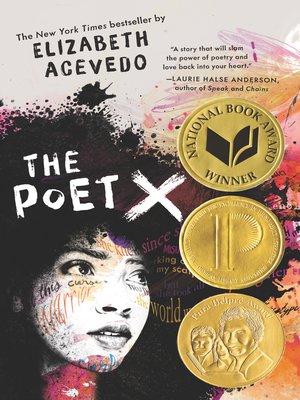
 From Elizabeth Acevedo comes a novel-in-verse from award winning slam poet. Xiomara  has plenty to say and she refuses to stay silent. This is a great summer read for kids going into 7th or 8th grade.
Cover image for The Poet X

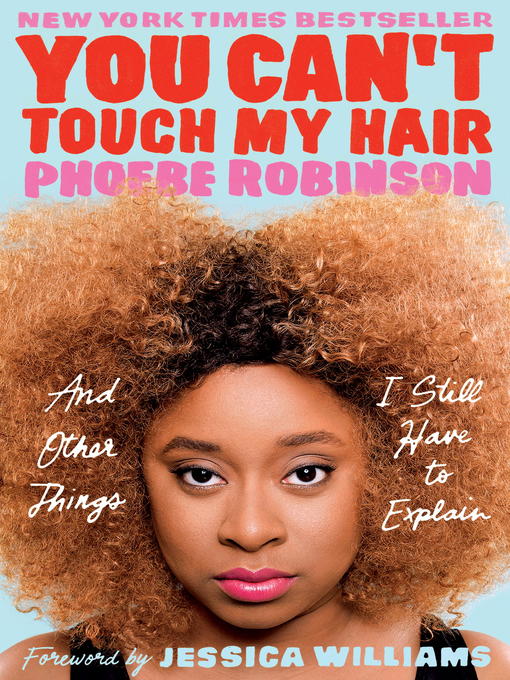
Title details for You Can't Touch My Hair by Phoebe Robinson - Available
Comedian Phoebe Robinson discusses race, culture and other random occurrences as she navigates life all while making you laugh. 

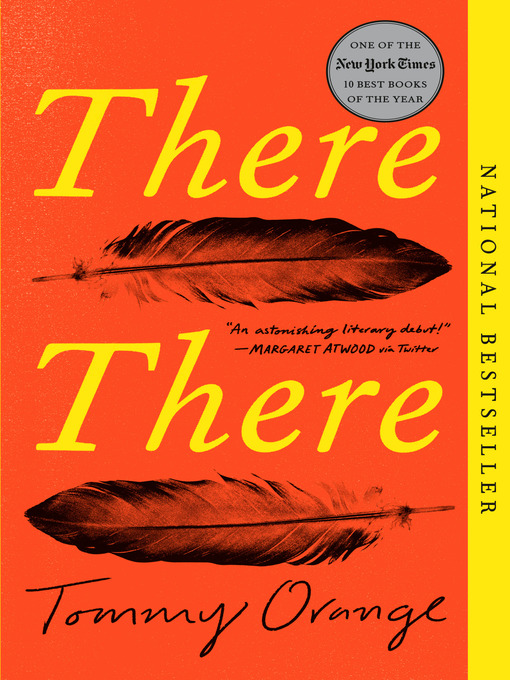
New York Times Bestseller, There There describes twelve unforgettable characters as they make their way to the Big Oakland Powwow. Each on their own journey, they are all working to connect back to a shared tradition. 
Title details for There There by Tommy Orange - Available


Friday, January 17, 2020

Martin Luther King Jr. Day

Photo by Brian Kraus on Unsplash

Martin Luther King Jr. Day. 

Martin Luther King Jr. Day is Monday January 20, 2020 and the library will be closed. King delivered his iconic “I Have a Dream Speech” on the steps of the Lincoln Memorial August 28, 1963. You can listen to the speech in its entirety here through NPR

King created a legacy of empowerment, hope and passion. He was a renowned public speaker which helped him inspire millions and continues to encourage people to fervently pursue equality and justice. Tarleton Libraries has the resources to help you hone your public speaking skills. Find available resources here 

King was born in Atlanta, GA in 1929. He was a Christian minister, activist, and a charismatic speaker. To learn more about his life and leading role in the Civil Rights Movement check out some of the biographies listed below 

The library also has a subject guide dedicated to African American culture, history and resources


Martin Luther King Jr., By Marshall Frady

E185.97 .K5 F695 2002B c.1 


 Martin Luther King Jr., by Peter J. Ling

 E185.97 .K5 L55 2002 c.1

Thursday, November 7, 2019

National Native American Heritage Month


https://nativeamericanheritagemonth.gov/ 

November is the National Native American Heritage Month, celebrating the rich ancestry and traditions of Native Americans.


Learn More!

American Indian Histories and Cultures database has access to art, historical documents, maps, an interactive chronology tool, and so much more! This is a wide-ranging digital resource presenting a unique insight into interactions between American Indians and Europeans from their earliest contact, continuing through the turbulence of the American Civil War, the on-going repercussions of government legislation, right up to the civil rights movement of the mid-twentieth century.

With Mango Languages, you can learn about Cherokee and Potawatomi languages.

Texas State Archives has extensive historical resources focusing on local history, indigenous nations of Texas, and Native American relations.


Want to get involved or learn about indigenous culture first hand? Learn powwow traditions and etiquette, find an event in your area,  and learn more about native american culture.  UT Arlington's Native American Student Association has one of the largest annual powows in Texas. The 25th Annual Benefit Powwow will be February 29, 2020 and is open to the community. 

Tarleton's Office of Diversity and Inclusio is another great place to learn more about other cultures, get involved, and give back to the community. They have programs to help students from diverse backgrounds succeed in life and at college. 


Check out these books by Native American authors!


Title details for There There by Tommy Orange - Available

 There There by Tommy Orange - OverDrive

As we learn the reasons that each person is attending the Big Oakland Powwow—some generous, some fearful, some joyful, some violent—momentum builds toward a shocking yet inevitable conclusion that changes everything. Jacquie Red Feather is newly sober and trying to make it back to the family she left behind in shame. Dene Oxendene is pulling his life back together after his uncle's death and has come to work at the powwow to honor his uncle's memory. Opal Viola Victoria Bear Shield has come to watch her nephew Orvil, who has taught himself traditional Indian dance through YouTube videos and will to perform in public for the very first time. There will be glorious communion, and a spectacle of sacred tradition and pageantry. And there will be sacrifice, and heroism, and loss.


Ceremony by Leslie Marmon Silko - Call# PS3569 .I44 C4 1986

Tayo, the hero of Leslie Marmon Silko’s groundbreaking novel Ceremony, is a half-blood Laguna Indian who returns to his reservation after surviving the Bataan Death March of World War II. As he struggles to recover the peace of mind that his experience of warfare has stolen from him, Tayo finds that memory, identity, and his relations with others all resemble the colored threads of his grandmother’s sewing basket. The elements of his personality feel knotted and tangled, and his every attempt to restore them to order merely snags and twists them all the more. Tayo’s problems, however, extend far beyond the frustrations and alienation he encounters in trying to readjust to peacetime. Having risked his life for an America that fundamentally disowns him, Tayo must confront difficult and painful questions about the society he has been fighting for.


The Plague of Doves by Louise Erdich - Call # PS3555 .R42 P55 2008

Though generations have passed, the town of Pluto continues to be haunted by the murder of a farm family. Evelina Harp—part Ojibwe, part white—is an ambitious young girl whose grandfather, a repository of family and tribal history, harbors knowledge of the violent past. And Judge Antone Bazil Coutts, who bears witness, understands the weight of historical injustice better than anyone. Through the distinct and winning voices of three unforgettable narrators, the collective stories of two interwoven communities ultimately come together to reveal a final wrenching truth.


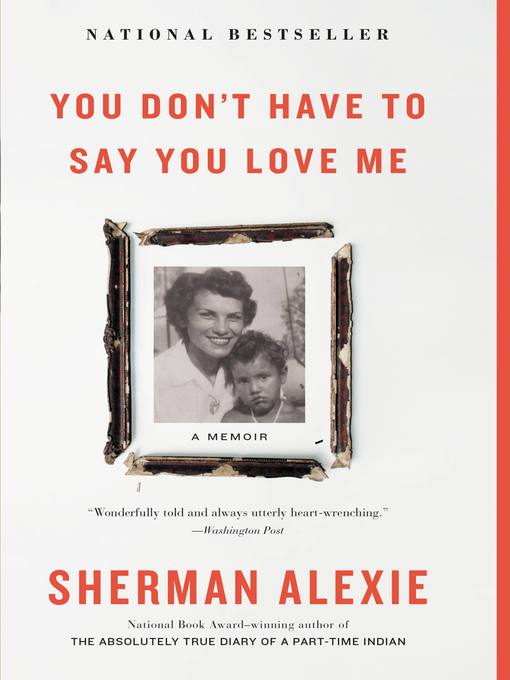
Title details for You Don't Have to Say You Love Me by Sherman Alexie - AvailableYou don't have to say you love me by Sherman Alexie -OverDrive 


Family relationships are never simple. But Sherman Alexie's bond with his mother Lillian was more complex than most. She plunged her family into chaos with a drinking habit, but shed her addiction when it was on the brink of costing her everything. She survived a violent past, but created an elaborate facade to hide the truth. She selflessly cared for strangers, but was often incapable of showering her children with the affection that they so desperately craved. She wanted a better life for her son, but it was only by leaving her behind that he could hope to achieve it. It's these contradictions that made Lillian Alexie a beautiful, mercurial, abusive, intelligent, complicated, and very human woman.
When she passed away, the incongruities that defined his mother shook Sherman and his remembrance of her. Grappling with the haunting ghosts of the past in the wake of loss, he responded the only way he knew how: he wrote. The result is a stunning memoir filled with raw, angry, funny, profane, tender memories of a childhood few can imagine, much less survive. An unflinching and unforgettable remembrance, YOU DON'T HAVE TO SAY YOU LOVE ME is a powerful, deeply felt account of a complicated relationship.


Monday, January 21, 2019

Martin Luther King Jr. Day

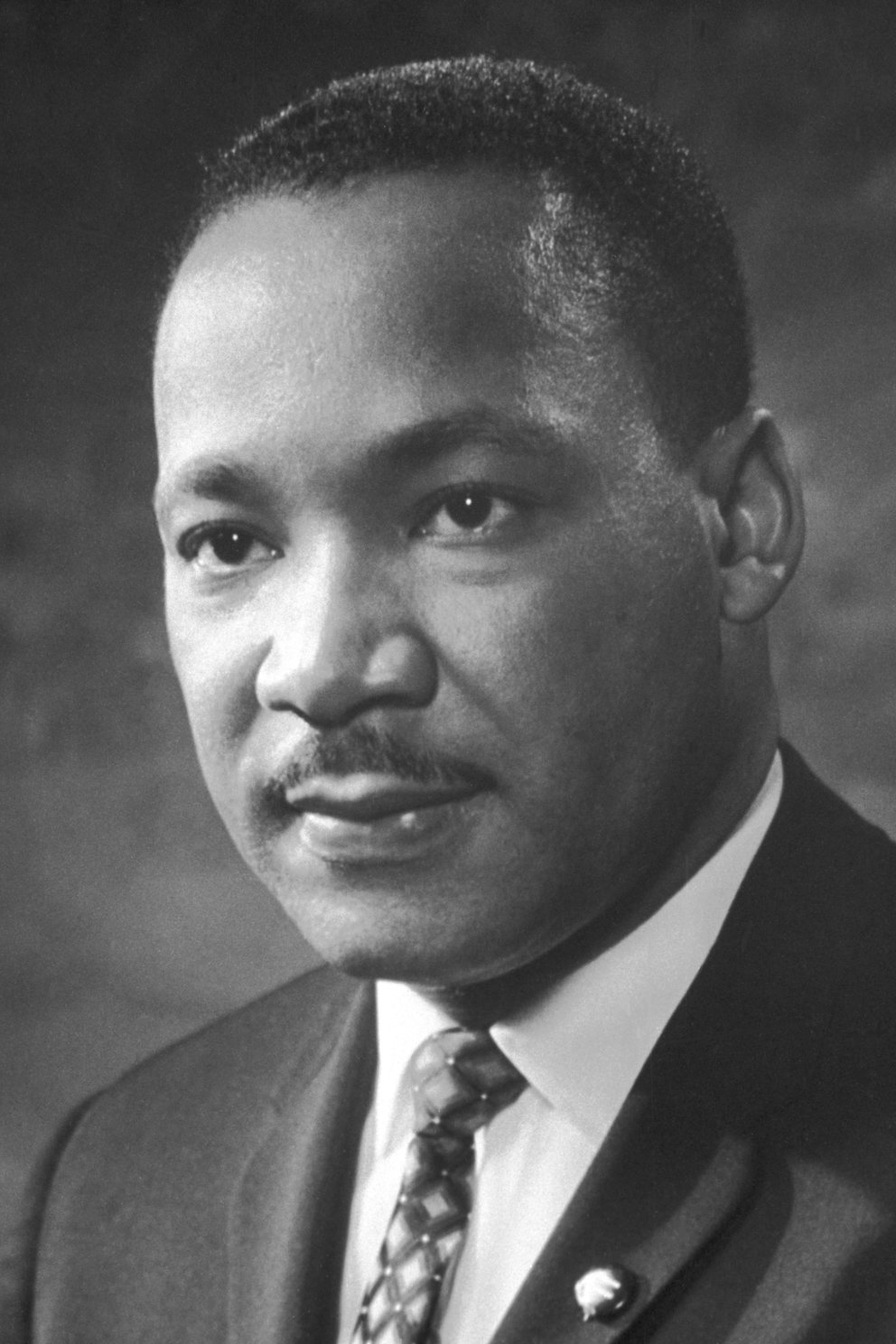
Martin Luther King Jr. 1964
Nobel Foundation [Public domain]
via Wikimedia Commons
Martin Luther King Jr. Day (also known as MLK Day) is a federal holiday commemorating the life and works of Martin Luther King Jr. It is held on the 3rd Monday of January each year, which falls on or near King's birthday of January 15th. 

The push to make this a national holiday was contentious. The first bill was introduced in the US House of Representatives in 1968, just four days after King's assassination. However, it was not brought up for a full vote of the House until 1979, where it lost by 5 votes. The bill finally became law in 1983, and the first MLK Day was celebrated in 1986. 

Tarleton's Dick Smith Library has a wealth of resources by and about Martin Luther King Jr. such as these titles: 


King at the March on Washington in 1963,
where he gave his famous "I Have a Dream Speech."
 [Public domain], via Wikimedia Commons


The Papers of Martin Luther King, Jr. 
The Radical King
A Lasting Prophetic Legacy
Waking from the Dream
Misremembering Dr. King
Selma to Saigon
Extremist for Love
The Speech
The King Years
Martin's Dream
The Awful Grace of God
Behind the Dream
Hellhound on His Trail

The Trumpet of Conscience
Where Do We Go from Here? 


Tuesday, November 13, 2018

Celebrate Native American Heritage Month

November is Native American Heritage Month. You can celebrate by checking out these recently published titles on Native American history and culture available at the library:

An American Genocide: The United States and the California Indian Catastrophe, 1846-1873 by Benjamin Madley.
"Provides an account of the government-sanctioned genocide of California Indians under United States rule." - From publisher.

Archaeological Perspectives of Warfare on the Great Plains ed. by Andrew J. Clark and Douglas B. Bamforth.
"Bringing together research from across the region, this volume provides unprecedented evidence of the effects of war on tribal societies." - From publisher.

Atlas of Indian Nations by Anton Treuer.
"The most comprehensive atlas of Native American history and culture available." - From publisher.

Blood Moon: An American Epic of War and Splendor in the Cherokee Nation by John Sedgwick.
"A sweeping, powerful, and necessary work of history that reads like Gone with the Wind for the Cherokee." - From publisher.

The Confederate Cherokees: John Drew's Regiment of Mounted Rifles by W. Craig Gaines.
"...provides an absorbing account of the Cherokees' involvement in the early years of the Civil War..." - From publisher.

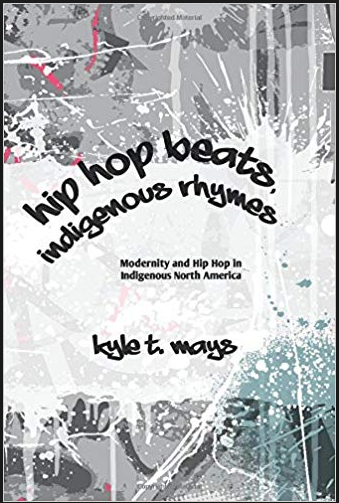
Hip Hop Beats, Indigenous Rhyms: Modernity and Hip Hop in Indigenous North America by Kyle T. Mays.
"Indigenous people have blended expressive cultures with hip hop culture, creating new sounds, aesthetics, movements and ways of being indigenous." - From publisher.

The Indian World of George Washington: The First President, the First Americans, and the Birth of the Nation by Colin G. Calloway.
"...reveals fully the dimensions and depths of George Washington's relations with the First Americans." - From publisher.

Lakota Performers in Europe: Their Culture and the Artifacts They Left Behind by Steve Friesen.
"From April to November 1935 in Belgium, fifteen Lakotas enacted their culture on a world stage." - From Publisher.

Ojibwe Stories from the Upper Berens River by Adam Bigmouth
"...presents the dozens of stories and memories that A. Irving Hallowell recorded from Adam (Samuel) Bigmouth...in the summers of 1938 and 1940.

Reference Encyclopedia of the American Indian (23rd edition) by Barry T. Klein
Directory information for Native American governments, organizations, etc. in the United States and Canada.


Thursday, September 20, 2018

Constitution Day

Monday September 17th was Constitution Day. On that day in 1787, the delegates to the Constitutional Convention in Philadelphia signed the proposed Constitution and submitted it to the Congress for consideration.
Signatures on the US Constitution, 1787.
By Constitutional Convention of 1787 [Public domain], via Wikimedia Commons
The library has a large collection of items for learning more about the Constitution. Such as these titles:  

Let us know if we can help you find information on the Constitution or any other topic at 254-968-9249 or reference@tarleton.edu

Tuesday, July 31, 2018

The Living New Deal

The Living New Deal is a non-profit organization that exists to document all of the public works that were created by various New Deal programs from 1933-43. Several professors at the University of California-Berkeley began this project in 2005 by gathering information on New Deal public works projects in California. In 2010, they expanded and began documenting projects nationally. The New Deal refers to a wide range of economic programs that President Franklin Roosevelt's administration enacted in response to the Great Depression


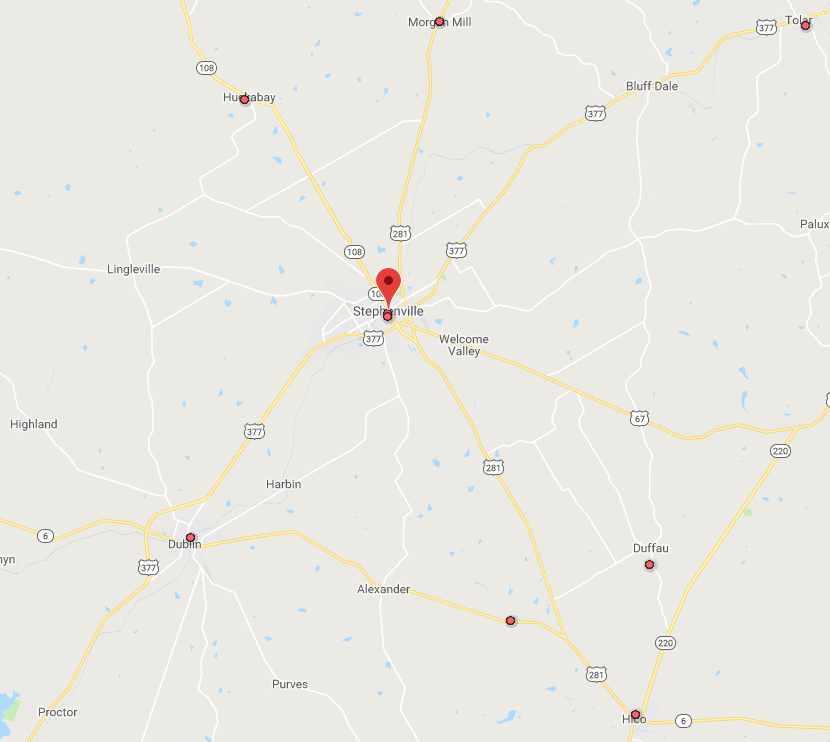
The Living New Deal's website contains a wealth of information and resources. My favorite tool is the map. You can use navigation tools in the map to either zoom in or search for a specific location in the United States and see New Deal public works projects in the area. 
Map from the Living New Deal website.
Each red dot represents a public works project built by a New Deal program between 1933-43. 
Close up view of Stephenville and surrounding towns reveals several New Deal projects in the area.  
This map reveals that there are two buildings in Stephenville that were built by New Deal programs. One is the current Public Library and former post office building located at 174 N. Columbia Street. It was funded by the US Treasury Department and completed in 1935.

Current Stephenville Public Library and former post office.
The building was a New Deal public works project completed in 1935.
Michael Barera [CC BY-SA 4.0  (https://creativecommons.org/licenses/by-sa/4.0), from Wikimedia Commons.

The other is the Recreation Hall located at 378 W. Long Street. It was built the Works Progress Administration (WPA) and completed in 1938. Today it houses the offices of the Stephenville's Parks and Recreation Department.

Recreation Hall in Stephenville. Built by the WPA in 1938.
Joshua Wallace - Photographer & Copyright Holder, 2018. 
If you want to learn more about the New Deal, the Dick Smith library has a large collection of items on the subject. Such as these titles:

Digital Film:
A Chaos of Experimentation

Books & eBooks:
A Concise History of the New Deal by Jason Scott Smith
The Crash of '29 and the New Deal by Bruce Glassman
Designing a New America: The Origins of New Deal Planning, 1890-1943 by Patrick D. Reagan


Contact us at 254-968-9249 or reference@tarleton.edu if you have any questions about library resources on the New Deal or any other topic.


Tuesday, July 3, 2018

Independence Day

On July 4th we celebrate Independence Day. On this day in 1776 the Continental Congress adopted the Declaration of Independence, which formally declared that the United States was free of any connection to Great Britain. However, actual independence was not achieved until the conclusion of the American Revolutionary War and the signing of the Treaty of Paris in 1783.

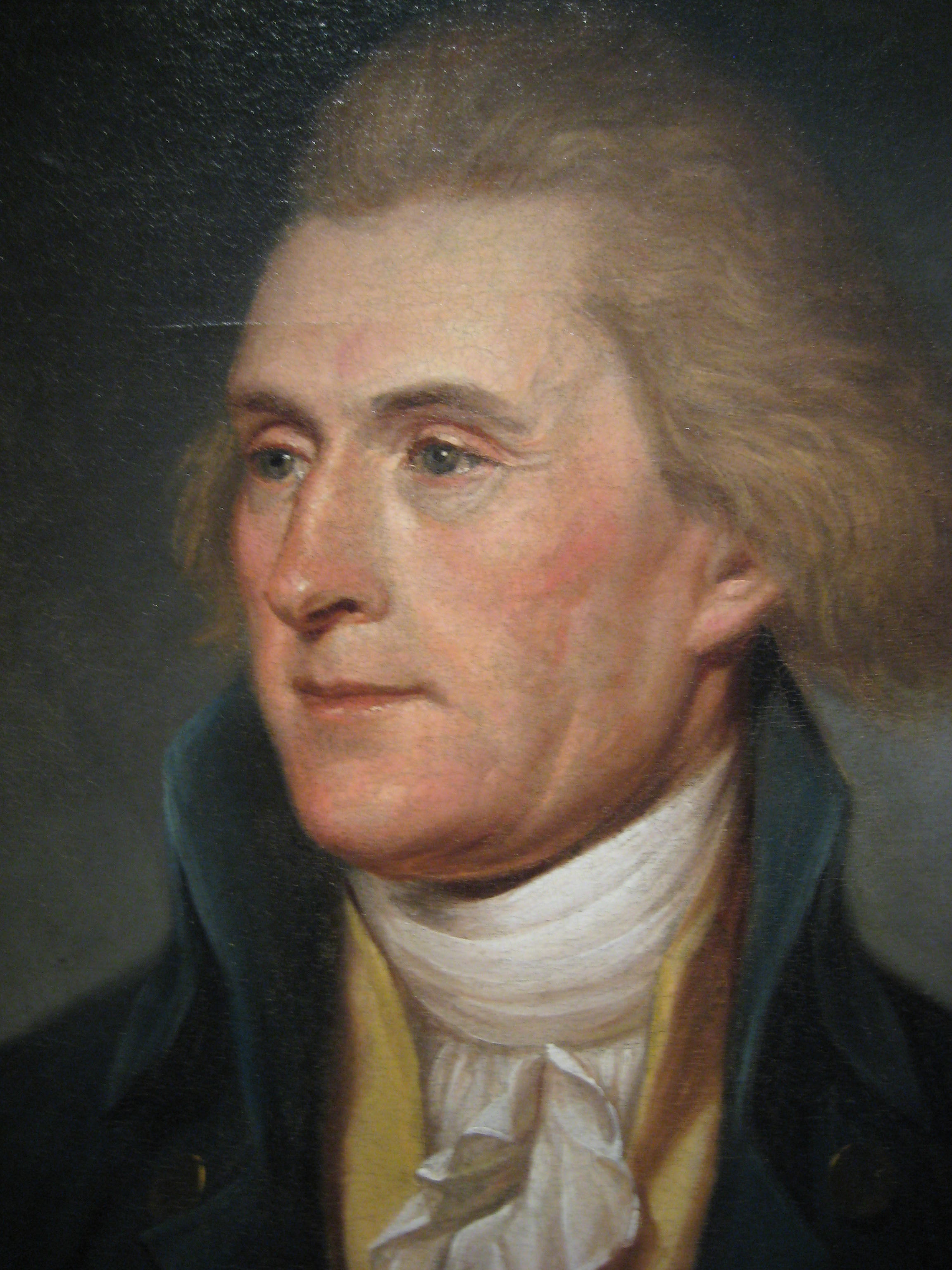
On June 10th, 1776 the Continental Congress designated the Committee of Five to write a declaration of independence.  The five men on the committee were: John Adams, Benjamin Franklin, Thomas Jefferson, Robert R. Livingston, and Roger Sherman. The committee chose Thomas Jefferson to be the author of the document, and the other members of the committee assisted with editing and revisions. The committee approved the final draft on June 28th, and then submitted it to the Congress. The Congress adopted the declaration on July 4th.
1791 portrait of Thomas Jefferson (1743-1826)
Third President of the United States and primary author of the Declaration of Independence.
 [Public domain], via Wikimedia Commons. 
The library has a lot of resources for learning more about the Declaration of Independence. Such as these titles:

Thursday, May 10, 2018

Jewish American Heritage Month

May is Jewish American Heritage Month. This is the time to recognize the experiences and contributions of Jewish Americans. In 1980, the first Jewish American Heritage Week was celebrated in April of the year. In 2006, it was elevated to a month-long recognition and moved to the month of May.
Percentage of Jewish population in each state in 2015.
By Irvadm [CC BY-SA 4.0 (https://creativecommons.org/licenses/by-sa/4.0)], via Wikimedia Commons
The Berman Jewish DataBank estimates that as of 2015 there were 6,829,930 Jewish people living in the United States. That is 2.14% of the total population.

Timeline of Jewish American History

1654 First record of Jewish settlers coming to North America. Twenty-three Sephardi Jews arrived in New Amsterdam (which became New York in 1664). In 1655, the directors of the Dutch West India Company, who governed the colony, agreed to allow them to settle there permanently.
"The Early History of the Jews in New York, 1654-1664" in Publications of the American Jewish Historical Society by Samuel Oppenheim

1730 The New York Jewish community created the first synagogue in North America.
"The Congregation Shearith Israel" in Publications of the American Jewish Historical Society by N. Taylor Phillips
America's First Synagogues [streaming video]

1763 The Touro Synagogue was built in Newport, Rhode Island. It is the oldest continuously operating synagogue in the United States.
"House of Worship: At Touro Synagogue, the Jewish Story is the American Story" in National Parks by Ethan Gilsdorf

1774 Francis Salvador became the first Jewish elected official in America. He was elected to the South Carolina legislature. In 1776, he died fighting for the patriot cause in the American Revolution.
"Francis Salvador, A Prominent Patriot of the Revolutionary War" in Publications of the American Jewish Historical Society by Leon Huhner
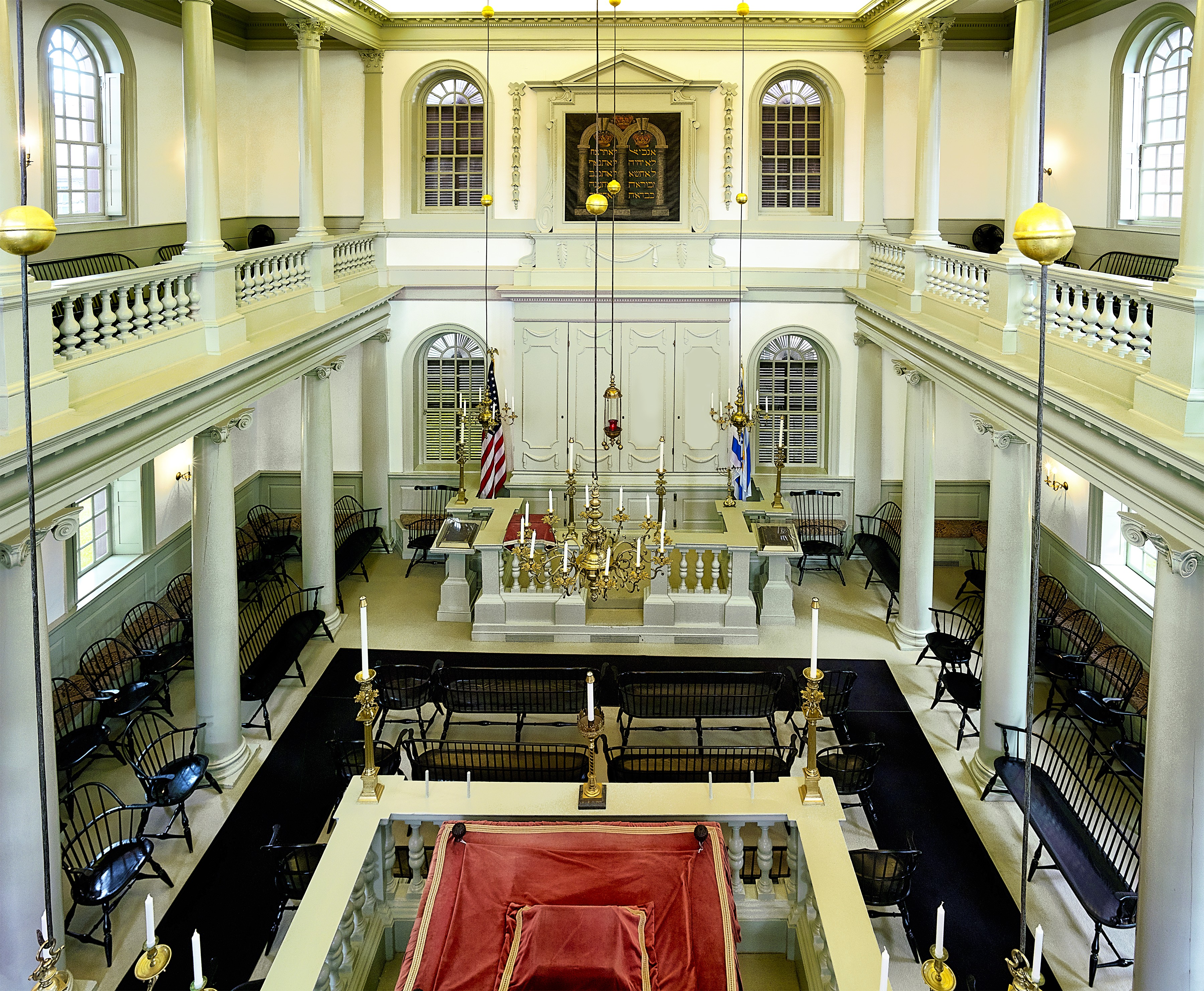
Interior of the Touro Synagogue in Newport, RI. Built in 1763. It is the oldest continuously operating synagogue in the US.
By S.d.touro [CC BY-SA 4.0 (https://creativecommons.org/licenses/by-sa/4.0)], from Wikimedia Commons
1802 In Philadelphia, Pennsylvania the first Ashkenazi synagogue was built in the United States.

1819 Philanthropist Rebecca Gratz founded the Female Hebrew Benevolent Society, a charity organization that is still in operation.

1843 German Jewish immigrants form the B'nai B'rith fraternal order.

1845 Lewis Charles Levin, of Pennsylvania, became the first Jewish person to serve in the House of Representatives.

         David Levy Yulee, of Florida, became the first Jewish person to serve in the Senate.

1854 Isaac Mayer Wise founded The Israelite newspaper (It became The American Israelite in 1874). It is the longest-running English language Jewish newspaper still in publication the United States.

1860 Morris Raphall became the first Rabbi to open a session of the US Congress with prayer.

1861-65 Judah P. Benjamin became the first Jewish person to serve in a government Cabinet in North America. He served the Confederate States of America as Attorney General, then Secretary of War, and finally as Secretary of State.
Judah P. Benjamin by Pierce Butler
 Rebecca Gratz (1781-1869).
Painted by Thomas Sully in 1831. [Public domain], via Wikimedia Commons
1880-1924 About 27 million people immigrated to the US during this period. Approximately 2 million of them were Jewish people from Central and Eastern Europe.
Jewish Immigration to the United States from 1881-1910 by Samuel Joseph
Troubled Waters: The Origins of the 1881 Anti-Jewish Pogroms in Russia by Irwin Michael Aronson

1883 Emma Lazarus composed the poem "The New Colossus" to raise money to build a pedestal for the Statue of Liberty. In 1903, a plaque engraved with the poem was placed in the statue's pedestal. A famous line from that poem is "Give me your tired, your poor, your huddled masses yearning to breathe free..."
Emma Lazarus by Esther H. Schor
Liberty's Voice: The Story of Emma Lazarus by Erica Silverman

1885 The first Yiddish language newspaper Yidishes Tageblatt (The Jewish Daily News) was published in the United States. It ceased publication in 1928.

1887 Washington Bartlett, of California, became the first Jewish person elected as governor of a US State.

1906 Oscar Straus became the first Jewish person to serve on the US Cabinet. He served as Secretary of Commerce until 1909.
The American Spirit by Oscar S. Straus
Under Four Administrations: From Cleveland to Taft by Oscar S. Straus

1910 The first Ladino language newspaper Lah Amerikah began publication. It continued until 1925.
"Asymmetric Fates: Secular Yiddish and Ladino Culture in Comparison" in The Jewish Quarterly Review by Sarah Abrevaya Stein
Louis D. Brandeis (1856-1941) in 1916.
By Harris & Ewing [Public domain], via Wikimedia Commons
1915 Leo Frank was lynched in Marietta, Georgia.
The Leo Frank Case by Leonard Dinnerstein
An Unspeakable Crime: The Prosecution and Persecution of Leo Frank by Elaine Marie Alphin

1916 Louis Brandeis became the first Jewish person to serve on the Supreme Court.
Letters of Louis D. Brandeis by Louis Dembitz Brandeis
Other People's Money and How the Bankers Use It by Louis Dembitz Brandeis

1920 Henry Ford acquired the Dearborn Independent newspaper and used it to publish 91 anti-Semitic propaganda articles over the next several years, including the Protocols of the Elders of Zion.

1924 Immigration Act of 1924 strictly limited the number of immigrants entering the United States, which resulted in a decline of Jewish immigration from Europe.

1933 Fleeing persecution from the Nazi government in Germany, Albert Einstein immigrated to the United States and became a resident scholar at the Institution for Advanced Study in Princeton, New Jersey. He obtained US citizenship in 1940. 
The Meaning of Relativity by Albert Einstein
On a Beam of Light: A Story of Albert Einstein by Jennifer Berne
Albert Einstein (1879-1955) in 1935.
By Sophie Delar, photographer; published in 1955 by "unknown press organization" per source (RR Auction and Einstein's World) [Public domain], via Wikimedia Commons
1941-45 Approximately 500,000 Jewish Americans served in the armed forces during World War II.
GI Jews: How World War II Changed a Generation by Deborah Dash Moore

1945-52 President Truman issued a directive to allow immigration preference for those displaced by World War II. An estimated 80,000 Jewish immigrants arrived to the US during these years.

1955 Jonas Salk developed the polio vaccine.
Splendid Solution: Jonas Salk and the Conquest of Polio by Jeffrey Kluger

1963 Betty Friedan published The Feminine Mystique, which sparked the modern feminist movement. In 1966, she co-founded the National Organization for Women.
Success and Solitude: Feminist Organizations Fifty Years after The Feminine Mystique by Sarah Maxwell

1993 The United States Holocaust Museum opened in Washington DC.

2000 Joe Lieberman became the first Jewish American nominated for Vice President by one of the two major political parties.


Tarleton's library has a large collection of materials relevant to the Jewish American experience. Such as these titles:

The Chosen Folks: Jews on the Frontiers of Texas by Bryan Edward Stone
The Columbia History of Jews & Judaism in America ed. by Marc Lee Raphael
God, Faith & Identity from the Ashes: Reflections of Children and Grandchildren of Holocaust Survivors by Menachem Z. Rosensaft
Jewish "Junior League": The Rise and Demise of the Fort Worth Council of Jewish Women by Hollace Ava Weiner
Jewish Women Pioneering the Frontier Trail: A History in the American West by Jeanne E. Abrams
Jews and Gentiles in Early America, 1654-1800 by William Pencak
The Jews of the United States, 1654-2000 by Hasia R. Diner
Lone Stars of David: The Jews of Texas by Hollace Ava Weiner
Memories of Two Generations: A Yiddish Life in Russia and Texas by Z. Gurwitz
Still Jewish: A History of Women and Intermarriage in America by Keren R. McGinity
Who is a Jew? Reflections on History, Religion, and Culture by Leonard J. Greenspoon
Thursday, January 18, 2018

New History Databases

Do you have a history research assignment this semester? If so, then the library is the place for you. We have a wealth of reliable sources that will make your professor very happy when you use them to support your research papers and projects. Over the past few months, the Dick Smith Library has added a large number of new databases to its collection. Including several that provide historical information.

  • Do you need to find information about a notable person from the past? Then check out the Biography in Context database. It provides articles from scholarly journals, magazines, and newspapers, in addition to videos, audio recordings, images, and more.

Screenshot from the Biography in Context database. The top portion of the entry for Rosa Parks.

  • Do you need to find primary documents about the Civil Right Movement? Then you must spend some time searching through the information available in the Race Relations in America database. 
Screenshot from the Race Relations in America database showing just 8 of the 26 types of documents it has available.
  • Are you researching the history of slavery? Slavery in America and the World contains a wealth of both legal information and primary source documents relevant to the history of slavery in the United States and other English-speaking countries. 
Screenshot from the Slavery in America and the World database showing some of the periodicals it contains. 
Screenshot of the homepage of the US.History in Context database. 
If you want to see a complete list of our history-related databases, along with other library resources for history, then check out our History subject guide page: https://www.tarleton.edu/library/research/subject-guides/history.html

Contact us at 254-968-9249 or reference@tarleton.edu if you need assistance with these or any other library resource. 

Tuesday, December 5, 2017

Bill of Rights Day

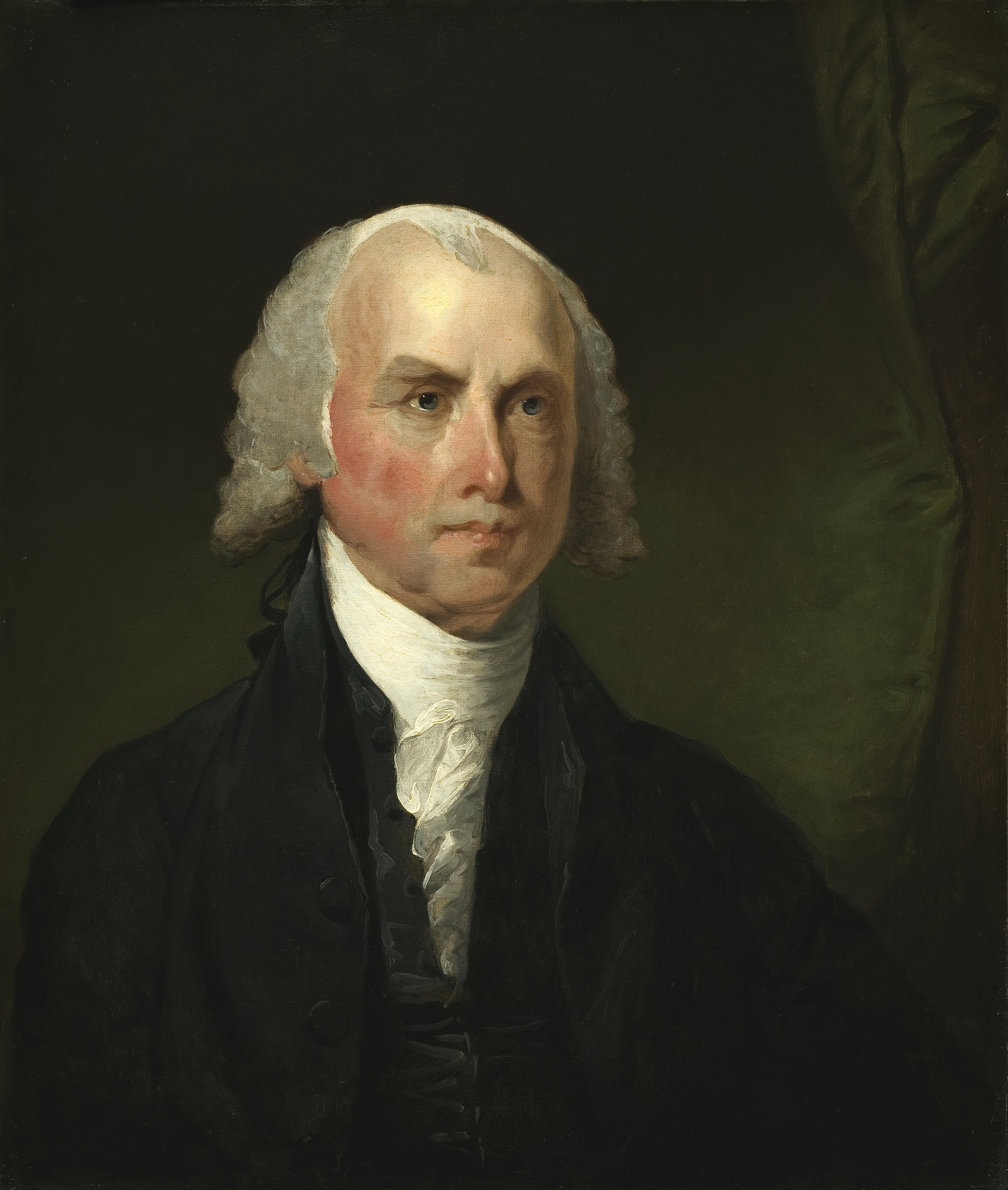
December is the month we celebrate a very important holiday. You guessed it, Bill of Rights Day is on December 15th! The Bill of Rights are the first 10 amendments to the US Constitution. They were ratified on December 15th, 1791. President Franklin D. Roosevelt proclaimed the first Bill of Rights day in 1941. These amendments guarantee our rights to speech, religion, bear arms, trial by jury, protection from unreasonable search and seizure, and more. 
James Madison (who would later become the 4th President of the United States)
was the primary author of the Bill of Rights in the House of Representatives in 1789.
Gilbert Stuart [Public domain], via Wikimedia Commons.
Tarleton's Library has a wealth of resources about the Bill of Rights. Such as these titles: 

Digital films by Cambridge Educational available through the Films on Demand database: 
The Bill of Rights Primer: A Citizen's Guidebook to the American Bill of Rights by Akhil Reed Amar
The Birth of the Bill of Rights, 1776-1791 by Robert Allen Rutland 
Founding Rivals: Madison vs. Monroe, the Bill of Rights, and the Election that Saved a Nation by Chris DeRose 
The Future of the First Amendment by Kenneth Dautrich 
In Defense of Liberty: The Story of America's Bill of Rights by Russell Freedman
James Madison and the Struggle for the Bill of Rights by Richard E. Labunski 
Misreading the Bill of Rights: Top Ten Myths Concerning Your Rights and Liberties by Robert K. Goidel
Mobilizing the Press: Defending the First Amendment in the Supreme Court by Eric B. Easton
Origins of the Bill of Rights by Leonard W. Levy
Religious Freedom and the Constitution by Christopher L. Eisgruber
Sexual Rights in America: The Ninth Amendment and the Pursuit of Happiness by Paul R. Abramson
Unreasonable Searches and Seizures: Rights and Liberties under the Law by Otis H. Stephens, Jr. 
Whose Right to Bear Arms did the Second Amendment Protect? by Saul Cornell 

If you need assistance finding information about the Bill of Rights, or any other topic, then contact us at reference@tarleton.edu or 254-968-9249.