February is
African American History Month. This is the time we recognize the experiences and contributions of Americans of African ancestry. The idea of celebrating African American history began in 1926 when the Association for the Study of Negro Life and History (now the
Association for the Study of African American Life and History) founded Negro History Week. Dr.
Carter G. Woodson chose the week in February that included the birthdays of
Abraham Lincoln and
Frederick Douglass. In 1976, President Gerald Ford
proclaimed the first Black History Month, and it has been a month-long recognition ever since.
The
2010 census counted 42,020,743 African Americans in the United States. That represents 13.6% of the total population and a 15.4% increase since the 2000 census.
Timeline of African-American history
Click the links below to learn more about each topic. Many of these link to resources available through our subscription databases. If you are a Tarleton student, faculty, or staff you can access these resources from off-campus with your NTNET username and password.
1527-39 After surviving the ill-fated
Pánfilo de Narváez expedition,
Estevanico (an enslaved African) led an expedition into present-day New Mexico on behalf of Spain in 1539.
"
Estevanico, Negro Discoverer of the Southwest: A Critical Reexamination" in
Phylon by Rayford W. Logan
1619 First record of African slaves brought to English North American colonies. Approximately twenty arrived in Jamestown, VA that year.
"
Blacks in Virginia: A Note on the First Decade" in
The William and Mary Quarterly by Alden T. Vaughan
1641 Mathias de Sousa (a freeman of African decent) was elected to the Maryland colonial assembly.
1655 Elizabeth Key, a slave of mixed African and English heritage, successfully won her freedom via a lawsuit in the Virginia Colony. In 1661, the Virginia colonial assembly (
House of Burgesses) passed legislation to prevent other slaves from winning their freedom via this legal route.
"
Dangerous Woman: Elizabeth Key's Freedom Suit: Subjecthood and Racialized Identity in Seventeenth Century Colonial Virginia" in
Akron Law Review by Taunya Lovell Banks
1712 About two dozen slaves led a
revolt in New York City.
1724 France enacted the
Code Noir in its Louisiana colony. The first body of laws that governed both slaves and free blacks in North America.
"
Colonial Intimacies: Legislating Sex in French Louisiana" in
William & Mary Quarterly by Jennifer M. Spear
The
Transatlantic Slave Trade began in the late 15th century and continued to the mid 19th century. It is estimated that 12 to 15 million Africans were enslaved and transported to the Americas during that time, and about half arrived in the 18th century. Approximately 7% of the total were brought to the area that is now the United States.
The African Slave Trade: Precolonial History, 1450-1850 by Basil Davidson
The Interesting Narrative of the Life of Olaudah Equiano, or Gustavus Vassa, the African by Olaudah Equiano
The Transatlantic Slave Trade: A History by James A. Rawley
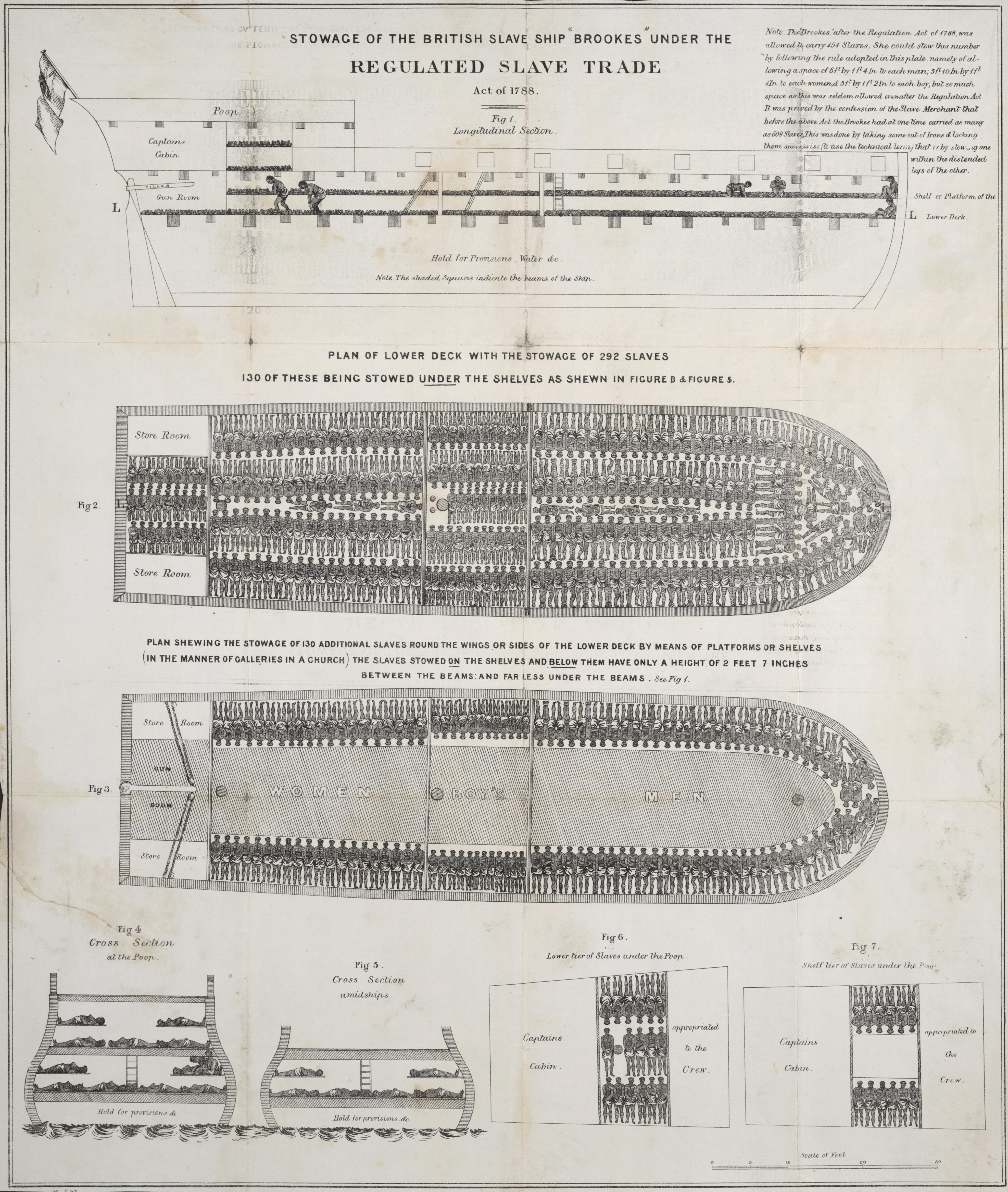 |
| Stowage of the British slave ship Brookes under the regulated slave trade act of 1788. By Plymouth Chapter of the Society for Effecting the Abolition of the Slave Trade [Public domain], via Wikimedia Commons. |
1738 Beginning in 1693, Spain offered freedom to slaves who escaped from English colonies to Florida. In 1738, hundreds of escaped slaves established
Fort Mose (also known as
Gracia Real de Santa Teresa de Mose) near St. Augustine. It was the first community of free blacks in North America.
"
Gracia Real de Santa Teresa de Mose: A Free Black Town in Spanish Colonial Florida" in
The American Historical Review by Jane Landers
1739 The
Stono Rebellion took place in South Carolina. It was the largest slave uprising in colonial America, with approximately 120 deaths. After suppressing the rebellion, the South Carolina colonial assembly responded by enacting the Slave Code of 1741. That law prevented slaves from growing their own food, assembling in groups, earning money, or learning to read and write.
Black Majority: Negroes in Colonial South Carolina from 1670 to the Stono Rebellion by Peter H. Wood
Stono: Documenting and Interpreting a Southern Slave Revolt by Mark M. Smith
1741 New York Slave Conspiracy - rumors of slaves plotting to burn the city caused panic among the white community. Thirty four people were executed for allegedly being involved in the conspiracy.
New York Burning: Liberty, Slavery, and Conspiracy in Eighteenth-Century Manhattan by Jill Lepore
1752 Astronomer and clock-maker
Benjamin Banneker built the first clock in America. In 1789, he successfully predicted a solar eclipse. In 1791, Secretary of State Thomas Jefferson appointed him to the planning committee that designed Washington DC.
Benjamin Banneker: Pioneering Scientist by Ginger Wadsword
1770 Crispus Attucks was shot and killed by British soldiers in the
Boston Massacre. He is known as the first casualty of the American Revolution.
1773 Phillis Wheatley, a young slave living in Boston, published
Poems on Various Subjects, Religious and Moral. Many doubted that she could have published such a work, but she proved herself when she successfully passed an oral examination conducted by a board of Harvard University professors.
Complete Writings by Phillis Wheatley
The Trials of Phillis Wheatly: America's First Black Poet and Her Encounters with the Founding Fathers by Henry Louis Gates Jr.
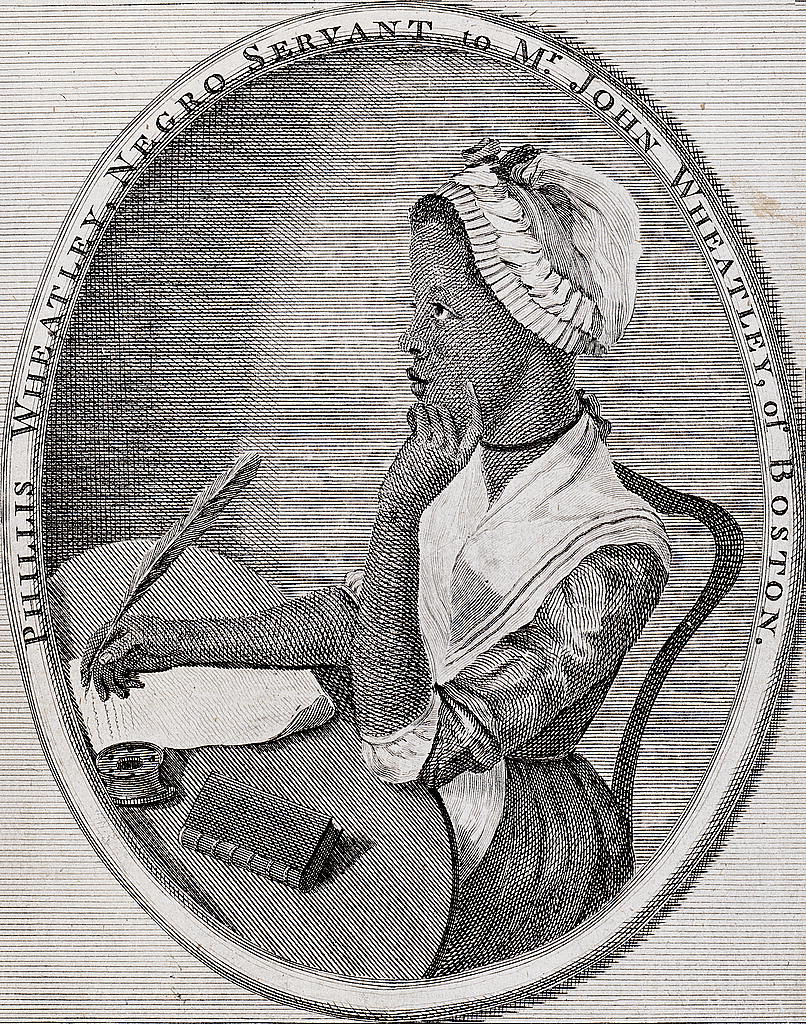 |
Phillis Wheatley (1753-84).
This illustration was in the Frontispiece to her book Poems on Various Subjects.
By Scipio Moorhead [Public domain], via Wikimedia Commons. |
1775-83 During the
American Revolution approximately
5000 African Americans served in the Continental Army, and approximately 1000 served on the British side. Many African Americans who sided with the British settled in
Sierra Leone after the war.
The Black Presence in the Era of the American Revolution by Sidney Kaplan
The Forgotten Fifth: African Americans in the Age of Revolution by Gary B. Nash
During, and in the years following, the
American Revolution a number of slaves were granted freedom by their owners, and several Northern states began outlawing the practice (most did so gradually). However, the invention of the cotton gin in 1793 resulted in a growing demand for slaves in the South during the first half of the 19th century.
1777 Vermont abolished slavery.
1780 Pennsylvania enacted a gradual
emancipation law.
1783 The
Massachusetts Supreme Court abolished slavery.
1784 Connecticut and Rhode Island enacted gradual emancipation laws.
1787 The
Northwest Ordinance banned slavery in the territories "North West of the River Ohio."
The Northwest Ordinance: Constitutional Politics and the Theft of Native Land by Robert Alexander
1789 New Hampshire abolished slavery.
1793 Eli Whitney (or was it
Catherine Greene?) invented the
Cotton Gin. This made growing cotton as a cash crop possible throughout much of the South, which led to increased demand for slave labor.
Inventing the Cotton Gin: Machine and Myth in Antebellum America by Angela Lakwete
1799 New York enacted a gradual emancipation law.
1804 New Jersey enacted a gradual emancipation law.
 |
This graph shows a correlation between cotton production and the increasing number of slaves in the early 19th century.
By Conrad Zbikowski (Own work) [Public domain], via Wikimedia Commons. |
1800 The
White House and
US Capitol buildings were completed in Washington DC. They were built with slave labor.
1804 Ohio enacted
Black Codes, becoming the first non-slave holding state to pass laws restricting the rights of African Americans.
1808 The United States
abolished the international slave trade. Although African slaves continued to be smuggled illegally into the country, the domestic slave trade took on increasing importance.
Carry Me Back: The Domestic Slave Trade in American Life by Steven Deyle
Mutiny on the Amistad: The Saga of a Slave Revolt and Its Impact on American Abolition, Law, and Diplomacy by Howard Jones
1811 The
German Coast Rebellion, the largest slave uprising in US history, took place in the Louisiana Territory. It was eventually suppressed with the assistance of federal troops.
1814 Joseph Savary became the first African American to hold the rank of major in the US Army. He led the Battalion of Freemen of Color which fought under General Andrew Jackson at the
Battle of New Orleans during the War of 1812.
1816 The
American Colonization Society was formed. It promoted freeing slaves and settling them in Africa. Throughout the mid 19th century, it assisted thousands of former African American slaves to settle in
Liberia.
The African Colonization Movement 1816-1865 by P. J. Staudenraus
Back to Africa: A History of Sierra Leone and Liberia by Richard West
1821 Thomas Jennings became the first African American to receive a patent. He invented a dry cleaning process and created the world's first dry cleaning business.
1822 Demark Vesey was arrested and executed for plotting a slave uprising in Charleston, SC.
The Denmark Vesey Affair: A Documented History ed. by Douglas R. Egerton
Denmark Vesey: The Slave Conspiracy of 1822 by Rober S. Starobin
1823 Alexander Twilight became the first African American to receive a degree from an American college. In 1836, he became the first African American elected to a state legislature (Vermont).
1831 Nat Turner led a slave rebellion in Virginia.
The Land Shall Be Deluged in Blood: A New History of the Nat Turner Revolt by Patrick H. Breen
Nat Turner by Eric Foner
 |
Frederick Douglass (1818-95)
By unknown (National Portrait Gallery, Smithsonian Institution) [Public domain], via Wikimedia Commons. |
1838 Frederick Douglass escaped from slavery, and became active in the
Abolitionist Movement. In 1845 he became nationally famous with the publication of his autobiography. After the Civil War he served in several government posts including Minister to Haiti from 1889-1891.
Narrative of the Life of Frederick Douglass, an American Slave by Frederick Douglass
There was once a slave...The Heroic Story of Frederick Douglass by Shirley Graham Du Bois
Speeches by Frederick Douglass (audio reenactments of Douglass' speeches)
1845 Macon Allen became the first African American to practice law.
1847 Dr.
David J. Peck became the first African American to graduate from a US medical school.
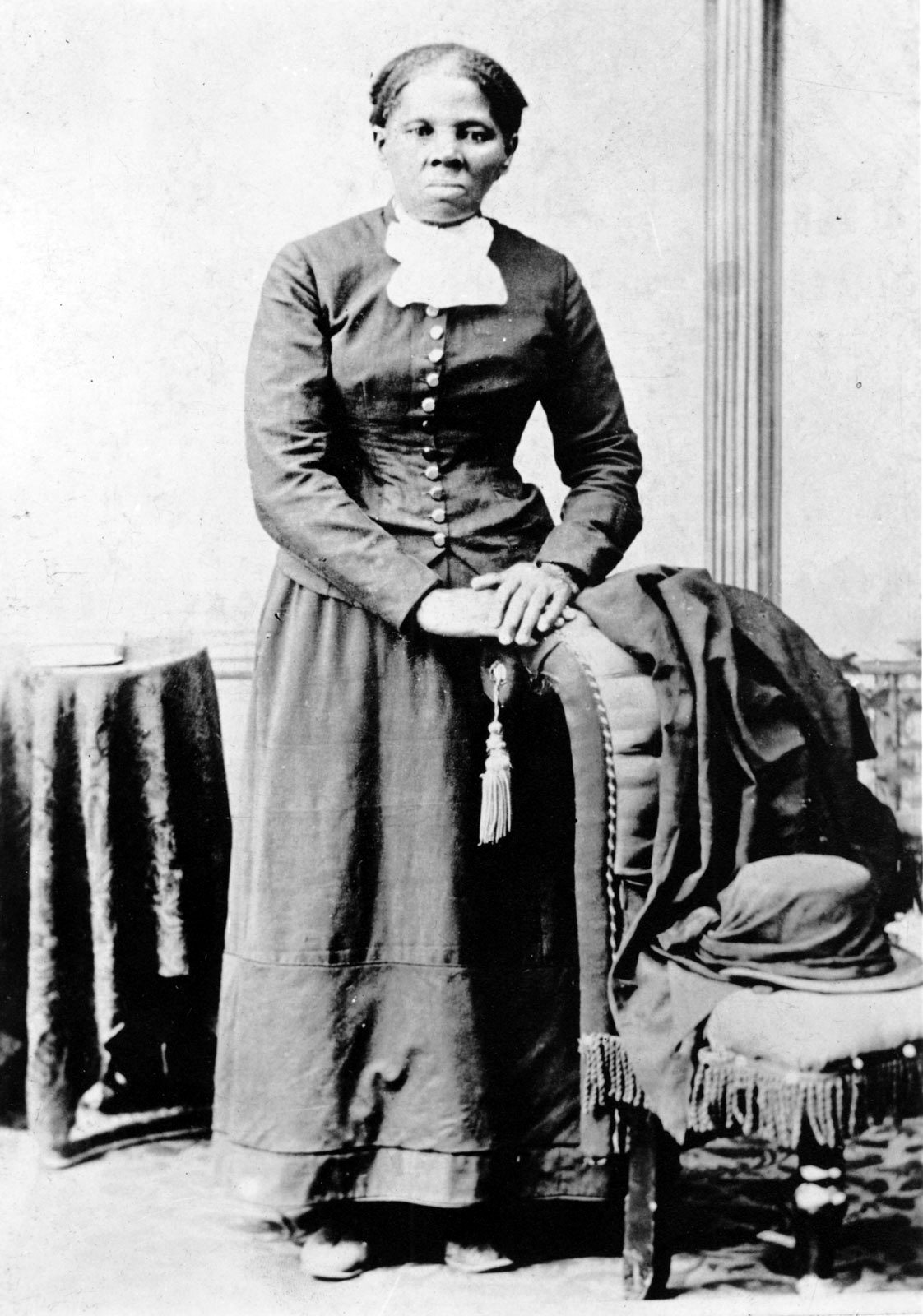
1849 Harriett Tubman escaped from slavery via the
Underground Railroad. Over the next 10 years she made 19 trips back to slave states and helped approximately 300 slaves escape to freedom.
Fleeing for Freedom: Stories of the Underground Railroad by Levi Coffin
Harriet Tubman: The Road to Freedom by Catherine Clinton
"Wanted Dead or Alive": The True Story of Harriet Tubman by Ann McGovern
1851 Former slave
Sojourner Truth gave her famous "
Ain't I a Woman?" speech at a women's rights convention in Ohio.
Sojourner Truth: A Life, a Symbol by Nell Irvin Painter
1857 The Supreme Court issued its ruling in the
Dred Scott v. Sandford case. Among other things, this infamous court decision found that constitutional rights did not apply to African Americans, whether they were free or slave.
The Dred Scott Case, Its Significance in American Law and Politics by Don E. Fehrenbacher
Mrs. Dred Scott: A Life on Slavery's Frontier by Lea VanderVelde
1861 Philip Reid, an enslaved sculptor, completed his work on the
Statue of Freedom, which sits atop the Capitol dome in Washington DC.
 |
The Statue of Freedom on top of the US Capitol Dome. Created, in part, by the work of Philip Reid.
By Andreas Praefcke (Self-photographed) [GFDL (http://www.gnu.org/copyleft/fdl.html) or CC BY 3.0 (http://creativecommons.org/licenses/by/3.0)], via Wikimedia Commons. |
1861-65 Approximately 200,000
African Americans served in the Union armed forces during the Civil War.
Black Soldiers in Blue: African American Troops in the Civil War Era by John David Smith
Paying Freedom's Price: A History of African Americans in the Civil War by Paul D. Escott
1863 The
Emancipation Proclamation took effect on January 1st. This executive order by President Lincoln declared "...slaves within any State...in rebellion...shall be...forever free..." This proclamation did not outlaw slavery in the border states that remained loyal to the Union (Delaware, Maryland, Kentucky, and Missouri).
Lincoln, Congress, and Emancipation by Paul Finkelman
Lincoln's Hundred Days: The Emancipation Proclamation and the War for the Union by Louis P. Masur
1865 The
Freedmen's Bureau was established to provide health care, education, and technical assistance to freed slaves. The Bureau terminated its work in 1868.
A History of the Freedmen's Bureau by George R. Bentley
On June 19th, enslaved African Americans in Texas received news of emancipation. Thus creating the
Juneteenth holiday.
Juneteenth!: Celebrating Freedom in Texas by Anna Pearl Barrett
The
13th Amendment to the Constitution was ratified. It outlawed slavery throughout the US.
Who Freed the Slaves?: The Fight Over the Thirteenth Amendment by Leonard L. Richards
1866 Approximately 80 African Americans were killed in race riots in
Memphis, TN and New Orleans, LA.
An Absolute Massacre: The New Orleans Race Riot of July 30, 1866 by James G. Hollandsworth Jr.
Congress approved the creation of four all-black regiments of the US Army. They were nicknamed
Buffalo Soldiers by Native American tribes in the west.
The Buffalo Soldiers: A Narrative of the Black Cavalry in the West by William H. Leckie
 |
Buffalo Soldiers of the 25th Infantry, Montana 1890.
By Chr. Barthelmess [Public domain], via Wikimedia Commons |
1868 The
14th Amendment to the constitution was ratified. It granted citizenship to any person born or naturalized in the United States, and reversed the
Dred Scott v Sanford decision.
The Adoption of the Fourteenth Amendment by Horace Edgar Flack
1870 The
15th Amendment to the Constitution was ratified. It states, "The right of citizens of the United States to vote shall not be denied...on account of race, color, or previous condition of servitude."
The Right to Vote: Politics and the Passage of the Fifteenth Amendment by William Gillette
Hiram Revels, of Mississippi, became the first African American to serve in the US Senate, and
Joseph Rainey, of South Carolina, became the first African American to serve in the US House of Representatives.
Black Americans in Congress, 1870-2007 by The United States Congress House Committee on House Administration
1873 A white mob killed hundreds of African Americans in
Colfax, Louisiana after a disputed election.
The Colfax Massacre: The Untold Story of Black Power, White Terror, and the Death of Reconstruction by LeeAnna Keith
1875-1910 Southern states enacted a variety of
Jim Crow Laws. These laws enforced the
segregation of races in educational facilities and public places. Additionally, these laws made it effectively impossible for African Americans to vote via the creation of
poll taxes and
literacy tests.
American Nightmare: The History of Jim Crow by Jerrold M. Packard
The Strange Career of Jim Crow by C. Vann Woodward
1876 Edward Bouchet became the first African American to earn a doctoral degree when he graduated with a PhD in Physics from Yale University.
Edward Bouchet: The First African-American Doctorate by Ronald E. Mickens
1892 Ida B. Wells published
Southern Horrors: Lynch Law in All Its Phases, an expos
é into the
lynching of African Americans in Memphis, TN.
'They Say': Ida B. Wells and the Reconstruction of Race by James West Davidson
1895 Booker T. Washington, founder of the Tuskegee Institute (now
University), delivered his
Atlanta Compromise speech. He advocated that African Americans should focus on economic development rather than political and civil rights.
Uncle Tom or New Negro?: African Americans reflect on Booker T. Washington...100 Years Later by Rebecca Carroll
Up from Slavery by Booker T. Washington
1896 In
Plessy v. Ferguson the US Supreme Court ruled that segregation laws were constitutional, and established the "
separate but equal" doctrine.
Plessy v. Ferguson: A Brief History with Documents by Brook Thomas
Right to Ride: Streetcar Boycotts and African American Citizenship in the Era of Plessy v. Ferguson by Blair Murphy Kelley
George Washington Carver, botanist, was appointed Director of Agricultural Research at the Tuskegee Institute. His research benefited peanut and sweet potato farmers.
How to Grow the Peanut and 105 ways of Preparing it for Human Consumption by George Washington Carver
My Work is that of Conservation: An Environmental Biography of George Washington Carver by Mark D. Hersey
1898 A white gang attacked the biracial government of
Wilmington, NC and overthrew the elected government of the city. Approximately 60 African Americans were killed in the violence.
Democracy Betrayed: The Wilmington Race Riot of 1898 and its Legacy by David S. Cecelski
1899 Scott Joplin, a Texas native, composed
Maple Leaf Rag, which began the
Ragtime music craze of the early 20th century.
Complete Piano Rags by Scott Joplin
1901 George H. White, the last African American elected to congress in the 19th century, left office. Due to the impact of Jim Crow laws, no African Americans served in Congress for the next 28 years.
 |
Ida B. Wells (1862-1931) journalist who investigated lynchings in Memphis, TN.
By Barnett (http://blackusa.com/ida-b-wells-barnett/) [Public domain], via Wikimedia Commons |
1903 W.E.B. Du Bois published
Souls of Black Folk. He rejected Booker T. Washinton's argument and recommended that African Americans strive for political and civil rights.
Booker T. Washington, W.E.B. Du Bois, and the Struggle for Racial Uplift by Jacqueline M. Moore
W.E.B. Du Bois: American Prophet by Edward J. Blum
1904 George Edwin Taylor became the first African American to run for president. He was nominated by the National Liberty Party.
1908 Jack Johnson, a Texas native, became the first African American heavyweight boxing champion.
My Life and Battles by Jack Johnson
1909 The
National Association for the Advancement of Colored People (NAACP) was formed.
NAACP: A History of the National Association for the Advancement of Colored People by Charles Flint Kellogg
1913 President
Woodrow Wilson's Administration implemented segregation in federal government departments, which caused many African American federal employees to lose their
positions.
Racism in the Nation's Service: Government Workers and the Color Line in Woodrow Wilson's America by Eric Steven Yellin
1914 Garrett Morgan invented the gas mask, which was widely used in World War I. In 1923, he invented the three-way automatic traffic signal.
Garret Morgan by Sarah L. Schuette
1915 The
Great Migration of African Americans out of the South began, and continued through the 1960s. Approximately 7 million African Americans left the South during this time.
The Warmth of Other Suns: The Epic Story of America's Great Migration by Isabel Wilkerson
1916 Marcus Garvey brought his
Universal Negro Improvement Association to the United States, and promoted the
Back to Africa movement.
Negro with a Hat: The Rise and Fall of Marcus Garvey by Colin Grant
1917-18 United States entered
World War I. Approximately 400,000 African Americans served.
African American Army Officers of World War I: A Vanguard of Equality in War and Beyond by Adam P. Wilson
Freedom Struggles: African Americans and World War I by Adriane Lentz-Smith
1919 The
Red Summer race riots occurred in 25 cities across the country. The deadliest riots took place in
Elaine, AR, where over 200 people were killed, and
Chicago, IL where approximately 40 people were killed.
Blood in Their Eyes: The Elaine Race Massacres of 1919 by Grif Stockley
The Negro in Chicago: A Study of Race Relations and a Race Riot by Chicago Commission on Race Relations
1920s-30s The
Harlem Renaissance, an African American literary and artistic movement, had a profound impact on American cultural life.
Claude McKay,
Langston Hughes, and
Zora Neal Hurston were prominent writers in the movement.
Blues and
Jazz musicians like
Bessie Smith,
Duke Ellington, and
Louis Armstrong became household names.
Black Culture and the Harlem Renaissance by Cary D. Wintz
Harlem: Negro Metropolis by Claude McKay
Let America be America Again by Langston Hughes
Their Eyes Were Watching God: A Novel by Zora Neale Hurston
The Bluesman: The Musical Heritage of Black Men and Women in the Americas by Julio Finn
The History of Jazz by Gunther Schuller
Music is my Mistress by Duke Ellington
Louis Armstrong: An Extravagant Life by Laurence Bergreen
1921 Over 80 people were killed in a race riot in
Tulsa, OK.
Riot and Remembrance: The Tulsa Race War and its Legacy by James S. Hirsch
1923 A white mob destroyed the African American community of
Rosewood, FL. An estimated 40 people were killed in the riot.
"
The Rosewood Massacre and the Women Who Survived It" in
The Florida Historical Quarterly by Maxine D. Jones
1931 Nine African American males (aged 12 to 20) were falsely convicted of raping two white women on a train near
Scottsboro, AL. They spent many years in prison before they were finally released.
The Last of the Scottsoboro Boys: An Autobiography by Clarence Norris
Scottsboro: A Tragedy of the American South by Dan T. Carter
1932 The US Public Health Service began the
Tuskegee Institute Syphilis Study. Approximately 400 African American men were infected with syphilis without their knowledge or consent. The purpose of the study was to see the full effects of untreated syphilis on the human body. The study ended in 1972.
Examining Tuskegee: The Infamous Syphilis Study and its Legacy by Susan Reverby
1936 Track star
Jesse Owens won four gold medals at the
Berlin Olympics.
Triumph: The Untold Story of Jesse Owens and Hitler's Olympics by Jeremy Schaap
1940 Hattie McDaniel was the first African American actor to win an academy award. She won it for her role as
Mammy in
Gone with the Wind.
Gone with the Wind [DVD]
Hattie McDaniel: Black Ambition, White Hollywood by Jill Watts
1941 US Army authorized the creation of the Tuskegee Air Squadron, usually known as the
Tuskegee Airmen. Led by
Benjamin O. Davis Jr., they had an excellent record of service in World War II.
Freedom Flyers: The Tuskegee Airmen of World War II by J. Todd Moye
Benjamin O. Davis, Jr., American: An Autobiography by Benjamin O. Davis Jr.
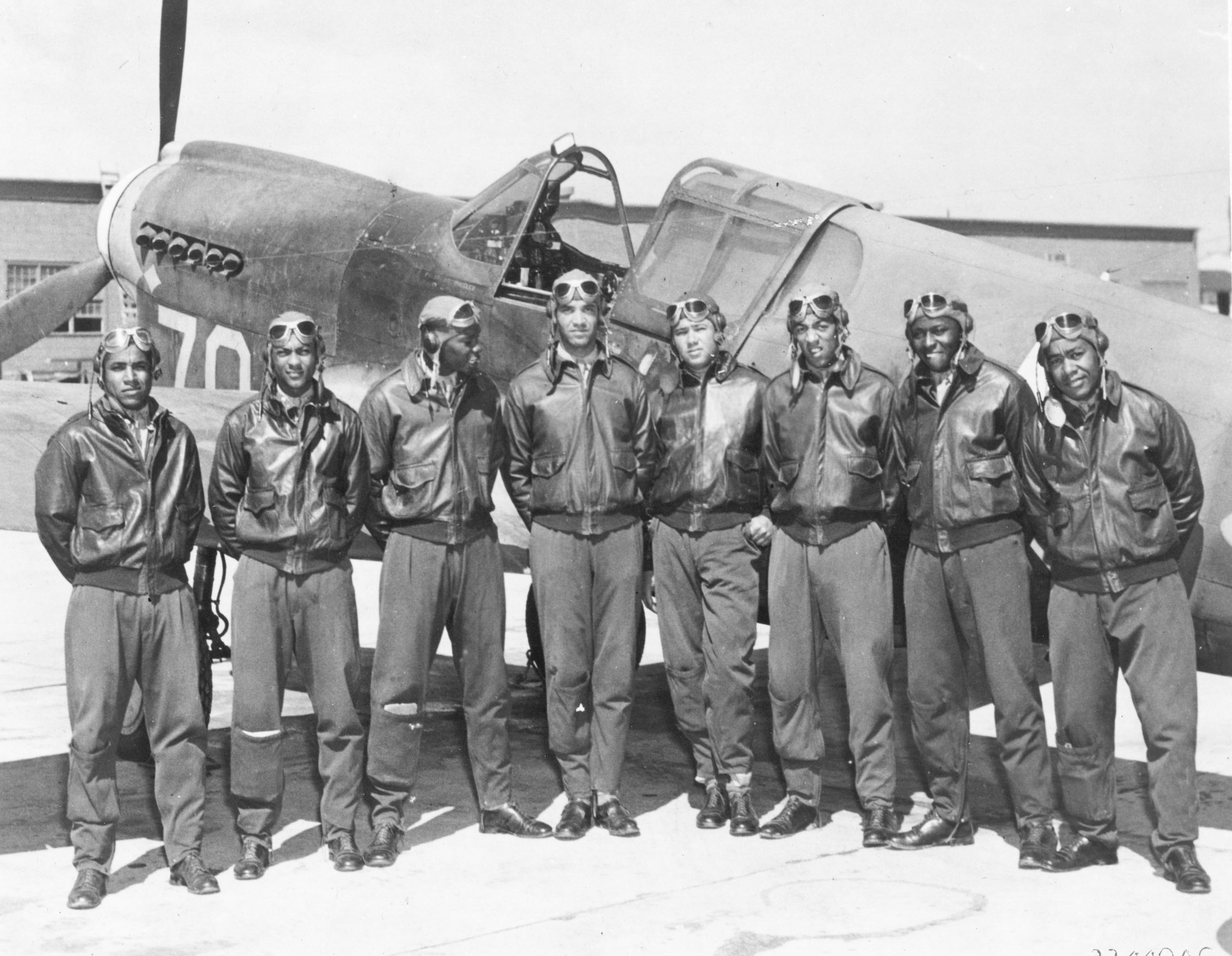 |
Tuskegee Airmen in 1942 or 1943.
Public Domain via Wikimedia Commons. |
1941-45 Over 1 million African Americans served in the US military during
World War II.
Blood on German Snow: An African American Artilleryman in World War II and Beyond by Emiel W. Owens
Forgotten: The Untold Story of D-Day's Black Heroes, at Home and at War by Linda Hervieux
Let us Fight as Free Men: Black Soldiers and Civil Rights by Christine Knauer
1943 - Approximately 38 people were killed in the
Detroit, MI race riot.
Race Riot, Detroit 1943 by Alfred McClung Lee
1947 Jackie Robinson became the first African American major league baseball player of the modern era. There were major league African American baseball players in the 19th century (like
Moses Fleetwood Walker), but the sport was segregated in the 1890s.
Jackie Robinson and the Integration of Baseball by Scott Simon
1948 President Harry S. Truman issued an
executive order desegregating the armed forces.
Foxholes & Color Lines: Desegregating the U.S. Armed Forces by Sherie Mershon
1950 Juanita Hall became the first African American to win a Tony award. She won for her role as Bloody Mary in
South Pacific.
Juanita Hall Sings the Blues [Streaming audio]
South Pacific: A Musical Play by Richard Rodgers
Gwendolyn Brooks became the first African American to win a
Pulitzer Prize.
A Life Distilled: Gwendolyn Brooks, her Poetry and Fiction by Maria Mootry
Selected Poems by Gwendolyn Brooks
Ralph Bunche became the first African American to win the
Nobel Peace Prize.
Ralph Bunche Discusses United Nations Policy to End Wars [Streaming Video]
1951 Harry Moore, NAACP official in Florida, was assassinated.
1954 US Supreme Court ruled that segregation in public schools was unconstitutional in the
Brown v. Board of Education case.
Brown v. Board of Education: A Civil Rights Milestone and its Troubled Legacy by James T. Patterson
Simple Justice: The History of Brown v. Board of Education and Black America's Struggle for Equality by Richard Kluger
1955 Fourteen-year old
Emmett Till was lynched in Mississippi for allegedly whistling at a white woman.
A Death in the Delta: The Story of Emmett Till by Sephen J. Whitfield
Getting Away with Murder: The True Story of the Emmett Till Case by Chris Crowe
Rosa Parks was arrested for refusing to give up her bus seat to a white man. In response,
Dr. Martin Luther King Jr. led a year-long boycott of the segregated bus system in
Montgomery, AL.
Daybreak of Freedom: The Montgomery Bus Boycott by Stewart Burns
She would not be Moved: How We Tell the Story of Rosa Parks and the Montgomery Bus Boycott by Herbert R. Kohl
 |
Rosa Parks (1913-2005) being fingerprinted after being arrested for boycotting public transportation in Montgomery, AL in 1956.
By Associated Press (http://www.rmyauctions.com/lot-8002.aspx) [Public domain], via Wikimedia Commons |
1957 -
Nine African American students were prevented from enrolling at Central High School in Little Rock, AR when, under the direction of Governor Orval Faubus, the Arkansas National Guard and white rioters blocked their entrance. Weeks later President Dwight Eisenhower deployed the US Army 101st Airborne to Little Rock to protect the students.
Little Rock: Race and Resistance at Central High School by Karen Anderson
Althea Gibson became the first African-American woman to win the
Wimbledon tennis championship.
Charging the Net: A History of Blacks in Tennis from Althea Gibson to Arthur Ashe to the Williams Sisters by Cecil Harris
1958 The
Southern Christian Leadership Conference (SCLC) was formed. Dr. Martin Luther King Jr. served as its first president.
Bearing the Cross: Martin Luther King, Jr., and the Southern Christian Leadership Conference by David J. Garrow
1960 Four African American college students organized a
sit-in to protest Woolworth's whites-only lunch counter in Greensboro, NC. A few months later, 150 black and white college students in North Carolina formed the
Student Nonviolent Coordinating Committee (SNCC) to organize future sit-ins and other protests.
Hands on the Freedom Plow: Personal Accounts by Women in SNCC by Faith S. Holsaert
In Struggle: SNCC and the Black Awakening of the 1960s by Clayborne Carson
Sit-in: How Four Friends Stood Up by Sitting Down by Andrea Davis Pinkney
1961 SNCC organized the
Freedom Rides, integrated interstate bus rides, though several Southern states. They encountered violence in Anniston, AL where the bus was firebombed.
Freedom's Main Line: The Journey of Reconciliation and the Freedom Rides by Derek Catsam
1962 James Meredith became the first black student to enroll at the University of Mississippi.
Violent protests broke out. Two were killed and over 300 injured. President John F. Kennedy deployed US Marshals and National Guard to restore order.
An American Insurrection: The Battle of Oxford, Mississippi, 1962 by William Doyle
The Battle of Ole Miss: Civil Rights v. States' Rights by Frank Lambert
1963 Dr. Martin Luther King Jr. was
arrested and spent 11 days in jail for organizing non-violent protests in
Birmingham, AL.
The Radical King by Martin Luther King Jr.
Although Governor George Wallace gave a speech at the schoolhouse door proclaiming "Segregation forever,"
Vivian Malone and James Hood were able to enroll at The University of Alabama. Integrating the school without violence.
The Schoolhouse Door: Segregation's Last Stand at the University of Alabama by E. Culpepper Clark
Medgar Evers, NAACP official in Mississippi, was assassinated.
Hundreds of thousands attended the
March on Washington demonstration demanding civil rights for African Americans, where Martin Luther King Jr. delivered his famous "
I Have a Dream" speech.
The Speech: The Story Behind Dr. Martin Luther Kin Jr.'s Dream by Gary Younge
The
Sixteenth Street Baptist Church in Birmingham, AL was bombed killing four African American girls ages 11-14.
Last Chance for Justice: How Relentless Investigators Uncovered New Evidence Convicting the Birmingham Church Bombers by T.K. Thorne
 |
Dr. Martin Luther King Jr. (1929-68) delivers his "I Have a Dream" speech in Washington DC in 1963.
[Public domain], via Wikimedia Commons |
1964 The
24th amendment to the constitution was ratified. It outlawed poll taxes.
Cassius Clay (who later changed his name to
Muhammad Ali) won first of three world heavyweight boxing championships.
Muhammad Ali: The Making of an Icon by Michael Ezra
SNCC organized the
Freedom Summer project to register black voters in Mississippi. Three activists (
James Chaney, Andrew Goodman, and Michael Schwerner) who were involved in the project were murdered.
Voice of Freedom: Fannie Lou Hamer, Spirit of the Civil Rights Movement by Carole Boston Weatherford
We are not Afraid: The Story of Goodman, Schwerner, and Chaney and the Civil Rights Campaign for Mississippi by Seth Cagin
President Lyndon Johnson signed the
Civil Rights Act of 1964 into law. It prohibited unequal application of voter requirements and racial segregation in public accommodations.
The Longest Debate: A Legislative History of the 1964 Civil Rights Act by Charles W. Whalen
1965 Malcolm X was assassinated.
The Autobiography of Malcolm X by Malcolm X.
On March 7th, civil rights activists attempted to
march from Selma to Montgomery, AL to bring attention to continuing denial of voting rights for African Americans. They were violently suppressed by Alabama State Troopers on the Edmund Pettus Bridge. On March 21st, Dr. Martin Luther King Jr. successfully led a larger group to complete the march.
From Selma to Montgomery: The Long March to Freedom by Barbara Combs
This Day in History: March 7th, 1965 - "Bloody Sunday" in Selma, AL [Streaming Video]
President Johnson signed the
Voting Rights Act into law. It prohibited literacy tests and racial discrimination in voting. It gave the Justice Department enforcement powers to protect voting rights.
Protest at Selma: Martin Luther King Jr., and the Voting Rights Act of 1965 by David J. Garrow
Watts Riot took place in Los Angeles, CA over allegations of police brutality against African Americans. Thirty four people were killed.
The Politics of Violence: The New Urban Blacks and the Watts Riot by David O. Sears
1966 President Johnson appointed
Robert C. Weaver as Secretary of Housing and Urban Development. Making him the first African American to serve in the Cabinet.
The Urban Complex: Human Values in Urban Life by Robert C. Weaver
The
Black Panther Party was founded in Oakland, CA.
Survival Pending Revolution: The History of the Black Panther Party by Paul Alkebulan
Bill Cosby became the first African American to win an Emmy award for his role in
I Spy.
Primetime Blues: African Americans on Network Television by Donald Bogle
1967 The Supreme Court ruled interracial marriage bans unconstitutional in the
Loving v. Virginia case.
Loving: Interracial Intimacy in America and the Threat to White Supremacy by Sheryll Cashin
Thurgood Marshall became the first African American to serve on the Supreme Court.
Thurgood Marshall: American Revolutionary by Juan Williams
Race riots occured in
Newark, NJ (23 killed) and
Detroit, MI (43 killed).
This Day in History: July 12,1967 - Riots Break Out in Newark [Streaming video]
The Detroit Riots, 1967 [Streaming video]
 |
Thurgood Marshall (1908-93) photographed in the Oval Office in 1967.
By Okamoto, Yoichi R. (Yoichi Robert) Photographer [Public domain], via Wikimedia Commons |
1968 Dr. Martin Luther King Jr. was
assassinated.
Hellhound on His Trail: The Stalking of Martin Luther King Jr. and the International Hunt for His Assassin by Hampton Sides
President Johnson signed the
Civil Rights Act of 1968 into law. It prohibited racial discrimination in the sale or renting of housing.
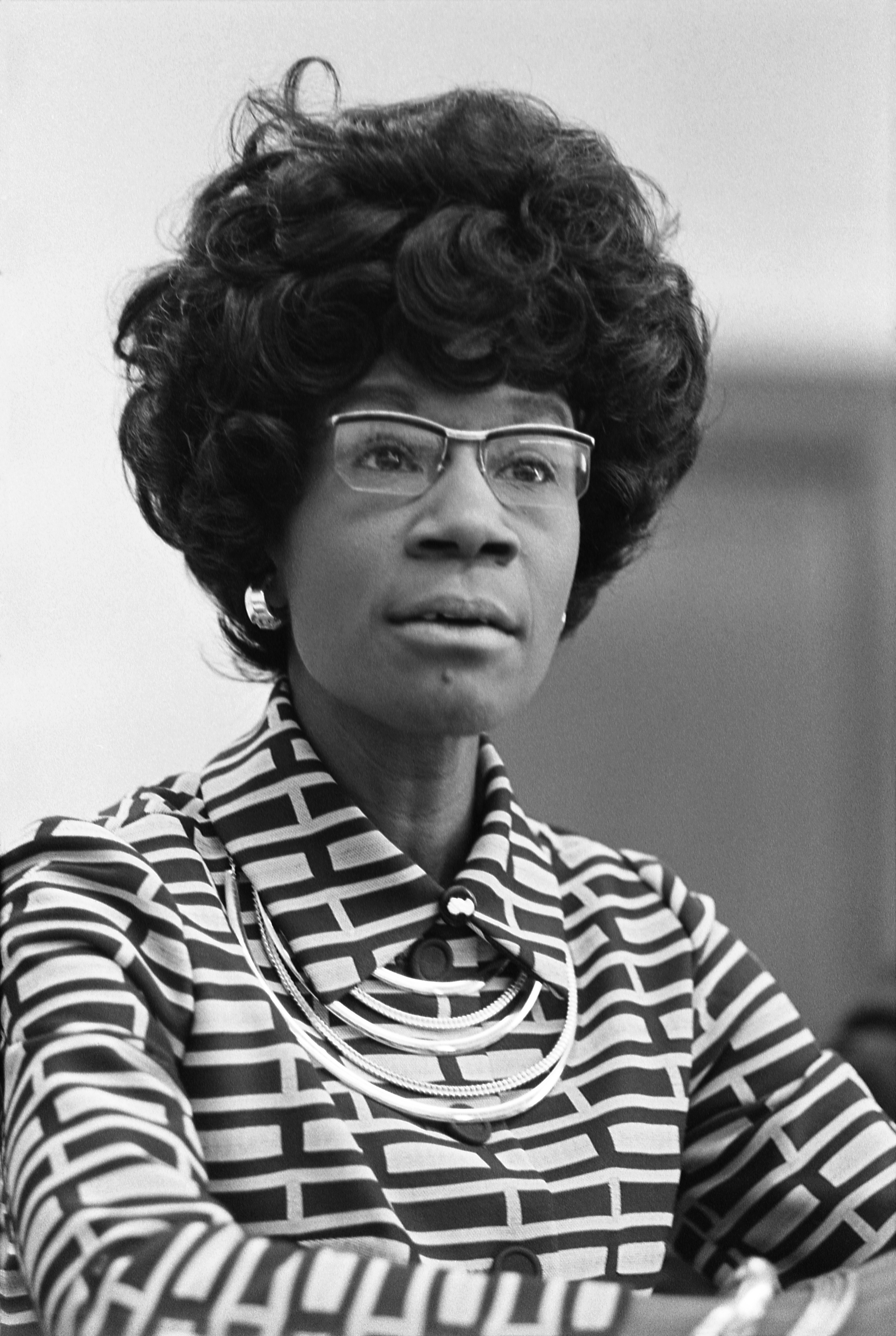
1972 Shirley Chisholm became the first African American to seek the presidential nomination from one of the two major political parties. She won 152 delegates at the Democratic National Convention.
What to Start a Revolution?: Radical Women in the Black Freedom Struggle by Dayo F. Gore
Barbara Jordan of Houston, TX and
Andrew Young of Atlanta, GA became the first African Americans elected to the Congress from the South since 1898.
Barbara Jordan, a Self-Portrait by Barbara Jordan
1983 President Ronald Reagan signed a bill establishing January 20th as a federal holiday in honor of Dr. Martin Luther King, Jr.
1989 President George H.W. Bush appointed
Colin Powell as Chairman of the
Joint Chiefs of Staff. Making him the first African American to hold that position.
The Leadership Secrets of Colin Powell by Oren Harari
Douglas Wilder, of Virginia, became the first African American elected as governor of a US state.
1992 Riots broke out in
Los Angeles, CA after a jury found police officers not-guilty of assault against
Rodney King. Fifty-four people were killed in the rioting.
L.A. Riots Revisited [Streaming Video]
1993 Toni Morrison became the first African American to win the
Nobel Prize for Literature.
Click
here for a complete list of books written by Toni Morrison in our library's collection.
1997 Tiger Woods became the first African American to win The Masters Tournament professional golf championship.
Tiger Woods: A Biography by Lawrence J. Londino
2008 Barack Obama became the first African American elected President of the United States.
The Audacity of Hope: Thoughts on Reclaiming the American Dream by Barack Obama
Barack Obama: An American Story by Bob Carlton
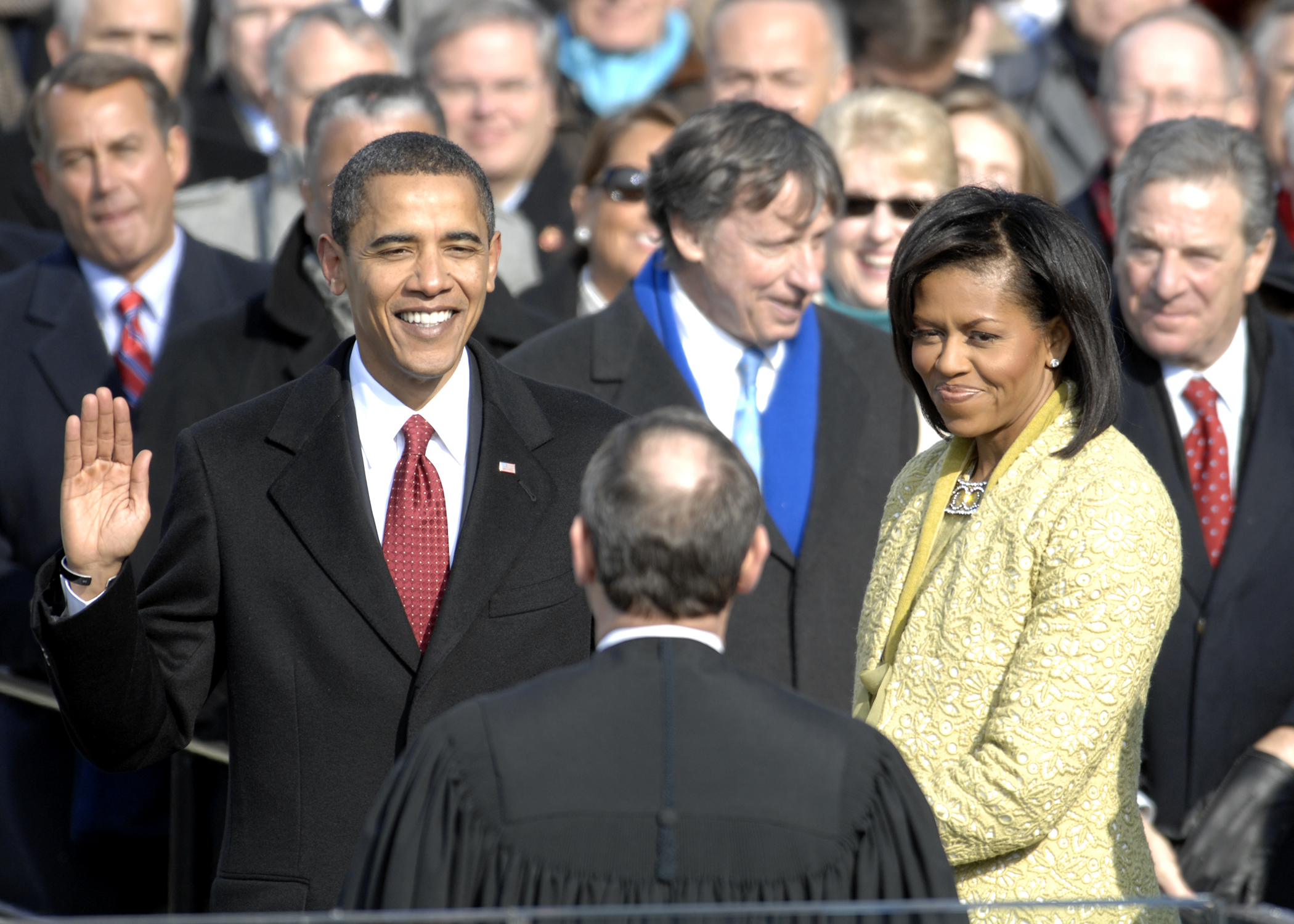 |
Barack Obama being sworn in as 44th President of the United States, January 20th, 2009.
By Master Sgt. Cecilio Ricardo, U.S. Air Force [Public domain], via Wikimedia Commons |
2013 The
Black Lives Matter organization was founded following the acquittal of
George Zimmerman for the murder of Trayvon Martin. The organization gained national attention in 2014 following protests over the killing of
Michael Brown by a police officer in Ferguson, Missouri.
Policing the Black Man: Arrest, Prosecution, and Imprisonment by Angela J. Davis
Policing the Planet: Why the Policing Crisis Led to Black Lives Matter by Jordan T. Camp
Books & eBooks
The Dick Smith Library has a large collection of books and other resources relevant to African American history.
Such as these titles:
African American History: An Introduction by Joanne Turner-Sadler
Anti-Black Violence in Twentieth-Century Texas by Bruce A. Glasrud
Black Wings: Courageous Stories of African Americans in Aviation and Space History by Von Hardesty
Children of Fire: A History of African Americans by Thomas C. Holt
Creating Black Americans: African-American History and its Meanings, 1619 to the Present by Nell Irvin Painter
Free Blacks in Antebellum Texas by Bruce A. Glasrud
In the Black: A History of African Americans on Wall Street by Gregory S. Bell
The Power to Die: Slavery and Suicide in British North America by Terri L. Snyder
Slavery, Civil War, and Salvation: African American Slaves and Christianity, 1830-1870 by Daniel L. Fountain
White over Black: American Attitudes Toward the Negro, 1550-1812 by Winthrop D. Jordan
Also, be sure to explore our
Black History subject guide to discover more library resources on this topic. If you have any questions about library resources please contact us at
reference@tarleton.edu or 254-968-9249.