Showing posts with label electronic resources. Show all posts

Monday, December 23, 2019

Wintertime e-gov docs

icy road in a winter landscape
Image by monicore from Pixabay

The library has thousands of electronic government documents in its catalog. They're 100% free, can be accessed from the comfort of your home, and cover a wider and more interesting variety of topics than you might think.

Below are a few e-gov docs that might help make your wintertime a little easier, whether you're staying at home or traveling elsewhere:
  • How to Prepare for a Winter Storm - Includes information about how to winterize your home and vehicle, avoid carbon monoxide poisoning, recognize signs of hypothermia and frostbite, and more. There's also a helpful checklist.
  • Winter Driving Tips - Learn how to prepare your vehicle for winter weather and stay safe on the road.
  • CDC Digital Media Toolkit: 2019-20 Flu Season - Lots of shareable resources related to the CDC's season flu vaccination campaign, including posters and flyers about the flu vaccine, the symptoms of the flu, what to do if you get the flu.
  • Holiday Food and Nutrition Resource List - A list of physical and electronic resources on holiday recipes, food safety, and healthy eating. Includes resources that may be useful for those with diabetes or food allergies.
  • SnowNews - If you just really miss snow, you can read about the Snow Survey Program and the science of snowpack here. Complete with snowy pictures!

Tuesday, September 19, 2017

Hispanic Heritage Month


September 15th through October 15th is National Hispanic Heritage month. This is the time to recognize the contributions and experiences of Americans of Hispanic heritage. According to the National Hispanic Heritage Month website, hosted by the Library of Congress, "September 15 is significant because it is the anniversary of the independence for Latin American countries Costa Rica, El Salvador, Guatemala, Honduras and Nicaragua. In addition, Mexico and Chile celebrate their Independence days on September 16th and 18th respectively."

2010 US Census Hispanic Population by County
Percentage of Hispanic or Latino population by county in 2010 census.
By United States Census Bureau [Public domain], via Wikimedia Commons.
Hispanic Americans are a large and quickly growing segment of the US population. In 2003, Hispanics became the largest minority group in the United States. The 2010 census counted 50,477,594 Americans of Hispanic or Latino origin. That's 16.3% of the total US population and a 43% increase from the 2000 census count.

Timeline of Hispanic-American History
Click on the links below to find relevant library resources on each topic.

1493: Christopher Columbus began Spanish colonization of Puerto Rico.
1513: Juan Ponce de León led first expedition to Florida.
1528 – 1536: Alvar Núñez Cabeza de Vaca survived an ill-fated expedition and explored portions of Texas. His book was the first written account of Texas Indians.
1539 – 1542: Hernando de Soto explored Southeast US including portions of Florida, Georgia, South Carolina, North Carolina, Tennessee, Alabama, and Mississippi. The Hernando de Soto Expedition by Jerald T. Milanich. Francisco Vásquez de Coronado explored Southwest US including portions of Arizona, New Mexico, Texas, Oklahoma, and Kansas. Documents of the Coronado Expedition, 1539 – 1542 by Richard and Shirley Cushing Flint.
1565: Pedro Menéndez de Avilés established a colony at Saint Augustine, Florida.
·         America’s Ancient City: Spanish St. Augustine, 1565 – 1763 by Kathleen A. Deagan
1598: Juan de Oñate led Spanish colonization of New Mexico.
1610: Santa Fe established as capital of New Mexico.
·         Santa Fe: History of an Ancient City by David Grant Noble
1718: Spanish colonists founded San Antonio, Texas.  
·         San Antonio de Béxar: a Community on New Spain’s Northern Frontier by Jesús F. de la Teja
·         Spanish Texas, 1519 – 1821 by Donald E. Chipman
      1748 - 1755: José de Escandón led the Spanish colonization of Nuevo Santander (which today includes the Mexican state of Tamaulipas and portions of southern Texas). He established several settlements in the region including Laredo, TX. 
·            De León: a Tejano Family History by A. Carolina Castillo Crimm
    Notable Men and Women of Spanish Texas by Donald E. Chipman and Harriet Denise Joseph 
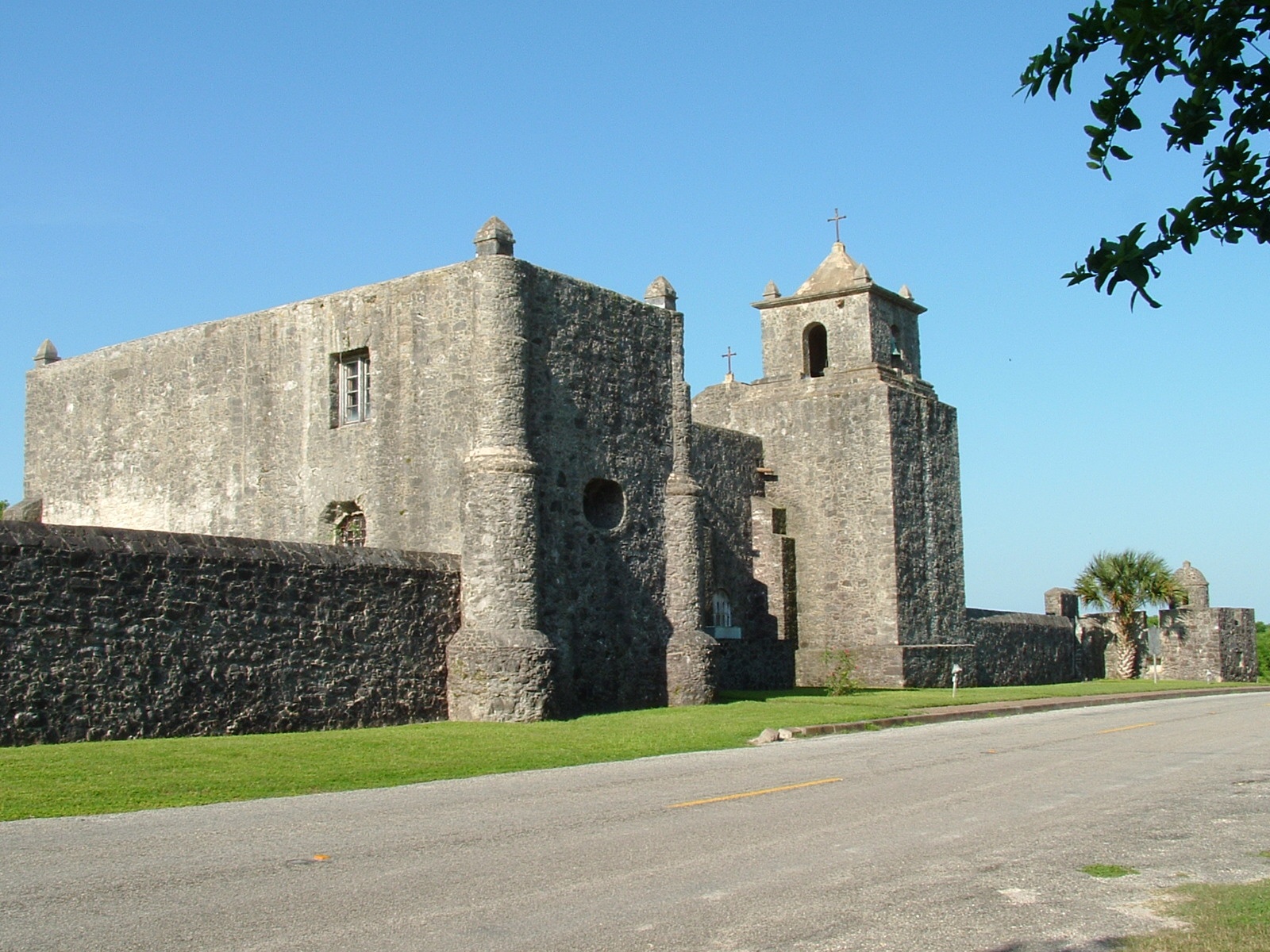
Presidio La Bahía near Goliad, TX. Originally built by the Spanish in 1721, and later rebuilt in 1771.
 Photo by Ernest Mettendorf - Public Domain, https://commons.wikimedia.org/w/index.php?curid=4208460
1769 – 1819: Spain established multiple settlements in California including San Diego (1769), San Francisco (1776), and Los Angeles (1781).
·         A History of California: the Spanish Period by Charles E. Chapman
1821: United States purchased Florida from Spain.
·         Diplomacy and the Borderlands: the Adams-Onís Treaty of 1819 by Philip Coolidge Brooks  
 Mexico won independence from Spain.
·         The Hidalgo Revolt: Prelude to Mexican Independence by Hugh M. Hamill
1822: Joseph Marion Hernández became first Hispanic to serve in the US Congress. He was a delegate from the Florida Territory.
1836: Texas declared independence from Mexico.
1845: United States annexed Texas.
·         The Annexation of Texas by Justin Harvey Smith
1848: Treaty of Guadalupe Hidalgo ended the Mexican-American War. Mexico ceded territory to US including: California, Arizona, New Mexico, Nevada, Utah, and portions of Colorado, Kansas, Oklahoma, and Wyoming. 
   The Border Crossed Us: Rhetorics of Borders, Citizenship, and Latino/a Identity by Josue David Cisneros. 
·         Border Visions: Mexican Cultures of the Southwest United States by Carlos G. Vélez-Ibañez
·         The Treaty of Guadalupe Hidalgo: a Legacy of Conflict by Richard Griswold del Castillo
1859: Juan Cortina seized control of Brownsville, TX in retaliation for town marshal’s assault on one of his employees.
·         Cortina: Defending the Mexican Name in Texas by Jerry D. Thompson
·         Juan N. Cortina: Two Interpretations by Charles William Goldfinch
1875: Romualdo Pacheco became the first Hispanic governor of a US state (California). 
1877: A white mob killed approximately 40 Mexican-Americans in Nueces County, Texas.
          Forgotten Dead: Mob Violence against Mexicans in the United States, 1848-1928 by William D. Carrigan and Clive Webb.   
1889: The Herrera brothers (Pablo, Nicanor, and Juan Jose) formed a resistance movement known as Las Gorras Blancas to protect Hispanic land from Anglo squatters in New Mexico.
1898: Spain ceded control of Puerto Rico to the United States at the conclusion of Spanish-American War.
·         Spanish-American War by Michael Golay
1910 – 1920: Revolution in Mexico resulted in increased Mexican immigration to US.
·         Pancho Villa at Columbus by Haldeen Braddy
1917: Puerto Ricans granted US citizenship.
1928: Octaviano Larrazolo, from New Mexico, became first Hispanic to serve in the US Senate.
1929: League of United Latin American Citizens (LULAC), which advocates for Latino civil rights, founded in Corpus Christi, TX.
·         LULAC, Mexican Americans, and National Policy by Craig Allen Kaplowitz
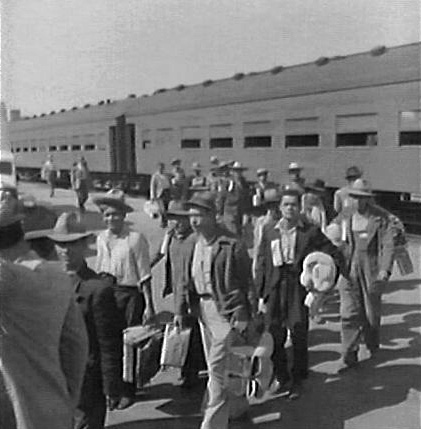
1942:  Due to labor shortage caused by World War II, US entered into an agreement with Mexico (known as the Bracero Program) to import Mexican laborers into the US.
   Harvest of Loneliness: The Bracero Program – documentary film.

The first Braceros arriving by train in Los Angeles, CA in 1942.
By Dorothea Lange, working for the US Government. [Public domain], via Wikimedia Commons. 
1943: Zoot Suit Riots in Los Angeles, CA.
·         Murder at the Sleepy Lagoon: Zoot Suits, Race, and Riot in Wartime L.A. by Eduardo Obregón Pagán
1945: Marcario García became first Mexican immigrant to be awarded the US Congressional Medal of Honor.
1948: Dr. Hector P. García founded the American G.I. Forum in Corpus Christi, TX to advocate for the civil rights of Hispanic veterans. The group gained national attention advocating on behalf of the family of Felix Longoria after a funeral home in Three Rivers, TX refused to bury him. 
1954 – 1958: US government implemented “Operation Wetback” and deported millions of people of Mexican descent.
1959: Fidel Castro’s successful revolution in Cuba resulted in increased Cuban immigration to US.
·         The Cuban Revolution: Origins, Course, and Legacy by Marifeli Pérez-Stable
1962: César Chávez and Dolores Huerta founded the United Farm Workers to advocate for the rights of migrant farm workers.
·         The Moral Vision of César Chávez by Fredrick John Dalton
·         Dolores Huerta: A Hero to Migrant Workers by Sarah E. Warren and Robert Casilla
1964: Bracero Program ended.
1965 – 1970: United Farm Workers conducted a successful strike on behalf of grape pickers in California.
·         Delano, the Story of the California Grape Strike by John Gregory Dunne
1968: Thousands of Hispanic students walkout of schools in Los Angeles, CA to protest unequal educational opportunities. Walkouts spread to hundreds of schools in multiple states.
1988: Lauro Cavazos became the first Hispanic to serve in the United States Cabinet. He served as Secretary of Education.
2003: Hispanics became largest minority group in the United States.
2009: Sonia Sotomayor became the first Hispanic to serve on the Supreme Court of the United States. 
President Obama and Sonia Sotomayor meeting in the Oval Office in 2009.
By Official White House photo by Pete Souza from Washington, DC (Flickr) [Public domain], via Wikimedia Commons

The Dick Smith Library has a large collection of books and other resources on topics relevant to the Hispanic American experience. Such as these titles: 
The Mexican Americans by Alma M. García
The Spanish Americans of New Mexico: a Heritage of Pride by Nancie L. Solien Gonzalez. 

Let us know if you need assistance finding additional information by calling 254-968-9249 or emailing at reference@tarleton.edu. 

Monday, June 19, 2017

Erath County Sheriff Murdered 140 Years Ago to be Honored

This coming Sunday, June 25, a ceremony will be held to dedicate a monument on the east side of the county courthouse to the first known peace officer in Erath County killed in the line of duty, James Mastin.  Free electronic resources at the Portal to Texas History and the Library of Congress website were used to find out more information about his murder and the aftermath.


Two references to his murder were on the same page (two)1  of the July 5, 1877, issue of the Weekly Democratic Statesman, published in Austin, Texas, found via the Portal to Texas History.  The search was for "mastin erath" (without the quotes) with results limited to the year 1877.  The first reference started at the bottom of column six and continued at the top of column 7.  Sheriff Maston [sic] was killed by a cattle thief he intended to arrest:


Further on in column seven was a little more detail.  This time Mastin's name was spelled correctly, and it gave the date of the murder, June 25.  The name and a detailed description of the murderer, Bone Wilson, was also given, as well as the fact that a reward was being offered for his capture.  This story also noted Mastin was going to arrest Wilson for stealing a horse (not cattle theft):


A follow-up story2 was in the Galveston Daily News of September 27, 1877, on page 4.  In a section with news from Erath County, the Stephenville Empire newspaper was quoted. (In the image below, a number of lines of news not relevant to this case have been blanked out.)  Bone Wilson, alias Napoleon B. Wilson, was killed by Texas Rangers under the command of T. M. Sparks about 20 miles from Fort Chadbourne on September 15, 1877:


A little more detail3 about the murderer’s death comes from the Lampasas Dispatch of September 27, 1877, via the Brownwood Banner.  This one was found by searching the Portal to Texas History for “sheriff erath” (no quotes in the search), as Mastin was sometimes spelled incorrectly.  This article does not even refer to the sheriff by name, and some of the details of Wilson's killing are different.  Both articles note that Wilson's body was taken to Coleman City (just established in 1876). which is about 60 miles east of the fort.


There’s more about Mastin on pages 15-16 of James Pylant’s 2009 book, Sins of the Pioneers4.  He was elected sheriff on February 15, 1876, and had survived an earlier attempt on his life in November of that year "when Rufus C. Howie fired a six-shooter at him."

One of Pylant’s sources5 is an account of the killing of Mastin’s murderer, Bone Wilson, by one of the Texas Rangers participating, Noah Armstrong.  Armstrong was interviewed sometime between 1936 and 1939, as part of the Folklore Project of the Federal Writers’ Project, a New Deal jobs program that was part of the U.S. Works Progress (later Work Projects) Administration (WPA).  His account of the killing of Bone Wilson starts on the fourth page.


Sources:

1Weekly Democratic Statesman. (Austin, Tex.), Vol. 6, No. 39, Ed. 1 Thursday, July 5, 1877, newspaper, July 5, 1877; Austin, Texas. (texashistory.unt.edu/ark:/67531/metapth277635/m1/2/?q=mastin+erath: accessed January 21, 2017), University of North Texas Libraries, The Portal to Texas History, texashistory.unt.edu; .                                                          

2The Galveston Daily News. (Galveston, Tex.), Vol. 36, No. 161, Ed. 1 Thursday, September 27, 1877, newspaper, September 27, 1877; (texashistory.unt.edu/ark:/67531/metapth464966/m1/4/?q=mastin%20erath: accessed January 21, 2017), University of North Texas Libraries, The Portal to Texas History, texashistory.unt.edu; crediting Abilene Library Consortium.

3Beall, W. P. The Lampasas Dispatch (Lampasas, Tex.), Vol. 7, No. 18, Ed. 1 Thursday, September 27, 1877, newspaper, September 27, 1877; (texashistory.unt.edu/ark:/67531/metapth179077/m1/3/?q=sheriff%20erath: accessed January 21, 2017), University of North Texas Libraries, The Portal to Texas History, texashistory.unt.edu; crediting The Dolph Briscoe Center for American History.

4Pylant, James. Sins of the pioneers: crimes & scandals in a small Texas town. Stephenville, TX: Jacobus Books, 2009.

5Doyle, Elizabeth, and Noah Armstrong. [Noah Armstrong]. Texas. Manuscript/Mixed Material. Retrieved from the Library of Congress, https://www.loc.gov/item/wpalh002308/. (Accessed January 21, 2017.)

Tuesday, May 30, 2017

Travel through Time and Place with Overdrive Audiobooks

Planning any travel this summer?  Going somewhere that involves a long drive or ride?  Try an e-audiobook!  Even if you're planning a stay-cation, you can travel to other times and places through historical fiction e-audiobooks.  Here are just some of the titles available as e-audiobooks in our Overdrive collection:


Curses and Smoke by Vicky Alvear Shecter, read by Marisol Ramirez and Zach Villa - Subtitled "A Novel of Pompeii," this novel is set in A.D. 79, the year the eruption of Mount Vesuvius destroyed the city.

All the Light We Cannot See by Anthony Doerr, read by Zach Appelman - This book won the 2015 Pulitzer Prize for Fiction and the 2015 Andrew Carnegie Medal for Excellence in Fiction.  The lives of a 12-year-old blind French girl living in Paris when the German occupation of World War II begins in 1940, and a 14-year-old German boy living in an orphanage in the coal-mining town of Zollverein, intersect in four years later, in August 1944, during the Allied bombing of the walled city of Saint-Malo on the Brittany coast.

The Marriage of Opposites by Alice Hoffman; read by Gloria Reuben, Tina Benko, and Santino Fontana - This is a fictionalized account of the life of the mother of the Impressionist painter Camille Pissarro, set on the Caribbean island of St. Thomas and in Paris in the early and mid-1800s.  It's a little bit of a fictionalized biography of the early life of the artist as well.

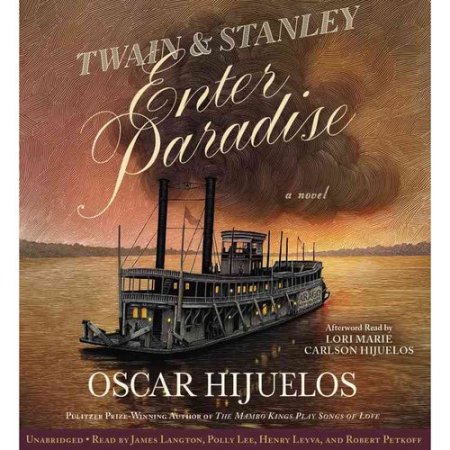
Twain & Stanley Enter Paradise by Oscar Hijuelos, read by James Langton, Polly Lee, Henry Leyva, and Robert Petkoff - The real, nearly-lifelong friendship between American author Samuel Clemens (aka Mark Twain) and British explorer Henry Morton Stanley is the basis for this historical fiction novel, set in the period between 1860 and 1910 along the Mississippi River, in Cuba, and in England.
The Gilded Hour by Sara Donati, read by Cassandra Campbell - Set in 1883 in New York City, this book focuses on two female doctors, cousins Anna and Sophie Savard, and the challenges they face practicing medicine in that place and time.  A murder and a police investigation also play into the story.


The Japanese Lover by Isabel Allende, read by Joanna Gleason - Jewish refugee Alma Mendel Belasco and Japanese gardener's son Ichimei "Ichi" Fukuda are the main characters in this story set in San Francisco covering the years 1939 to 2013, which touches on topics like racial prejudice, aging issues, and death with dignity.

The Boston Girl by Anita Diamant, read by Linda Lavin -  Born in 1900 in the United States to Jewish immigrant parents, Addie Baum tells her life story to her granddaughter in 1985, concentrating on the years 1915 to 1931 in and around Boston.  Life in the immigrant tenements, the effects of World War I, and the changes it brought about in the 1920s, especially for women, are all part of the tale.

Sashenka by Simon Montefiore, read by Anne Flosnik - Set in three time periods in twentieth century Russia - 1916, 1939, and 1994 - the title character becomes a Bolshevik and later part of the Communist elite.

The Goldfinch by Donna Tartt, read by David Pittu - Winner of the Pulitzer Prize for Fiction in 2014 and two 2014 Audie Awards, this book is actually set in more modern times, but moves between Amsterdam, New York City, and Las Vegas, and involves the fictional theft of a real painting called "The Goldfinch" from 1654 by Carel Fabritius (1622–1654), a Dutch artist.

*****

Listening to e-audiobooks is easy!  The OverDrive app lets you download and listen to the MP3 format of the audiobook.  It is available for iOS, Android, Chromebook, Windows 8 & 10, and Kindle Fire HD.  I have one of the latter, and I download the books, hook up an aux cable from the Kindle to my car, and listen to audiobooks on my car's speakers while I commute.  OverDrive Listen is a streaming audiobook player that works on computers, tablets, and mobile devices with compatible web browsers.  You'll need an active Internet connection to use it.

Tuesday, May 9, 2017

Asian/Pacific American Heritage Month

May is the month to recognize the experiences and contributions of Americans of Asian or Pacific Islander heritage. Originally established as a heritage week in 1978, it was upgraded to a month in 1990. According to the Library of Congress' Asia Pacific Heritage Month website, "May was chosen to commemorate the immigration of the first Japanese to the United States on May 7, 1843, and to mark the anniversary of the completion of the transcontinental railroad on May 10, 1869. The majority of the workers who laid the tracks were Chinese immigrants."


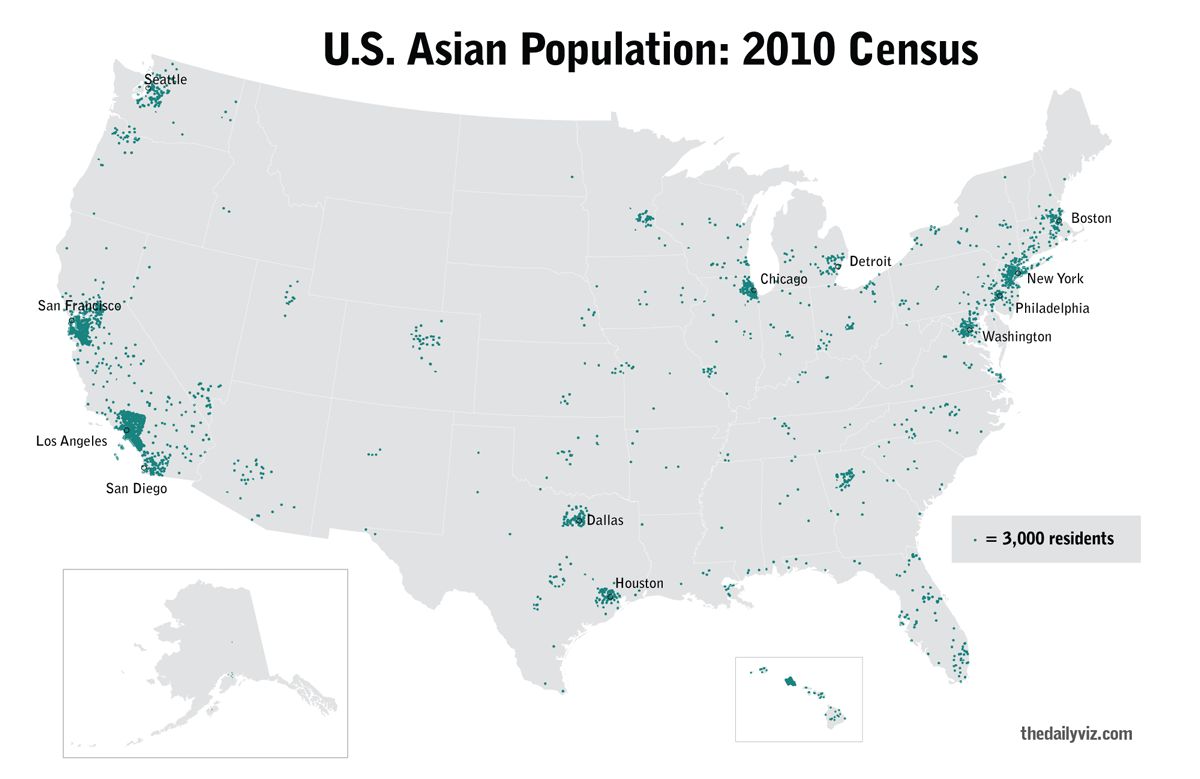
 Each green dot on the map above represents 3000 Asian Americans. By United States Census [CC BY-SA 1.0 (http://creativecommons.org/licenses/by-sa/1.0)], via Wikimedia Commons.
Asian and Pacific Islander Americans are a quickly growing segment of the population. According to the 2010 Census, there are 17,320,856 Asian Americans in the US. That is 5.6% of the total population, and is a 45.6% increase from the 2000 Census. In 2010, the Census counted 1,225,195 Americans of Hawaiian or other Pacific Islander heritage. That represents only 0.4% of the total population, however, it is a 40.1% increase from 2000.


Chronology of Asian/Pacific American History with Relevant Library Resources


1849 - California Gold Rush encouraged large numbers of Chinese to immigrate to US. 

Riches for all: the California Gold Rush and the World ed. by Kenneth N. Owens.
Gold Mountain Dreams (video available through Films on Demand database). 

1869 - Transcontinental Railroad completed, many of the workers were Chinese immigrants. 

A Great & Shining Road: the Epic Story of the Transcontinental Railroad by John Hoyt Williams

1882 - Chinese Exclusion Act severely limited Chinese immigration to the US. 

At America's Gates: Chinese Immigration During the Exclusion Era, 1882-1943 by Erica Lee

1885 - A mob of white miners massacred approximately 28 Chinese people in Rock Springs, Wyoming. 

"When Coal Miners Burned: The Rock Springs Massacre" in Wild West by Eric Niderost and Luc Nettleton. 

1887 - A white gang massacred over thirty Chinese gold miners along the Snake River Canyon in Oregon. 

1898 - Spain ceded control of Guam and the Philippines to the US. 

Guam and its People: a Study of Culture Change and Colonial Education by Laura Thompson.
A War of Frontier and Empire: the Philippine-American War, 1899-1902 by David J. Silbey           

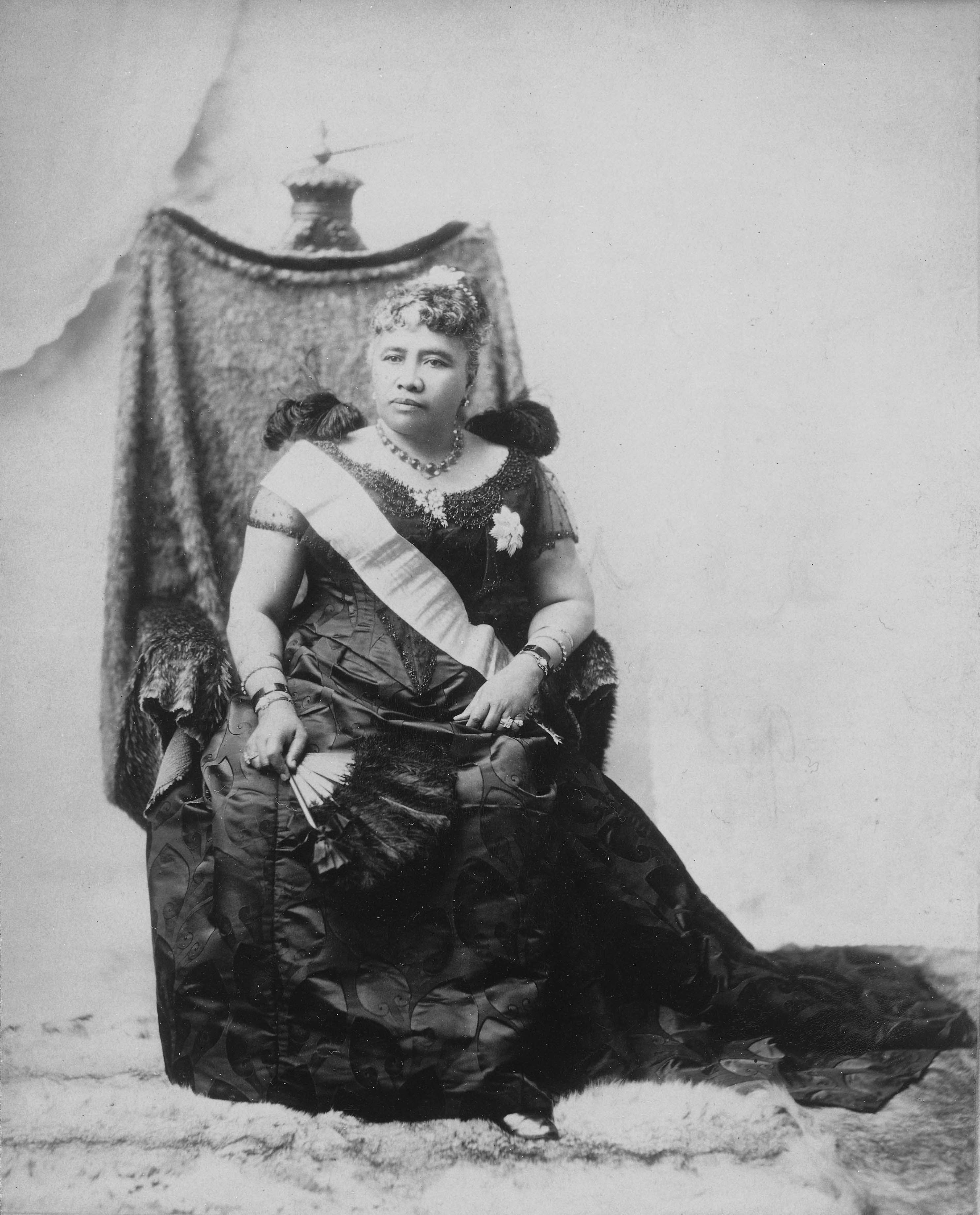
1898 - US annexed Hawaii. 

The Betrayal of Liliuokalani, last Queen of Hawaii, 1838-1917 by Helena G. Allen.

Queen Liliuokalani in 1891. James J. Williams [Public domain], via Wikimedia Commons.

1899 - US gained control of American Samoa (eastern half of the Samoan archipelago). Learn more about American Samoa here. 

1910 - Angel Island Immigration Station created in San Francisco Bay.  

Angel Island: gateway to Gold Mountain by Russell Freedman.
Angel Island: A Story of Chinese Immigration (video available through Films on Demand database). 

1924 - Immigration Act severely limited immigrants from most Asian countries. Read more about the Act here. 

1940 - Angel Island Immigration Station closed.  

1942 - President Roosevelt issued Executive Order 9066, which authorized the confinement of Japanese-Americans into internment camps. 

Looking like the enemy: My Story of Imprisonment in Japanese American Internment Camps by Mary Matsuda Gruenewald.

Arcadia, CA April, 1942. Japanese-Americans registering before being transferred to War Relocation Authority centers. By Clem Albers, Photographer (NARA record: 8452194) (U.S. National Archives and Records Administration) [Public domain], via Wikimedia Commons.

1943 - Chinese Exclusion Act was repealed. 

1944 - US gained control of Northern Mariana Islands. Learn more about the Northern Mariana Islands here. 

1946 - The Philippines gained independence from the US. 


1957 - Dalip Singh Saund, of California, became the first Asian American to serve in the US Congress. 

1959 - Hiram Fong, of Hawaii, became the first Asian American to serve in the US Senate. 

1965 - Immigration Act ended racial quotas, which increased immigration from Asian countries. Read more about the Act here. 

Korean Americans (video available through Films on Demand database).
Suburban Sahibs: Three Immigrant Families and Their Passage From India to America by Mitra S. Kalita. 

1973 - George Ariyoshi, of Hawaii, became the first Asian American governor of a US state.

1988 - Civil Liberties Act granted reparations to Japanese-Americans who had been interned during World War II. Read full text of the act here. 

2000 - Norman Mineta became the first Asian American to serve on the US Cabinet.

The Dick Smith Library has a large collection of resources relevant to the Asian-American and Pacific Islander-American experience. Let us know if we can help you find some information on the topic via email at reference@tarleton.edu or phone at 254-968-9249.