Showing posts with label constitution. Show all posts

Thursday, September 20, 2018

Constitution Day

Monday September 17th was Constitution Day. On that day in 1787, the delegates to the Constitutional Convention in Philadelphia signed the proposed Constitution and submitted it to the Congress for consideration.
Signatures on the US Constitution, 1787.
By Constitutional Convention of 1787 [Public domain], via Wikimedia Commons
The library has a large collection of items for learning more about the Constitution. Such as these titles:  

Let us know if we can help you find information on the Constitution or any other topic at 254-968-9249 or reference@tarleton.edu. 

Tuesday, December 5, 2017

Bill of Rights Day

December is the month we celebrate a very important holiday. You guessed it, Bill of Rights Day is on December 15th! The Bill of Rights are the first 10 amendments to the US Constitution. They were ratified on December 15th, 1791. President Franklin D. Roosevelt proclaimed the first Bill of Rights day in 1941. These amendments guarantee our rights to speech, religion, bear arms, trial by jury, protection from unreasonable search and seizure, and more. 
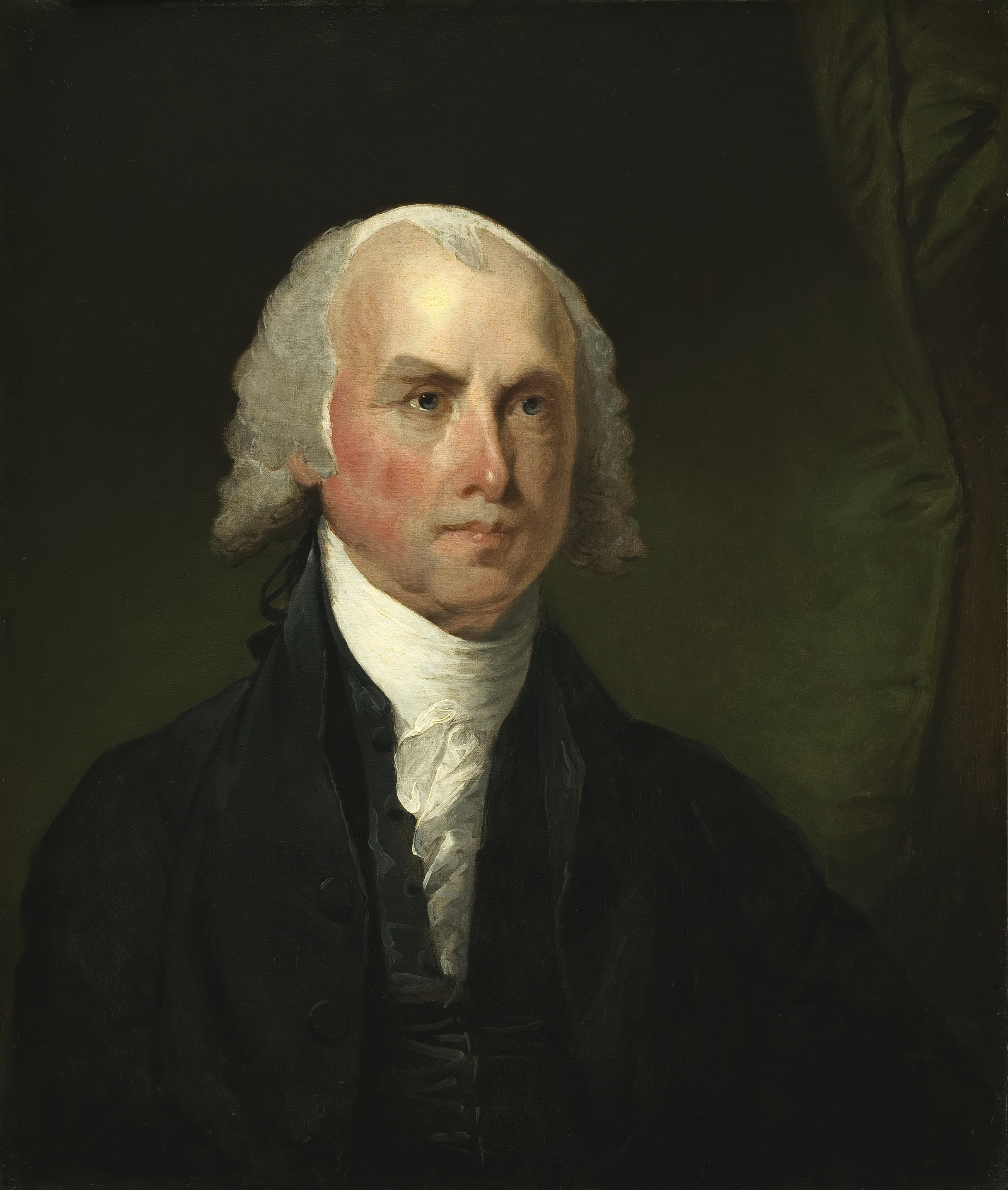
James Madison (who would later become the 4th President of the United States)
was the primary author of the Bill of Rights in the House of Representatives in 1789.
Gilbert Stuart [Public domain], via Wikimedia Commons.
Tarleton's Library has a wealth of resources about the Bill of Rights. Such as these titles: 

Digital films by Cambridge Educational available through the Films on Demand database: 
The Bill of Rights Primer: A Citizen's Guidebook to the American Bill of Rights by Akhil Reed Amar
The Birth of the Bill of Rights, 1776-1791 by Robert Allen Rutland 
Founding Rivals: Madison vs. Monroe, the Bill of Rights, and the Election that Saved a Nation by Chris DeRose 
The Future of the First Amendment by Kenneth Dautrich 
In Defense of Liberty: The Story of America's Bill of Rights by Russell Freedman
James Madison and the Struggle for the Bill of Rights by Richard E. Labunski 
Misreading the Bill of Rights: Top Ten Myths Concerning Your Rights and Liberties by Robert K. Goidel
Mobilizing the Press: Defending the First Amendment in the Supreme Court by Eric B. Easton
Origins of the Bill of Rights by Leonard W. Levy
Religious Freedom and the Constitution by Christopher L. Eisgruber
Sexual Rights in America: The Ninth Amendment and the Pursuit of Happiness by Paul R. Abramson
Unreasonable Searches and Seizures: Rights and Liberties under the Law by Otis H. Stephens, Jr. 
Whose Right to Bear Arms did the Second Amendment Protect? by Saul Cornell 

If you need assistance finding information about the Bill of Rights, or any other topic, then contact us at reference@tarleton.edu or 254-968-9249. 

Friday, December 9, 2016

What is the Electoral College?

For only the fifth time in US history (1824, 1876, 1888, 2000, 2016) the candidate who received the most popular votes will not be elected President of the United States. Why is this? Because the US doesn’t elect Presidents by popular vote, but by a process known as the Electoral College. Whichever candidate wins a majority in the Electoral College becomes President regardless of the popular vote. Although Clinton is ahead in the national popular vote, Trump has won the  popular vote in enough states to win 306 electoral votes. Which is much more than the 270 needed to win. 

[Here you can see the popular vote totals nationwide and broken down by state. These numbers are compiled by David Wasserman an editor with The Cook Political Report.]
Meeting of the Ohio Electoral College in 2012. This photo is in the public domain.

Article II Section 1 of the US Constitution says: “Each State shall appoint, in such Manner as the Legislature thereof may direct, a Number of Electors, equal to the whole Number of Senators and Representatives to which the State may be entitled in the Congress...”  

Since 1832, all states except one began allowing their electors to be chosen by popular vote (South Carolina began in 1868).If you voted on November 8th you weren’t actually voting for a Presidential candidate, instead you were voting on which electors will vote for President on behalf of the state. 

Donald Trump won the popular vote in Texas, therefore electors chosen by the Texas Republican Party will be voting in the Electoral College. If Hillary Clinton had won Texas, then electors chosen by the Texas Democratic Party would have been attending the Electoral College.  

Each state is guaranteed a minimum of three votes in the Electoral College, because each state has two Senators and at least one Representative. States with larger populations get more votes because they have a greater number of Representatives. Texas has 38 votes.

The Presidential election of 2016 hasn’t actually happened yet. The members of the Electoral College will vote on December 19th. On that day the electors will gather in their state capitals and write down their choice for President and Vice President. They are supposed to vote for whoever won the popular vote in their state. However, they don’t have to. Some (but not all) states have penalties for electors who don’t follow the popular vote of their state. Occasionally, there are faithless electors who don’t vote the way they are supposed to. However, there have never been enough faithless electors to change the outcome of an election. A Texas Elector has made news recently saying that he will not vote for Donald Trump. 

On January 6th, 2017 the ballots from the Electors will be sent to the President of the Senate (who is also the current Vice President of the US Joe Biden) and they will be counted before a joint session of Congress. 

The library has several books about the Electoral College if you want to learn more:

After the People Vote: A Guide to the Electoral College edited by John C. Fortier
Proposals for Presidential Election Reform: National Popular Vote and Electoral College Options by Maureen Stone
Taming the Electoral College by Robert W. Bennett
Who Will Be the Next President: A Guide to U.S. Presidential Election System by Alexander S. Belenky
Wrong Winner: The Coming Debacle in the Electoral College by David W. Abbott and James P. Levine