Showing posts with label civil rights. Show all posts

Tuesday, June 16, 2020

How to Write a Letter to a Representative or Government Official

building during day
Photo by Joshua Sukoff on Unsplash
Now more than ever it is important that you make your voice heard.


1.       Find your representative.
a.       If you are focusing on a local issue, contact your city council.
b.       For issues effecting the state, contact you may want to contact your state representative. Texas allows you to search for your specific representative, but there are also house committees that focus on specific issues.
c.    You can also look up your congress representative through the U.S. House of Representatives. 

2.       Make sure you format your letter correctly. Some representatives accept emails, but it is important to keep the same information.
a.       American Library Association offers this example:

Date

Your Name
Your Address
Your City, State, Zip code
Your E-mail
Your Phone Number

The Honorable_________________________
House of Representatives or United States Senate Office Address of Representative or Senator

Dear Representative/Senator ____________________,

3.       Keep the letter brief and to the point. Ideally, your letter should be no longer than one page.

4.       Introduce yourself first and the key reason about why you are contacting them. Try to focus on a single issue per letter.

5.       Do your research. You can reference resources to add credibility to your letter and offer evidence for your cause.  Depending on the topic you are addressing the subject guide for Criminal Justice, Sociology, Political Science or Legal Resources may have suggestions of where to start. Or, explore a detailed list of databases, all accessible on or off campus. 

6.       Narrow your letter down to three main points and argue for them.

7.       Personalize your stance. Offer an anecdote from your life or loved one that relates to the issue and supports your stance.

8.       State your desired outcome. What would you like to see this representative do to better represent you and your community?


These tips are based on sample letters and writing tips from the American Library Association and the American Civil Liberties Union.

Friday, January 17, 2020

Martin Luther King Jr. Day

Photo by Brian Kraus on Unsplash

Martin Luther King Jr. Day. 

Martin Luther King Jr. Day is Monday January 20, 2020 and the library will be closed. King delivered his iconic “I Have a Dream Speech” on the steps of the Lincoln Memorial August 28, 1963. You can listen to the speech in its entirety here through NPR

King created a legacy of empowerment, hope and passion. He was a renowned public speaker which helped him inspire millions and continues to encourage people to fervently pursue equality and justice. Tarleton Libraries has the resources to help you hone your public speaking skills. Find available resources here 

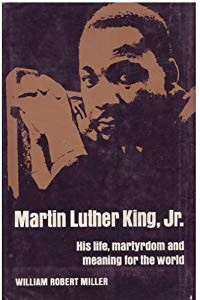
King was born in Atlanta, GA in 1929. He was a Christian minister, activist, and a charismatic speaker. To learn more about his life and leading role in the Civil Rights Movement check out some of the biographies listed below 

The library also has a subject guide dedicated to African American culture, history and resources


Martin Luther King Jr., By Marshall Frady

E185.97 .K5 F695 2002B c.1 


 Martin Luther King Jr., by Peter J. Ling

 E185.97 .K5 L55 2002 c.1

Thursday, January 18, 2018

New History Databases

Do you have a history research assignment this semester? If so, then the library is the place for you. We have a wealth of reliable sources that will make your professor very happy when you use them to support your research papers and projects. Over the past few months, the Dick Smith Library has added a large number of new databases to its collection. Including several that provide historical information.

  • Do you need to find information about a notable person from the past? Then check out the Biography in Context database. It provides articles from scholarly journals, magazines, and newspapers, in addition to videos, audio recordings, images, and more.

Screenshot from the Biography in Context database. The top portion of the entry for Rosa Parks.

  • Do you need to find primary documents about the Civil Right Movement? Then you must spend some time searching through the information available in the Race Relations in America database. 
Screenshot from the Race Relations in America database showing just 8 of the 26 types of documents it has available.
  • Are you researching the history of slavery? Slavery in America and the World contains a wealth of both legal information and primary source documents relevant to the history of slavery in the United States and other English-speaking countries. 
Screenshot from the Slavery in America and the World database showing some of the periodicals it contains. 
Screenshot of the homepage of the US.History in Context database. 
If you want to see a complete list of our history-related databases, along with other library resources for history, then check out our History subject guide page: https://www.tarleton.edu/library/research/subject-guides/history.html

Contact us at 254-968-9249 or reference@tarleton.edu if you need assistance with these or any other library resource.