Tuesday, May 30, 2017

Travel through Time and Place with Overdrive Audiobooks

Planning any travel this summer?  Going somewhere that involves a long drive or ride?  Try an e-audiobook!  Even if you're planning a stay-cation, you can travel to other times and places through historical fiction e-audiobooks.  Here are just some of the titles available as e-audiobooks in our Overdrive collection:


Curses and Smoke by Vicky Alvear Shecter, read by Marisol Ramirez and Zach Villa - Subtitled "A Novel of Pompeii," this novel is set in A.D. 79, the year the eruption of Mount Vesuvius destroyed the city.

All the Light We Cannot See by Anthony Doerr, read by Zach Appelman - This book won the 2015 Pulitzer Prize for Fiction and the 2015 Andrew Carnegie Medal for Excellence in Fiction.  The lives of a 12-year-old blind French girl living in Paris when the German occupation of World War II begins in 1940, and a 14-year-old German boy living in an orphanage in the coal-mining town of Zollverein, intersect in four years later, in August 1944, during the Allied bombing of the walled city of Saint-Malo on the Brittany coast.

The Marriage of Opposites by Alice Hoffman; read by Gloria Reuben, Tina Benko, and Santino Fontana - This is a fictionalized account of the life of the mother of the Impressionist painter Camille Pissarro, set on the Caribbean island of St. Thomas and in Paris in the early and mid-1800s.  It's a little bit of a fictionalized biography of the early life of the artist as well.

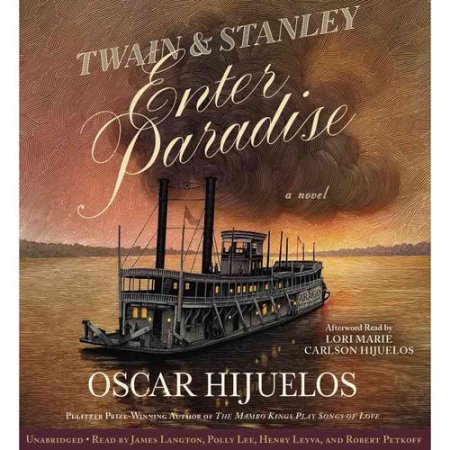
Twain & Stanley Enter Paradise by Oscar Hijuelos, read by James Langton, Polly Lee, Henry Leyva, and Robert Petkoff - The real, nearly-lifelong friendship between American author Samuel Clemens (aka Mark Twain) and British explorer Henry Morton Stanley is the basis for this historical fiction novel, set in the period between 1860 and 1910 along the Mississippi River, in Cuba, and in England.
The Gilded Hour by Sara Donati, read by Cassandra Campbell - Set in 1883 in New York City, this book focuses on two female doctors, cousins Anna and Sophie Savard, and the challenges they face practicing medicine in that place and time.  A murder and a police investigation also play into the story.


The Japanese Lover by Isabel Allende, read by Joanna Gleason - Jewish refugee Alma Mendel Belasco and Japanese gardener's son Ichimei "Ichi" Fukuda are the main characters in this story set in San Francisco covering the years 1939 to 2013, which touches on topics like racial prejudice, aging issues, and death with dignity.

The Boston Girl by Anita Diamant, read by Linda Lavin -  Born in 1900 in the United States to Jewish immigrant parents, Addie Baum tells her life story to her granddaughter in 1985, concentrating on the years 1915 to 1931 in and around Boston.  Life in the immigrant tenements, the effects of World War I, and the changes it brought about in the 1920s, especially for women, are all part of the tale.

Sashenka by Simon Montefiore, read by Anne Flosnik - Set in three time periods in twentieth century Russia - 1916, 1939, and 1994 - the title character becomes a Bolshevik and later part of the Communist elite.

The Goldfinch by Donna Tartt, read by David Pittu - Winner of the Pulitzer Prize for Fiction in 2014 and two 2014 Audie Awards, this book is actually set in more modern times, but moves between Amsterdam, New York City, and Las Vegas, and involves the fictional theft of a real painting called "The Goldfinch" from 1654 by Carel Fabritius (1622–1654), a Dutch artist.

*****

Listening to e-audiobooks is easy!  The OverDrive app lets you download and listen to the MP3 format of the audiobook.  It is available for iOS, Android, Chromebook, Windows 8 & 10, and Kindle Fire HD.  I have one of the latter, and I download the books, hook up an aux cable from the Kindle to my car, and listen to audiobooks on my car's speakers while I commute.  OverDrive Listen is a streaming audiobook player that works on computers, tablets, and mobile devices with compatible web browsers.  You'll need an active Internet connection to use it.

Tuesday, May 23, 2017

Get ready for Summer travel!


Summer is here, and for many of us that means it's time to travel! Whether you are going on one of the many Study Abroad trips this summer, volunteering overseas, or just traveling for fun. The library has good information sources to help you prepare for your trip, and have fun while you are there!

Global Road Warrior

Global Road Warrior contains information about virtually every country in the world. It includes everything you would need to know to travel to a country from what type of electrical adapter to bring, how to find a doctor if you get sick, and emergency numbers, to information on food, music and history. I found this one really useful when I was preparing to go to Ireland on a COBA Study Abroad trip over Spring Break because it had really good information on how to act and dress for business meetings, which we did several of. 

Mango Languages

Mango has fun, interactive language learning courses for 72 languages. They have courses for all levels and interests, so if you want to just brush up on your high-school Spanish, or take a quick class in conversational Korean, they have a class for you!


Tuesday, May 16, 2017

New Library Catalog Interface!

Yesterday, the University Libraries went live with a new library catalog interface!  When you click on the link to the Library Catalog from the library's home page, you'll see a screen similar to this:


Check back for future posts on using the new catalog screen more effectively in your searches!

Thursday, May 11, 2017

Graduation Traditions


Graduation ceremonies are tomorrow and Saturday. Congratulations to all the graduates!


During the ceremony you may end up looking around at and wonder at the significance of some of the items around you...


University Mace


The University Mace is a ceremonial staff that was created for the inauguration of Dr. Dottavio. It will be carried in the procession by the president of Faculty Senate. You may notice that it has Tarleton seals attached to each of the four sides. A bronze plated flame of knowledge is mounted to the top, which sits above three bronze bands that symbolize Tarleton's past, present and future.


International Flags


Tarleton's students come from all corners of the world with a wide range of cultures and experiences. International flags are carried at the start of the procession to honor the students' home countries. Currently we have students from 27 countries around the world.


Click here to view more Tarleton graduation traditions

Tuesday, May 9, 2017

Asian/Pacific American Heritage Month

May is the month to recognize the experiences and contributions of Americans of Asian or Pacific Islander heritage. Originally established as a heritage week in 1978, it was upgraded to a month in 1990. According to the Library of Congress' Asia Pacific Heritage Month website, "May was chosen to commemorate the immigration of the first Japanese to the United States on May 7, 1843, and to mark the anniversary of the completion of the transcontinental railroad on May 10, 1869. The majority of the workers who laid the tracks were Chinese immigrants."


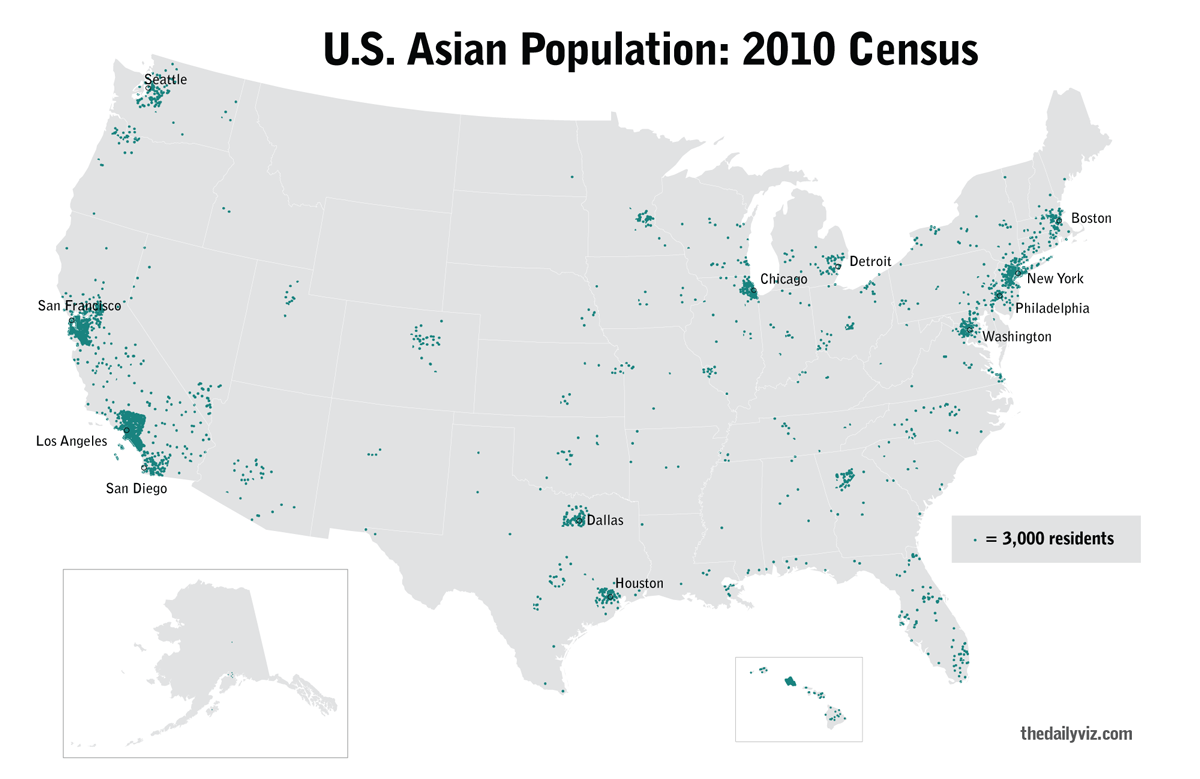
 Each green dot on the map above represents 3000 Asian Americans. By United States Census [CC BY-SA 1.0 (http://creativecommons.org/licenses/by-sa/1.0)], via Wikimedia Commons.
Asian and Pacific Islander Americans are a quickly growing segment of the population. According to the 2010 Census, there are 17,320,856 Asian Americans in the US. That is 5.6% of the total population, and is a 45.6% increase from the 2000 Census. In 2010, the Census counted 1,225,195 Americans of Hawaiian or other Pacific Islander heritage. That represents only 0.4% of the total population, however, it is a 40.1% increase from 2000.


Chronology of Asian/Pacific American History with Relevant Library Resources


1849 - California Gold Rush encouraged large numbers of Chinese to immigrate to US. 

Riches for all: the California Gold Rush and the World ed. by Kenneth N. Owens.
Gold Mountain Dreams (video available through Films on Demand database). 

1869 - Transcontinental Railroad completed, many of the workers were Chinese immigrants. 

A Great & Shining Road: the Epic Story of the Transcontinental Railroad by John Hoyt Williams

1882 - Chinese Exclusion Act severely limited Chinese immigration to the US. 

At America's Gates: Chinese Immigration During the Exclusion Era, 1882-1943 by Erica Lee

1885 - A mob of white miners massacred approximately 28 Chinese people in Rock Springs, Wyoming. 

"When Coal Miners Burned: The Rock Springs Massacre" in Wild West by Eric Niderost and Luc Nettleton. 

1887 - A white gang massacred over thirty Chinese gold miners along the Snake River Canyon in Oregon. 

1898 - Spain ceded control of Guam and the Philippines to the US. 

Guam and its People: a Study of Culture Change and Colonial Education by Laura Thompson.
A War of Frontier and Empire: the Philippine-American War, 1899-1902 by David J. Silbey           

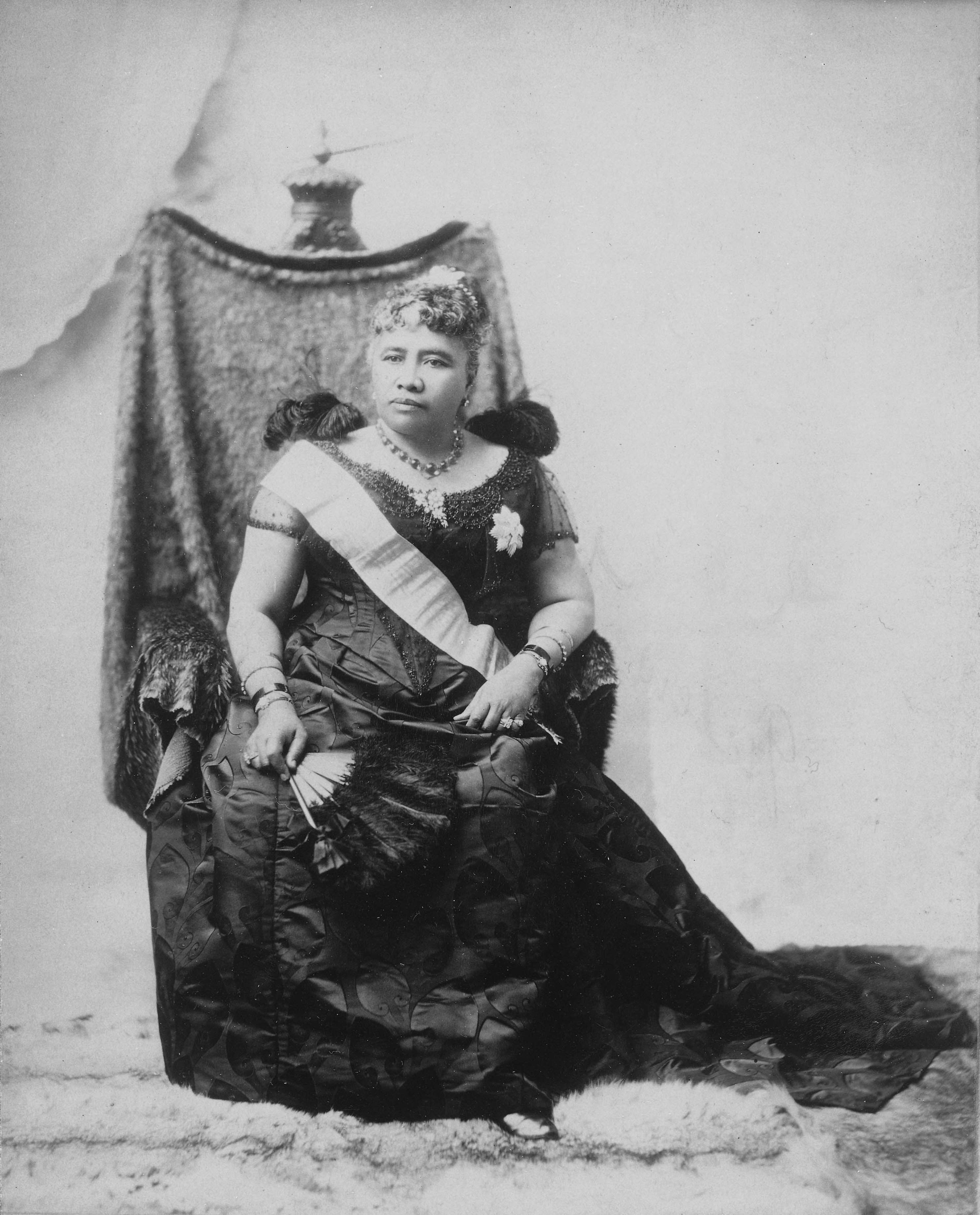
1898 - US annexed Hawaii. 

The Betrayal of Liliuokalani, last Queen of Hawaii, 1838-1917 by Helena G. Allen.

Queen Liliuokalani in 1891. James J. Williams [Public domain], via Wikimedia Commons.

1899 - US gained control of American Samoa (eastern half of the Samoan archipelago). Learn more about American Samoa here. 

1910 - Angel Island Immigration Station created in San Francisco Bay.  

Angel Island: gateway to Gold Mountain by Russell Freedman.
Angel Island: A Story of Chinese Immigration (video available through Films on Demand database). 

1924 - Immigration Act severely limited immigrants from most Asian countries. Read more about the Act here. 

1940 - Angel Island Immigration Station closed.  

1942 - President Roosevelt issued Executive Order 9066, which authorized the confinement of Japanese-Americans into internment camps. 

Looking like the enemy: My Story of Imprisonment in Japanese American Internment Camps by Mary Matsuda Gruenewald.

Arcadia, CA April, 1942. Japanese-Americans registering before being transferred to War Relocation Authority centers. By Clem Albers, Photographer (NARA record: 8452194) (U.S. National Archives and Records Administration) [Public domain], via Wikimedia Commons.

1943 - Chinese Exclusion Act was repealed. 

1944 - US gained control of Northern Mariana Islands. Learn more about the Northern Mariana Islands here. 

1946 - The Philippines gained independence from the US. 


1957 - Dalip Singh Saund, of California, became the first Asian American to serve in the US Congress. 

1959 - Hiram Fong, of Hawaii, became the first Asian American to serve in the US Senate. 

1965 - Immigration Act ended racial quotas, which increased immigration from Asian countries. Read more about the Act here. 

Korean Americans (video available through Films on Demand database).
Suburban Sahibs: Three Immigrant Families and Their Passage From India to America by Mitra S. Kalita. 

1973 - George Ariyoshi, of Hawaii, became the first Asian American governor of a US state.

1988 - Civil Liberties Act granted reparations to Japanese-Americans who had been interned during World War II. Read full text of the act here. 

2000 - Norman Mineta became the first Asian American to serve on the US Cabinet.

The Dick Smith Library has a large collection of resources relevant to the Asian-American and Pacific Islander-American experience. Let us know if we can help you find some information on the topic via email at reference@tarleton.edu or phone at 254-968-9249.

Thursday, April 20, 2017

Tarleton Thursdays - Stephenville Historic Resources Survey

In the spring semester of 2015, Dr. T. Lindsay Baker, W.K. Gordon endowed chair in history, and his students in HIST 5309 (Historic Preservation) and HIST 4350 (Special Topics) partnered with the City of Stephenville to identify and document historic, mostly commercial structures within a 25 block area surrounding the Erath County Courthouse and the square, as well as additional sites outside of this area selected by the city.  The students used recording forms approved by the Texas Historical Commission, adding photographs and other research documents.

The result was called the Stephenville Historic Resources Survey.  Dr. Baker recently donated a copy of this survey, as well as the accompanying research files for the 147 sites and other supporting material, to the Dick Smith Library, along with digital copies of the photographs from the project.

A nearly-21-block area downtown was initially identified, with over half of the buildings surveyed in it considered to be contributing to a historic district designation on the National Register of Historic Places (NRHP).  Further work by the expert consultant hired by the city, Mary Saltarelli, has expanded the district to include a total of 120 buildings, with 77 of those (63%) contributing.  The minimum requirement is 51 percent to be considered for placement on the registry.  Being listed on the registry can bring tax incentives and other benefits to the downtown area and property owners.

While the original research files will be preserved, the library hopes to make copies of the files available in the Local History Room in the Special Collections Suite on the lower level of the Dick Smith Library, where users can access them to learn the history of their homes or buildings.

Here are just a few examples of buildings that are part of the proposed district.  The first building pictured, the First National Bank building on the square, built in 1889, has been a Recorded Texas Historic Landmark since 1994.  On July 21, 2015, it was added to the NRHP as an individual building, and in February 2017, it received a Preservation Texas Honor Award for its restoration and rehabilitation.


Above:  198 S Belknap Ave., First National Bank Building.  Photo by T. Lindsay Baker, 4 May 2015.
Below:  160 E Washington St., W.W. Rutherford Building.   Photo by T. Lindsay Baker, 3 May 2015.


Below:  154 E Washington St., Tatum and Sons Building.  Photo by T. Lindsay Baker, 3 May 2015.
Research by the library's Special Services and Archives staff using old Sanborn insurance maps shows that the first floor of the Tatum building was actually constructed between September 1902 and November 1907, which corresponds with a large increase in the property's value in 1905, the estimated construction year for the first floor (a grocery warehouse on that 1907 Sanborn map).  
The second floor was added in 1920.


On this building, the first floor is made of stone while the second floor is made of brick.  The cast iron columns by the entry were furnished by Fort Worth Iron Works, and were added before 1920.  


Tuesday, April 18, 2017

Top Ten Ways to Motivate Yourself

 
Welcome to the home stretch!

The semester is winding down and projects are wrapping up. Finals and graduation ceremonies are right around the corner. Some of you can see the light at the end of the tunnel. For others the goal may seem far away. Some are feeling accomplished. Others are feeling stretched and overwhelmed. How do you stay motivated when this happens to you? 


 Here are 10 ways to keep yourself motivated when things become overwhelming:
  1. Make yourself a deal
  2. Do something small
  3. Do the toughest tasks first
  4. Compare yourself with yourself, not with others
  5. Remember to have fun
  6. Don't fear failure
  7. Write your goals down and work towards them
  8. Break it down
  9. Do what makes you happy
  10. Think outside the box
Visit the Positivity Blog to learn more motivational tips.


 Looking for even more ideas? Here is a selection of books that are available in the library:


Thursday, April 13, 2017

The Racial Dot Map

Demographers at the University of Virginia's Weldon Cooper Center for Public Service have created an interactive map that allows users to examine population groupings throughout the United States.

The map's creators used data gathered from the 2010 census to place 308,745,538 dots on a map of the United States. Each dot represents one person counted in that census. The dots are color-coded by race/ethnicity: whites are represented with blue dots, African Americans with green dots, Hispanics with orange dots, and Asians with red dots. People who don't fall under any of the above categories are represented with brown dots.

A view of the lower 48 states.
The map allows users to zoom in to see the demographics of local areas.

A close up view of the Dallas/Fort Worth area. 

Each dot is smaller than a pixel. That makes viewing individual dots in rural areas challenging. The map allows users to turn off the racial color-coding, and every person is then represented with a black dot. This helps to better see people in rural areas.

A close up view of Stephenville, TX with color-coding removed. 
Take some time to explore this fascinating map.


Sunday, April 9, 2017

April is Sexual Assault Awareness Month


The month of April is Sexual Assault Awareness month, (SAAM). The purpose is to raise awareness about sexual assault and to help clear up the many misconceptions that go along with sexual assault.


The Dick Smith Library is helping be apart of this by being a location that students can sign a pledge to be part of the solution. The form to sign the pledge is located at the circulation desk. After students sign the pledge, they can tape it to the glass windows by the lounge area.


Another way to be involved is by wearing the color teal on Tuesdays and posting and talking about Sexual Assault awareness to others. There will also be other ways to get involved, so be sure to check the calendar daily.


It is important to remember that "Rape is about power and control in which sex is the weapon". If consent is not given, then it is sexual assault. When alcohol is involved the attacker tries to use this as an excuse. However, this is NOT true. "Just because a person is intoxicated does not mean that a person gives up their right to physical safety".


Prevention is possible by education, encouraging safe behaviors, thoughtful polices and healthy relationships.


If you have been a victim of Sexual Assault, you do not have to work through this alone. Mental healing is important. If you wish to talk to someone the Tarleton Student Counseling Center is a safe and confidential place where you can talk. The Cross Timbers Trails Family Services is also available for counseling


Tarleton Student Counseling Center:
 http://www.tarleton.edu/counseling/
(254) 968-9044 Office Hours are M-F 8 AM - 5 PM.
Phone Calls outside of these hours will automatically be redirected to ProtoCall, staffed by counselors who can help you in a crisis.
Barry B. Thompson Student Center, Suite 212


Cross Timbers Trails Family Services
http://ctfshelp.org/
Monday - Friday: 9:00 am - 5:00 pm
24 hour hotline 254-965-4357
Toll-free line 866-934-4357
Alt Phone
866-934-4357 (business number)


Source: http://www.tarleton.edu/currentstudents/
http://www.tarleton.edu/calendar/#!event_id/19460/view/event/date/20170409

Tuesday, April 4, 2017

2017 READ Poster Reveal


Staff members at the Dick Smith Library are excited about our upcoming National Library Week (April 9-15) celebration and our 2017 READ poster unveiling. 

Can you guess who will be featured this year?

You don't have to wait long for the answer. On Wednesday, April 12  at 3:00 p.m. we will unveil our 2017 READ posters.

Join us.  You'll be among the first to see the new posters. Plus, after the unveiling, you can enjoy refreshments, visit with friends, and get you own souvenir postcard of this years READ posters.

Introduced in 1958, National Library Week is sponsored by the American Library Association (ALA) to celebrate libraries across the country each April. All types of libraries - school, public, academic and special - participate every year. National Library Week is a time to celebrate and promote the contributions of the nation's libraries and library workers. From free access to books and online resources, research support, technology help and more -- libraries offer opportunity to all. 


Thursday, March 30, 2017

Tarleton Thursdays: From Our Day at the State Capitol, March 21, 2017

Senate Resolution 426, issued at Tarleton State University Day at the State Capitol on March 21, 2017, in honor of Tarleton's centennial as a member of the Texas A&M University System (click on the image to enlarge it).  This proclamation will be added to the University Archives.


Tuesday, March 28, 2017

Creative Commons and Attribution: It's the Right Thing to Do

What do you do when you need an image for an assignment - a presentation or a paper?  If the image is one you created yourself, you’re good to go. But what about those times you can’t create your own images? Is it OK to just use that great picture you found on the internet?

It’s safest to assume that all images on the web are copyrighted with all rights reserved, unless otherwise stated. That means you need to get permission for use from the image creator, or possibly face penalties ranging from a take-down notice, to a bill requesting payment for use of the image, to legal action against you. Not to mention – asking permission is moral and ethical.

A number of artists and photographers, sometimes in an effort to generate notice for their work, have made their images available for use under Creative Commons (CC) licenses. The creator can put the image into the public domain (waiving all copyright), or retain some rights and choose from six licenses, ranging from simple attribution (permitting derivatives and commercial reuse, CC-BY), to allowing reuse as long as it is noncommercial and the work is not modified (CC-BY-NC-ND).

This work, "CC Chart", is a derivative of slide 88 of “The OER 101 Workshop at USM II” by Zaid Alsagoff used under CC BY-NC-SA 2.5. ”CC Chart” is licensed under CC BY-NC-SA 2.5 by Amanda Pape


There are a number of tools available to help you find copyright-friendly images, such as Creative Commons Search and flickrCC. Recently, Google Images Search made finding such images much easier.
  • Enter your search term.
  • When results appear, click on Tools.
  • Click on Usage rights.
  • Select the appropriate license (“Not filtered by license” is the default). 

Google Images search screen shot taken and further modified by Amanda Pape, CC-BY


Images (if any) that fit the license restrictions will appear. Depending on your search terms and the license you choose, images may come from Flickr, Wikipedia or Wikimedia Commons, Pixabay, or the Open Clip Art library.  Be sure to click through to the image and double-check the licensing terms, as Google Images Search doesn't always get them right. 

It’s important to note that ALL Creative Commons licenses require users to provide attribution to the creator.

What is attribution? It’s the journalistic practice of crediting information to its source (so you know where something came from), and a concept in copyright law requiring acknowledgement of the creator of a work (such as an image) which is used or appears in another work (such as your blog or Facebook post).

Why should you provide attributions? Using other's images without giving credit is plagiarism. Also, think about how you might feel if someone “borrowed” one of your images to use on a website and did not give you credit, thereby implying that the image was his/her (or another’s) creation. This has happened to me (more than once), and I wasn’t too happy about it. (Luckily, in both cases, the borrowers added or corrected the attribution when I commented on the mistake.)

When using Creative Commons images, you must credit the photographers/artists in the manner they specify (if they do so). Sometimes you can find the preferred attribution with the image, or on a profile page from the website where you found the image.

Just as there are tools to help you find copyright-friendly images to use, there are tools available to generate attributions when no specific one is provided. Unfortunately, none of the tools I’ve tried (such as flickrCC, OpenAttribute, and ImageCodr) fully and consistently meet the Creative Commons guidelines for attribution, which require that you:

  • Cite the work’s title or name (and link it directly to source of the original work). 
  • Cite the author’s name, screen or real (and link to the author’s profile page when available). 
  • Cite the specific CC license the work is under (and link to the license deed on the CC website). 
  • Keep intact any copyright notices for the work. 
  • Indicate if the image has been modified or adapted by you in any way.

If you use one of the citation tools mentioned above, take what it generates and fill in the missing pieces, as much as you can. Make some effort, just as you would in citing text sources in a paper written for an assignment in school. The two images used in this blog post provide examples of proper attribution.

Here is an additional resource on proper attribution:
http://creativecommons.org.au/materials/attribution.pdf

And here is my presentation on Slideshare on Creative Commons licenses and proper attribution:
http://www.slideshare.net/CurriculumCollection/finding-and-crediting-copyrightfriendly-images-for-presentations-and-publications


[An earlier version of this post appeared originally on the Texas Social Media Research Institute blog on July 9, 2014, and is used with their permission and that of me, the author.]

Thursday, March 23, 2017

Stress Management


You have survived Midterms and suddenly realize that finals are a little over five weeks away. How do you cope with stress? According to WebMD you could:


Relax your mind by:
  • Write in a journal for 10 to 15 minutes
  • Let your feelings out by laughing or crying. Talk to others who care about you
  • Do something you enjoy
  • Volunteer your time

Relax your body by:
  • Practicing meditation
  • Practicing yoga
  • Go for a walk
  • Play a game with friends

If all else fails you could try some of my personal favorites:
  • Read a book
  • Checkout one of our cookbooks and bake something for a friend
  • Watch a video on Films on Demand
  • Checkout a CD or Audiobook


However you choose to prepare for the final academic push, please remember that the Reference staff is available to assist you with your research needs. You may get help either in person, over the phone, by email, or via the web at http://www.tarleton.edu/library/askaref.html