Tuesday, September 19, 2017

Hispanic Heritage Month


September 15th through October 15th is National Hispanic Heritage month. This is the time to recognize the contributions and experiences of Americans of Hispanic heritage. According to the National Hispanic Heritage Month website, hosted by the Library of Congress, "September 15 is significant because it is the anniversary of the independence for Latin American countries Costa Rica, El Salvador, Guatemala, Honduras and Nicaragua. In addition, Mexico and Chile celebrate their Independence days on September 16th and 18th respectively."

2010 US Census Hispanic Population by County
Percentage of Hispanic or Latino population by county in 2010 census.
By United States Census Bureau [Public domain], via Wikimedia Commons.
Hispanic Americans are a large and quickly growing segment of the US population. In 2003, Hispanics became the largest minority group in the United States. The 2010 census counted 50,477,594 Americans of Hispanic or Latino origin. That's 16.3% of the total US population and a 43% increase from the 2000 census count.

Timeline of Hispanic-American History
Click on the links below to find relevant library resources on each topic.

1493: Christopher Columbus began Spanish colonization of Puerto Rico.
1513: Juan Ponce de León led first expedition to Florida.
1528 – 1536: Alvar Núñez Cabeza de Vaca survived an ill-fated expedition and explored portions of Texas. His book was the first written account of Texas Indians.
1539 – 1542: Hernando de Soto explored Southeast US including portions of Florida, Georgia, South Carolina, North Carolina, Tennessee, Alabama, and Mississippi. The Hernando de Soto Expedition by Jerald T. Milanich. Francisco Vásquez de Coronado explored Southwest US including portions of Arizona, New Mexico, Texas, Oklahoma, and Kansas. Documents of the Coronado Expedition, 1539 – 1542 by Richard and Shirley Cushing Flint.
1565: Pedro Menéndez de Avilés established a colony at Saint Augustine, Florida.
·         America’s Ancient City: Spanish St. Augustine, 1565 – 1763 by Kathleen A. Deagan
1598: Juan de Oñate led Spanish colonization of New Mexico.
1610: Santa Fe established as capital of New Mexico.
·         Santa Fe: History of an Ancient City by David Grant Noble
1718: Spanish colonists founded San Antonio, Texas.  
·         San Antonio de Béxar: a Community on New Spain’s Northern Frontier by Jesús F. de la Teja
·         Spanish Texas, 1519 – 1821 by Donald E. Chipman
      1748 - 1755: José de Escandón led the Spanish colonization of Nuevo Santander (which today includes the Mexican state of Tamaulipas and portions of southern Texas). He established several settlements in the region including Laredo, TX. 
·            De León: a Tejano Family History by A. Carolina Castillo Crimm
    Notable Men and Women of Spanish Texas by Donald E. Chipman and Harriet Denise Joseph 
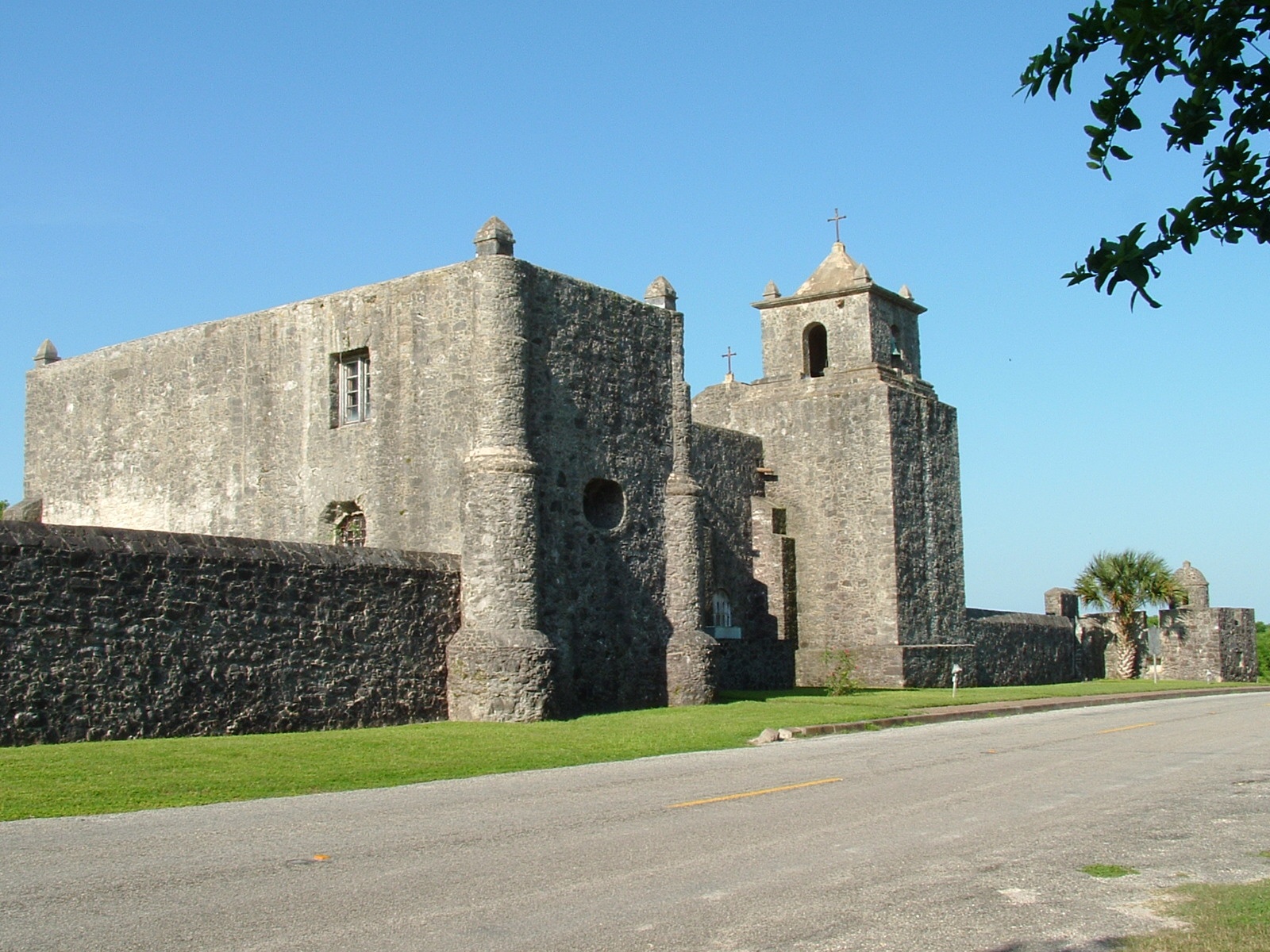
Presidio La Bahía near Goliad, TX. Originally built by the Spanish in 1721, and later rebuilt in 1771.
 Photo by Ernest Mettendorf - Public Domain, https://commons.wikimedia.org/w/index.php?curid=4208460
1769 – 1819: Spain established multiple settlements in California including San Diego (1769), San Francisco (1776), and Los Angeles (1781).
·         A History of California: the Spanish Period by Charles E. Chapman
1821: United States purchased Florida from Spain.
·         Diplomacy and the Borderlands: the Adams-Onís Treaty of 1819 by Philip Coolidge Brooks  
 Mexico won independence from Spain.
·         The Hidalgo Revolt: Prelude to Mexican Independence by Hugh M. Hamill
1822: Joseph Marion Hernández became first Hispanic to serve in the US Congress. He was a delegate from the Florida Territory.
1836: Texas declared independence from Mexico.
1845: United States annexed Texas.
·         The Annexation of Texas by Justin Harvey Smith
1848: Treaty of Guadalupe Hidalgo ended the Mexican-American War. Mexico ceded territory to US including: California, Arizona, New Mexico, Nevada, Utah, and portions of Colorado, Kansas, Oklahoma, and Wyoming. 
   The Border Crossed Us: Rhetorics of Borders, Citizenship, and Latino/a Identity by Josue David Cisneros. 
·         Border Visions: Mexican Cultures of the Southwest United States by Carlos G. Vélez-Ibañez
·         The Treaty of Guadalupe Hidalgo: a Legacy of Conflict by Richard Griswold del Castillo
1859: Juan Cortina seized control of Brownsville, TX in retaliation for town marshal’s assault on one of his employees.
·         Cortina: Defending the Mexican Name in Texas by Jerry D. Thompson
·         Juan N. Cortina: Two Interpretations by Charles William Goldfinch
1875: Romualdo Pacheco became the first Hispanic governor of a US state (California). 
1877: A white mob killed approximately 40 Mexican-Americans in Nueces County, Texas.
          Forgotten Dead: Mob Violence against Mexicans in the United States, 1848-1928 by William D. Carrigan and Clive Webb.   
1889: The Herrera brothers (Pablo, Nicanor, and Juan Jose) formed a resistance movement known as Las Gorras Blancas to protect Hispanic land from Anglo squatters in New Mexico.
1898: Spain ceded control of Puerto Rico to the United States at the conclusion of Spanish-American War.
·         Spanish-American War by Michael Golay
1910 – 1920: Revolution in Mexico resulted in increased Mexican immigration to US.
·         Pancho Villa at Columbus by Haldeen Braddy
1917: Puerto Ricans granted US citizenship.
1928: Octaviano Larrazolo, from New Mexico, became first Hispanic to serve in the US Senate.
1929: League of United Latin American Citizens (LULAC), which advocates for Latino civil rights, founded in Corpus Christi, TX.
·         LULAC, Mexican Americans, and National Policy by Craig Allen Kaplowitz
1942:  Due to labor shortage caused by World War II, US entered into an agreement with Mexico (known as the Bracero Program) to import Mexican laborers into the US.
   Harvest of Loneliness: The Bracero Program – documentary film.
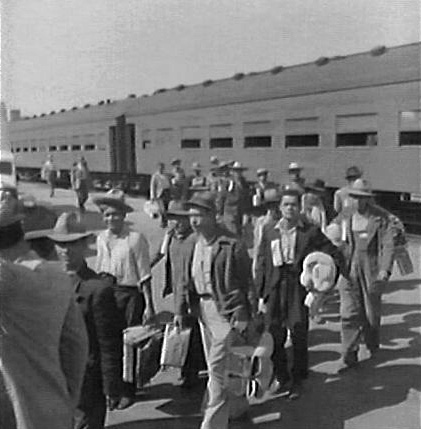
The first Braceros arriving by train in Los Angeles, CA in 1942.
By Dorothea Lange, working for the US Government. [Public domain], via Wikimedia Commons. 
1943: Zoot Suit Riots in Los Angeles, CA.
·         Murder at the Sleepy Lagoon: Zoot Suits, Race, and Riot in Wartime L.A. by Eduardo Obregón Pagán
1945: Marcario García became first Mexican immigrant to be awarded the US Congressional Medal of Honor.
1948: Dr. Hector P. García founded the American G.I. Forum in Corpus Christi, TX to advocate for the civil rights of Hispanic veterans. The group gained national attention advocating on behalf of the family of Felix Longoria after a funeral home in Three Rivers, TX refused to bury him. 
1954 – 1958: US government implemented “Operation Wetback” and deported millions of people of Mexican descent.
1959: Fidel Castro’s successful revolution in Cuba resulted in increased Cuban immigration to US.
·         The Cuban Revolution: Origins, Course, and Legacy by Marifeli Pérez-Stable
1962: César Chávez and Dolores Huerta founded the United Farm Workers to advocate for the rights of migrant farm workers.
·         The Moral Vision of César Chávez by Fredrick John Dalton
·         Dolores Huerta: A Hero to Migrant Workers by Sarah E. Warren and Robert Casilla
1964: Bracero Program ended.
1965 – 1970: United Farm Workers conducted a successful strike on behalf of grape pickers in California.
·         Delano, the Story of the California Grape Strike by John Gregory Dunne
1968: Thousands of Hispanic students walkout of schools in Los Angeles, CA to protest unequal educational opportunities. Walkouts spread to hundreds of schools in multiple states.
1988: Lauro Cavazos became the first Hispanic to serve in the United States Cabinet. He served as Secretary of Education.
2003: Hispanics became largest minority group in the United States.
2009Sonia Sotomayor became the first Hispanic to serve on the Supreme Court of the United States. 
President Obama and Sonia Sotomayor meeting in the Oval Office in 2009.
By Official White House photo by Pete Souza from Washington, DC (Flickr) [Public domain], via Wikimedia Commons

The Dick Smith Library has a large collection of books and other resources on topics relevant to the Hispanic American experience. Such as these titles: 
The Mexican Americans by Alma M. García
The Spanish Americans of New Mexico: a Heritage of Pride by Nancie L. Solien Gonzalez. 

Let us know if you need assistance finding additional information by calling 254-968-9249 or emailing at reference@tarleton.edu

Wednesday, September 13, 2017


The Dick Smith Library, the center of the Tarleton Community.
By Yeidi Rios

Part I

Maybe this year you decided it would be different and that you would visit the library more often? Or maybe you’re a freshmen and you just need access to a computer or a quiet place to study? Whatever the reason you decide to become a familiar face at the library, and whether you’re a Tarleton student, faculty or staff, you’re in luck! My goal with this series of posts is to provide knowledge and familiarity with what can be the greatest resource in someone’s learning journey. The library is that special place in campus were you can visit and learn comfortably in the company of others, where you don’t need to feel alone with your digital problems- the library is filled with professional personnel to help you overcome your digital obstacles. I’m proud to say the library has gone through many changes and upgrades to provide the best learning experience we can possibly provide, and our willingness to constantly adapt to our community’s needs will not stop.

The Dick Smith Library consists of three floors.  First, let’s start with the main level. As you enter the library, behind the crystal windows, you will find a cozy lounging area situated around a TV and wall shelves that display our newest books. Past circulation and the café we have our computer stations, and if they are all taken we have a laptop vending machine that lends laptops for up to 4 hours. If you are in need of group study areas with computers, we have 5 study booths surrounding big computer monitors. These are not the only ones. Near the Tech Spot, we have two more study rooms equipped with computers and big screen monitors.  In addition to all this, located at the back of the library in the periodicals section, you’ll find microfilm machinery and 2 desktops exclusively for use with the microfilm. For those students who need technical or digital support remember that you can go by the Tech Spot open Monday through Friday from 8-8 pm. Last but not least, if you find your mobile device low on battery we have solutions for that as well.  Near the Tech Spot you will find a charging station equipped with chargers for different mobile devices. If you have any questions regarding the services we provide, doubts on the basic use of computers or software, or simply need help finding information, visit the reference desk- it is always open. 

For my next blog post I will be discussing the lower level and all the neat technology and spaces located down there. If you let it, the Dick Smith library will be your greatest support in your pursuit of knowledge and personal growth, so until next time, we hope to see you in the library! 

Tuesday, September 12, 2017

Suicide Prevention Week Sept. 12-14

September 12-14 is suicide prevention week. The Dick Smith Library is collaborating with the counseling center to help bring awareness. When you stop by the study grounds café to get your coffee take a moment to check out the display that has an inspiring message by SGT Shane Ortega. "Suicide is a topic that needs to be discussed in the light of day, maybe even while sitting at a table with friends over coffee. It shouldn't be hushed. Let's start more conversations, even if they scare us. Ortega stated. Post it notes have been provided for you to leave encouraging positive messages. If you find a message that inspires you, feel free to take a message in exchange.


Thursday, September 7, 2017

Spotlight: Databases That Will Blow Your Mind


The fall semester at the Dick Smith Library brings us new arrivals of all sorts: incoming freshmen, new staff members, and exciting new materials to offer our patrons. Among them are two incredibly vast, versatile and impactful databases I am excited to introduce you to here today.

Life Magazine Archive – This massive archive provides a bird’s eye view into the events and people who have shaped us as a nation, spanning as far back as 1936. Life, most famously known for its provocative and timeless covers, is an invaluable treasure trove for the academia community.

As told to the San Francisco Gate: "Every day we receive requests from readers looking for these issues for research purposes, and to find photos and articles featuring family members, hometowns and other memories," Andrew Blau, president of Life Inc., said in a statement. "Now with these full issues available online, readers will be able to browse through history as it was being recorded."

Patrons are directed to the Ebsco host where they can search by keyword, publication date, document type and cover story. The results are beautiful scans, allowing us to step back in time and wonder at the world as it was.


Race Relations in America – About this database, John Giggie, Associate Professor of History and African American Studies, and Director for the Summersell Center for the Study of the South is quoted as saying, “A rare opportunity to track the fight for racial justice in the modern era. There are few collections that can rival it for tracking the evolution of civil rights thought and effort over time.” 
Image title “Hispanic delegate entertaining at the Race Relations Institute, 1955”
 Copyright the Amistad Research Center.

Race Relations highlights over 100 hours of audio recordings, survey material, case studies, campaigns against voter suppression in the African American communities, photographs, scrapbooks and posters spanning three decades. Additionally, the collection features interactive maps, a data association tool, interactive chronology, a visual highlights gallery, contextual essays, and video interviews for the engaged student. The value of this database, especially in the current atmosphere, cannot be overstated.

Whether it’s a speech given by Thurgood Marshall you’re seeking, or a survey of housewives in the 1960’s, this source will provide you with endless material to broaden your knowledge on the most prevalent, and important social theme of our time.

Thursday, August 31, 2017

After the Storm: What NOT to Donate, and Where TO Give

Many of us are eager to help victims of Hurricane Harvey.  Here are some tips on the best places to donate and volunteer - and what NOT to give.

Donate money through a trusted organization.  You can find out more about a particular charity's efficiency and effectiveness using your donations at Charity Navigator or CharityWatch.  Each site has set up a special page with Hurricane Harvey suggestions.  Look for organizations with the highest percentage of their funds going to actual programs and services (at least 75%), as opposed to administrative and fundraising expenses.


Items such as food, clothing, and toiletries should only be collected if you have a confirmed recipient at the disaster site willing and able to receive them.  Otherwise, volunteers will be pulled away from essential services to sort, transfer, store, and distribute items that might not even be needed by disaster victims.  Then you get a mess like the one pictured below - often such items will ultimately be discarded in an area already overwhelmed by debris from the disaster.  Here's a link to the 10 Worst Things to Donate After a Disaster - with explanations why and suggestions of what to do instead with those items.


Shoes Donated to Disaster Survivors / Adam DuBrowa - Sep 26, 2015 / FEMA.gov


If you want to volunteer to help on site, contact existing non-profit organizations BEFORE heading to the disaster area.  Get appropriate training, and be sure it is safe to travel (and you have some place to stay and eat) before going into the area.  Otherwise, you might just get in the way.  Remember, assistance will be needed long after the storm is over and the media is gone, so there will be plenty of opportunities for service later after you've been trained to best help.  Here is a link to Texas Voluntary Organizations Active in Disasters.

For more information, see Volunteer & Donate Responsibly at the Federal Emergency Management Agency website:  https://www.fema.gov/volunteer-donate-responsibly.

Tuesday, August 15, 2017

Need a ride? Call CARR

Do you live in the Stephenville area and need a ride around town or to nearby towns such as Granbury or Weatherford? Then what you need is CARR. City and Rural Rides (CARR) is a rural public transit operation that serves 11 counties including Erath.


CARR operates Monday to Friday from 7:30AM to 5:30PM and is closed on the following holidays: New Year’s Day, Memorial Day, Independence Day, Labor Day, Thanksgiving Day, Christmas Eve, and Christmas Day.

To request a ride call 1-800-710-2277. You can schedule a ride up to 60 days in advance. They recommend to call at least 2 business days ahead of your planned trip to ensure that they can accommodate you. They will take same-day requests until 3:30PM, but will only give you a ride if they can fit you in that day's schedule. When you call they will ask for the following information:
  1. Passenger Name
  2. Date of Birth
  3. Address
  4. Phone Number
  5. Assistance Needs 
  6. Emergency Contacts 
  7. Destination Name 
  8. Destination Address 
  9. Request time
The amount you pay depends on distance traveled. These are the current rates:

  • 1-5 miles................$1.00 
  • 6-10 miles..............$2.00 
  • 11-15 miles.............$3.00 
  • 16-20 miles.............$4.00 
  • 21-25 miles.............$5.00 
  • 26-30 miles.............$6.00 
  • 31-35 miles.............$7.00 
  • 36-40 miles.............$8.00 
  • 41-45 miles.............$9.00 
  • 46-50 miles.............$10.00 
  • 51-55 miles.............$11.00 
  • 56-60 miles.............$12.00

You must pay the driver with cash or check (credit cards are currently not accepted). Drivers are not able to make change. Another option is to purchase a prepaid fare pass, if you buy a $20 prepaid pass, then you will receive $4 worth of free rides.

If you have any questions about CARR you can contact them here: http://www.cityandruralrides.com/ContactUs.htm. I can tell you from personal experience that they respond to questions very quickly.

This online handbook provides detailed information about the services CARR provides.

Friday, August 4, 2017

Total Eclipse of the Sun - August 21, 2017


On Monday, August 21, parts of the United States will be able to view an uncommon event, a total eclipse of the sun by the moon.  The "path of totality," in which the total eclipse will be visible, is about 70 miles wide, and extends through 14 states from Oregon southeast to South Carolina.

Even if you can’t travel to the path of totality, you *should* be able to see a partial solar eclipse here (weather permitting).  On the Tarleton Stephenville campus, approximately 70% of the sun's surface will be covered by the moon around 1:07 p.m.  The partial eclipse will start about 11:38 a.m. and end about 2:36 p.m.

NASA has lots of great resources - including maps and eye safety tips, as well as the logo at the top of this post - at a special website:  https://eclipse2017.nasa.gov/


If you miss this eclipse, don't worry - you will have another (and better) chance to see a total solar eclipse in 2024.  On April 8 of that year, most of the Stephenville area *will* be in the path of totality.  You can use this interactive map to find areas on the path:

https://eclipse.gsfc.nasa.gov/SEgoogle/SEgoogle2001/SE2024Apr08Tgoogle.html  

Tuesday, July 25, 2017

Early Stephenville newspaper online at Portal to Texas History


The Stephenville Empire newspapers from 1882 to 1900 are now online at the Portal to Texas History!  The remaining issues of this early title (through 1917), as well as the early Stephenville Tribune (1905 through 1922) will appear in the future, so keep checking the Portal.  Please keep in mind that there are many gaps in those early years.  All Stephenville newspapers the Dick Smith Library has on microfilm through 1922 are being digitized.

This project was funded through a grant provided by the Ladd & Katherine Hancher Library Foundation in September 2016, awarded to the Stephenville Public Library, our partner in this project (they were eligible to apply for the grant; we were not!).

Already users are finding items of interest for their family history research:

"I found an article explaining when my 3X great-grandfather came to Texas from Mississippi!"

"I found my great-great-grandfather telling tall tales about his wheat crop."

"My great-great-grandfather was a member of the Morgan Mill Democratic Club in 1898."

Tuesday, July 11, 2017

Drive Texas Map

Are you planning a Texas road trip anytime soon? Then you should definitely check out the online Drive Texas map created by the Texas Department of Transportation. This map provides up-to-date information on Texas road conditions. It's a handy resource to consult before going on any road trip.

Each icon on the map represents a different condition:construction, closed, damaged, accident, etc. 

The map allows users to zoom in to a particular location, or you can search for a specific place with the map's search tool. If you click on an affected roadway, you will be provided with additional information.

Close up view of Stephenville area. 
After clicking on the affected road this information appears. 


The map has tools that allow you to choose what type of condition (i.e. accidents, etc.) you want to see on the map. You can also choose to see future planned construction or closures. There are options that also allow you to see traffic conditions or the locations of rest areas and travel information centers.

Choose to view various types of current and future conditions
Find locations of rest areas and other resources. 


Traffic conditions in the Dallas/Fort Worth area. 

Before you start your next Texas road trip, you should consult some library resources as well.

Here's a few books we have on the topic:
Exploring the Edges of Texas by Walt Davis and Isabel Davis.
History along the Way: Stories beyond the Texas Roadside Markers by Dan K. Utley and Cyntia J. Beeman.
Texas Road Trip: Stories from Across the Great State and a Few Personal Reflections by Bryan Woolley.

Library staff can assist you in finding information resources for your next road trip at reference@tarleton.edu or 254-968-9249.

Monday, June 19, 2017

Erath County Sheriff Murdered 140 Years Ago to be Honored

This coming Sunday, June 25, a ceremony will be held to dedicate a monument on the east side of the county courthouse to the first known peace officer in Erath County killed in the line of duty, James Mastin.  Free electronic resources at the Portal to Texas History and the Library of Congress website were used to find out more information about his murder and the aftermath.


Two references to his murder were on the same page (two)1  of the July 5, 1877, issue of the Weekly Democratic Statesman, published in Austin, Texas, found via the Portal to Texas History.  The search was for "mastin erath" (without the quotes) with results limited to the year 1877.  The first reference started at the bottom of column six and continued at the top of column 7.  Sheriff Maston [sic] was killed by a cattle thief he intended to arrest:


Further on in column seven was a little more detail.  This time Mastin's name was spelled correctly, and it gave the date of the murder, June 25.  The name and a detailed description of the murderer, Bone Wilson, was also given, as well as the fact that a reward was being offered for his capture.  This story also noted Mastin was going to arrest Wilson for stealing a horse (not cattle theft):


A follow-up story2 was in the Galveston Daily News of September 27, 1877, on page 4.  In a section with news from Erath County, the Stephenville Empire newspaper was quoted. (In the image below, a number of lines of news not relevant to this case have been blanked out.)  Bone Wilson, alias Napoleon B. Wilson, was killed by Texas Rangers under the command of T. M. Sparks about 20 miles from Fort Chadbourne on September 15, 1877:


A little more detailabout the murderer’s death comes from the Lampasas Dispatch of September 27, 1877, via the Brownwood Banner.  This one was found by searching the Portal to Texas History for “sheriff erath” (no quotes in the search), as Mastin was sometimes spelled incorrectly.  This article does not even refer to the sheriff by name, and some of the details of Wilson's killing are different.  Both articles note that Wilson's body was taken to Coleman City (just established in 1876). which is about 60 miles east of the fort.


There’s more about Mastin on pages 15-16 of James Pylant’s 2009 book, Sins of the Pioneers4.  He was elected sheriff on February 15, 1876, and had survived an earlier attempt on his life in November of that year "when Rufus C. Howie fired a six-shooter at him."

One of Pylant’s sources5 is an account of the killing of Mastin’s murderer, Bone Wilson, by one of the Texas Rangers participating, Noah Armstrong.  Armstrong was interviewed sometime between 1936 and 1939, as part of the Folklore Project of the Federal Writers’ Project, a New Deal jobs program that was part of the U.S. Works Progress (later Work Projects) Administration (WPA).  His account of the killing of Bone Wilson starts on the fourth page.


Sources:

1Weekly Democratic Statesman. (Austin, Tex.), Vol. 6, No. 39, Ed. 1 Thursday, July 5, 1877, newspaper, July 5, 1877; Austin, Texas. (texashistory.unt.edu/ark:/67531/metapth277635/m1/2/?q=mastin+erath: accessed January 21, 2017), University of North Texas Libraries, The Portal to Texas History, texashistory.unt.edu; .                                                          

2The Galveston Daily News. (Galveston, Tex.), Vol. 36, No. 161, Ed. 1 Thursday, September 27, 1877, newspaper, September 27, 1877; (texashistory.unt.edu/ark:/67531/metapth464966/m1/4/?q=mastin%20erath: accessed January 21, 2017), University of North Texas Libraries, The Portal to Texas History, texashistory.unt.edu; crediting Abilene Library Consortium.

3Beall, W. P. The Lampasas Dispatch (Lampasas, Tex.), Vol. 7, No. 18, Ed. 1 Thursday, September 27, 1877, newspaper, September 27, 1877; (texashistory.unt.edu/ark:/67531/metapth179077/m1/3/?q=sheriff%20erath: accessed January 21, 2017), University of North Texas Libraries, The Portal to Texas History, texashistory.unt.edu; crediting The Dolph Briscoe Center for American History.

4Pylant, James. Sins of the pioneers: crimes & scandals in a small Texas town. Stephenville, TX: Jacobus Books, 2009.

5Doyle, Elizabeth, and Noah Armstrong. [Noah Armstrong]. Texas. Manuscript/Mixed Material. Retrieved from the Library of Congress, https://www.loc.gov/item/wpalh002308/. (Accessed January 21, 2017.)

Tuesday, June 13, 2017

Flag Day


National Flag Day June 14

History of Flag Day

Have you every wondered what the significance of Flag Day was and why some of us celebrate it?


Bernard J CiGrand has been credited as the Founder of Flag Day. While others came before him, CiGrand was the first to gain enough national attention to turn it into a holiday.


On June 14th, 1885, Cigrand, a 19 year old teacher at Stony Hill School, placed a 10 inch, 38- star flag in a bottle on his desk and then assigned essays on the flag and its significance. This observance celebrated the adoption of the Stars and Stripes as the flag of the United States on June 14, 1777.

CiGrand's desire to celebrate the adoption of the flag grew and gained attention when he spoke in front of Chicago's organization, "Sons of America" in June 1888. After the speech, the organization decided to publish a magazine called "American Standard" and appointed CiGrand as the editor-in-chief. His articles helped grow attention to the flag and the need for it be acknowledged.


Over the years he continued to grow awareness of the flag, gaining the attention of President Wilson who. in 1916, decreed that there would be a nation wide observance of the flag. in 1916. President Truman signed an Act of Congress in 1949 designating June 14th as National Flag Day. 

To commemorate Flag Day:


Fly the American Flag
Recite the Pledge of Allegiance
Visit a National Monument
Attend a Flag retirement ceremony


Click here to learn more flag facts.


Click here to learn more about the man who started it all.


Tuesday, June 6, 2017

LGBT Pride Month

June is the month to recognize the experiences and contributions of Lesbian, Gay, Bisexual, and Transgender Americans. This month was originally chosen in recognition of the Stonewall Riots, which took place in New York City on June 28, 1969. However, the month of June took on more significance recently. On June 26, 2015, the Supreme Court decision in Obergefell v. Hodges guaranteed marriage rights to same-sex couples across the country. 

Some Prominent LGBT Americans - 
Click on hyperlinked text to see library resources with more information about them.

Walt Whitman (1819 - 1892) Poet
Mathew Brady [Public domain], via Wikimedia Commons.
Click here for a list of Walt Whitman books available in the library.

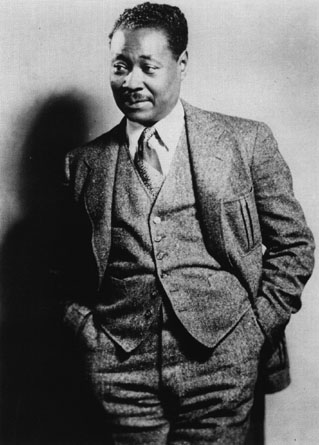
Claude McKay (1889 - 1948) Writer
By James L. Allen [Public domain], via Wikimedia Commons.
Click here for a list of books by or about Claude McKay available in the library. 

Margaret Mead (1901 - 1978) Anthropologist
By Smithsonian Institution from United States (Margaret Mead (1901-1978)  Uploaded by Fæ) [No restrictions], via Wikimedia Commons.
Click here to find Margaret Mead books available in the library. 

Christine Jorgensen (1926 - 1989) World War II US Army Veteran 
Received sexual reassignment surgery in Denmark in 1951.
Photo by Maurice Seymour, New York (Original text : eBay front back) [Public domain], via Wikimedia Commons.

The Dick Smith Library has a wide variety of resources on LGBT related topics. Let us know if we can assist you in finding library materials by calling 254-968-9249 or emailing at reference@tarleton.edu.

Additional Tarleton Resources: 
Office of Diversity and Inclusion's LGBTQ Ally program
Gay-Straight Alliance - student organization.