Wednesday, September 25, 2019

Hispanic Heritage Month

National Hispanic Heritage Month runs from September 15 to October 15 every year. The website says, "The Library of Congress, National Archives and Records Administration, National Endowment for the Humanities, National Gallery of Art, National Park Service, Smithsonian Institution and United States Holocaust Memorial Museum join in paying tribute to the generations of Hispanic Americans who have positively influenced and enriched our nation and society." Spanish is the official language for 20 countries around the world and for Puerto Rico, which is part of the United States.

A screenshot from the National Hispanic American Heritage Month website at hispanicheritage.gov


Library Resources

Timeline

Take a look at the timeline of notable Hispanics created by one of our librarians in 2017.

Learning Spanish
Mango Languages (which has an app) has a Spanish language course.

Spanish Databases
We have a number of databases in Spanish. Some of them include:
FuenteAcademic
ReferenciaLatina
Brittanica Encylopedia Moderna
Clase Periodica
InformeAcademia
MedicaLatina


Travel
Get detailed profiles of Spanish-speaking countries with our Global Road Warrior database.

Books in Spanish
We have over 77,000 items in Spanish in the library catalog.

Hispanic American History
We have over 500 items that discuss Hispanic Americans in the United States. Check out the library catalog to find these.
We also have biographies of notable Hispanic entertainers, including Celia Cruz, Rita Moreno, and more.

Monday, September 23, 2019

Read the BANNED book before you watch the series!


For Banned Books Week, check out these three books that have been turned into a hit series. 


1. C
atch-22 by Joseph Heller
Catch-22 is about Yossarian, a pilot during WWII, who is being sent on missions that only a crazy person would agree to. The catch? If you know you’re crazy, you can’t really be crazy, so he’s off on another impossible mission.  Find it on the shelves in print, audio or as an e-book, call # PS3558 .E476 C3385.


   2. The Handmaid’s Tale by Margaret Atwood 
     Offred navigates the dangerous life of being a “handmaiden”, forced to live a life of servitude while humanity struggles to deal with crippling levels of infertility. Tired of being oppressed, Offred dares to resist even if it means her life and the lives of those she trusts.  Find it on OverDrive, or on the shelves at call # PR9199.3 .A8 H3. 


      3. His Dark Materials  by Phillip Pullman 
     This exhilarating three part series features Lyra and Will, two children trying to out run child-stealing Gobblers and soul-eating Specters. Together they stumble upon an unthinkable weapon, terrifying secrets, and facedown a seemingly impossible task. Find it on OverDrive, or as an ebook, call #PZ7 .P968 G444.


Wednesday, September 11, 2019

7 Things You Didn't Know about Scholarly Communication!


Scholarly Communication Librarian Katie Pierce Farrier 

ACRL describes scholarly communication as “the system through which research and other scholarly writings are created, evaluated for quality, disseminated to the scholarly community, and preserved for future use (Association of College & Research Libraries, “Principles and Strategies for the Reform of Scholarly Communication 1,” 2003).  
 

Scholarly Communication is broad topic with many overlapping goals. Copyright impacts author rights, which impact open access, which impact bibliometrics, and so on. Depending on the needs of the faculty and the goals of the university, scholarly communication can help faculty and researchers:
1. Be more successful and impactful in their fields.
Scholarly Communication can help researchers at any stage, from finding open resources to begin initial research, to understanding your rights as an author and finding journals to publish in, to long term storage and dissemination of your work.

2. Avoid predatory publishers.
I can offer publishing guidance if you’re being asked to peer edit for a journal on topics you don’t specialize in, or you’re looking at publishing in a journal that you are unsure about their peer review, editing, or publishing standards.

3. Protect author rights.
I can help authors understand the full extent of their rights, help find addendums to protect author rights, and help find publishers that allow authors to keep more rights. I can also offer guidance on different types of licensing options for their works.

4. Track a researcher’s impact and bibliometrics.
There are several tools, databases, and ways to measure the impact of your work, such as how many times an article has been cited and/or downloaded. I can also help find a specific journal’s impact factor and other citation metrics.

5. Manage the research data life cycle.  
I can help find open data sources for researchers, help find repositories to house your data and share with other researchers, help manage the research data life cycle, offer advice on navigating funder mandates for storage, access, and retention of data.

6. Find and promote Open Access (OA) and Open Educational Resources (OER).
I function as an advocate for OA resources. I can advise researchers on the benefits of publishing in OA journals, the different types of OA journals, and I can help faculty find OERs for their classes.

7. Understand copyright.
I can offer people guidance on copyright, public domain, fair use and its applications for the classroom.   

Monday, August 19, 2019

Gale in Context: Opposing Viewpoints

Are you writing a paper or preparing a presentation on a controversial topic? Are you looking for credible sources that present multiple points-of-view? If so, then you should check out the library's Gale in Context: Opposing Viewpoints database. You can find it on the library's online list of databases.

When you open that database you will see its basic search screen.


Scroll down the page to find a list of issues that you can browse.


When you find an issue in this database, you'll see an overview of the topic and links to a wide variety of sources: academic journal articles, magazine articles, statistics, websites, and more.  


The Viewpoints section provides a list of opinion pieces in which people layout their arguments on various sides of the issue. This is a quick and convenient way to find a variety of opinions on current topics. 


If you need assistance using this, or any other library resource, contact us online or call 254-968-9249.


Tuesday, August 13, 2019

Get some library tips via YouTube

Did you know that Tarleton Libraries has a YouTube channel?


Screenshot of the library's YouTube channel.

It has a wide variety of videos.
Below are some of the topics you can learn about:

Understanding copyright and fair use
Renewing items online
Checking out items
Using the Discovery search tool

Our tutorial videos also have edited closed captions. Let us know in the comments below if there are any topics you think would be a good subject for a YouTube video.

A screenshot of our Transition Week 2015 video.

Thursday, July 25, 2019

More Stephenville Newspapers Available at Portal to Texas History

On July 18, Dr. Ana Krahmer, Director of the Digital Newspaper Program at the University of North Texas Libraries, spoke at the Dick Smith Library on the Texas Digital Newspaper Program, the largest statewide open digital newspaper access and preservation repository in the United States. It includes over 7 million newspaper pages, spanning west to east, from El Paso to Newton, and north to south, from Higgins to Brownsville, starting in 1813 and moving up to the present day.


Dr. Krahmer was here because of the recent addition of more issues of Stephenville newspapers to the Portal to Texas History, thanks to a cooperative effort by the Tarleton Libraries and the Dublin Public Library.  The latter applied for a Tocker Foundation grant to digitize the newspaper issues from 1923 through 1965.


Earlier Stephenville newspapers, from 1882 through 1922, were digitized thanks to a Ladd & Katherine Hancher Library Foundation grant obtained by the Stephenville Public Library, again in cooperation with Tarleton Libraries.

So if your research requires old (or current) Stephenville newspapers, here's a current description of what to find where:

Stephenville Newspaper Availability (Empire, Tribune, and Empire-Tribune)

Everything through 1965 is available online for free at the Portal to Texas History:  https://texashistory.unt.edu/search/?sort=date_a&fq=untl_collection%3ASTET. 
Note however that there are a number of gaps, because original newspapers (that were microfilmed and then later digitized) were lost or destroyed before microfilming.

Currently all of our microfilm for issues from 1966 through 1980 is at UNT (the University of North Texas) for digitization and addition to the Portal.  We do not have backup copies of these reels.  Please contact our Periodicals department at 254-968-9867 or periodicals@tarleton.edu 
if you need a reel from this date range so we can coordinate retrieval from UNT.  Note that it may take some time to retrieve the reel(s).


The microfilm for 1981 through 2017 is available in the Periodicals department, on the main floor of the library.  
We will be sending reels from 1981 through 1999 to UNT periodically for digitization, and the previous paragraph will apply, but earlier reels will be returned as they are digitized.


We have bound volumes of issues for 1993 through 2011 at our offsite location. These would need to be requested in advance from the Periodicals department to allow time for retrieval.

Full text of selected (not all) issues from 1930-1978 is available via open access through Newspaper Archive:   https://newspaperarchive.com/us/texas/stephenville/stephenville-empire-tribune/. Use the "Browse by Date" to choose from digitized issues. 

Full text for 2000 - present is available through Access World News, a subscription database. If you are a Tarleton student, faculty member, or staff member, you can access it with your NTNET user name and password at any time.  If you are not affiliated with Tarleton, you would have to come in after 3 p.m. on weekdays or any time on weekends and request a guest pass to use this database in the library.  It is also possible a library near you has this database, but you'd need to check with them to see if they have access to this newspaper.  Simply having a subscription to this database does not mean they have the same newspapers we do.

Selected articles are also available from the Stephenville Empire-Tribune website:  http://www.yourstephenvilletx.com/.

Issues from the current year and previous year are available in print, and are stored in-house in the Periodicals department until they have been microfilmed. 

You might also want to check the Tarleton student newspaper, the J-TAC, which began in 1919.  In earlier years it covered a lot of local news.  It is available on the Portal to Texas History: https://texashistory.unt.edu/explore/collections/JTAC/browse/?sort=date_a


The nearby town of Dublin has newspapers from 1882 through 2014 (but with some gaps) available on the Portal: https://texashistory.unt.edu/search/?sort=date_a&explore=true&fq=str_location_county%3AErath+County%2C+TX&fq=untl_institution%3ADUBPU


Finally, here is a link to all Erath County newspapers available on the Portal:  https://texashistory.unt.edu/search/?fq=dc_type%3Atext_newspaper&explore=true&fq=str_location_county%3AErath+County%2C+TX&sort=date_a

Tuesday, July 16, 2019

One Giant Leap for Mankind

July 16th, 2019 marks the 50th anniversary of the launch of Apollo 11, the first spaceflight that landed humans on the moon. It landed on the moon 4 days later.

  The Apollo 11 Saturn V space vehicle lifts off
with astronauts Neil A. Armstrong, Michael Collins and , Edwin "Buzz" E. Aldrin Jr.,
at 9:32 a.m. EDT July 16, 1969, from Kennedy Space Center. NASA [Public Domain].

You can learn more about this amazing feat of science and engineering by checking out one of these books at the library:
Moon Landing, Project Apollo by James C. Sparks

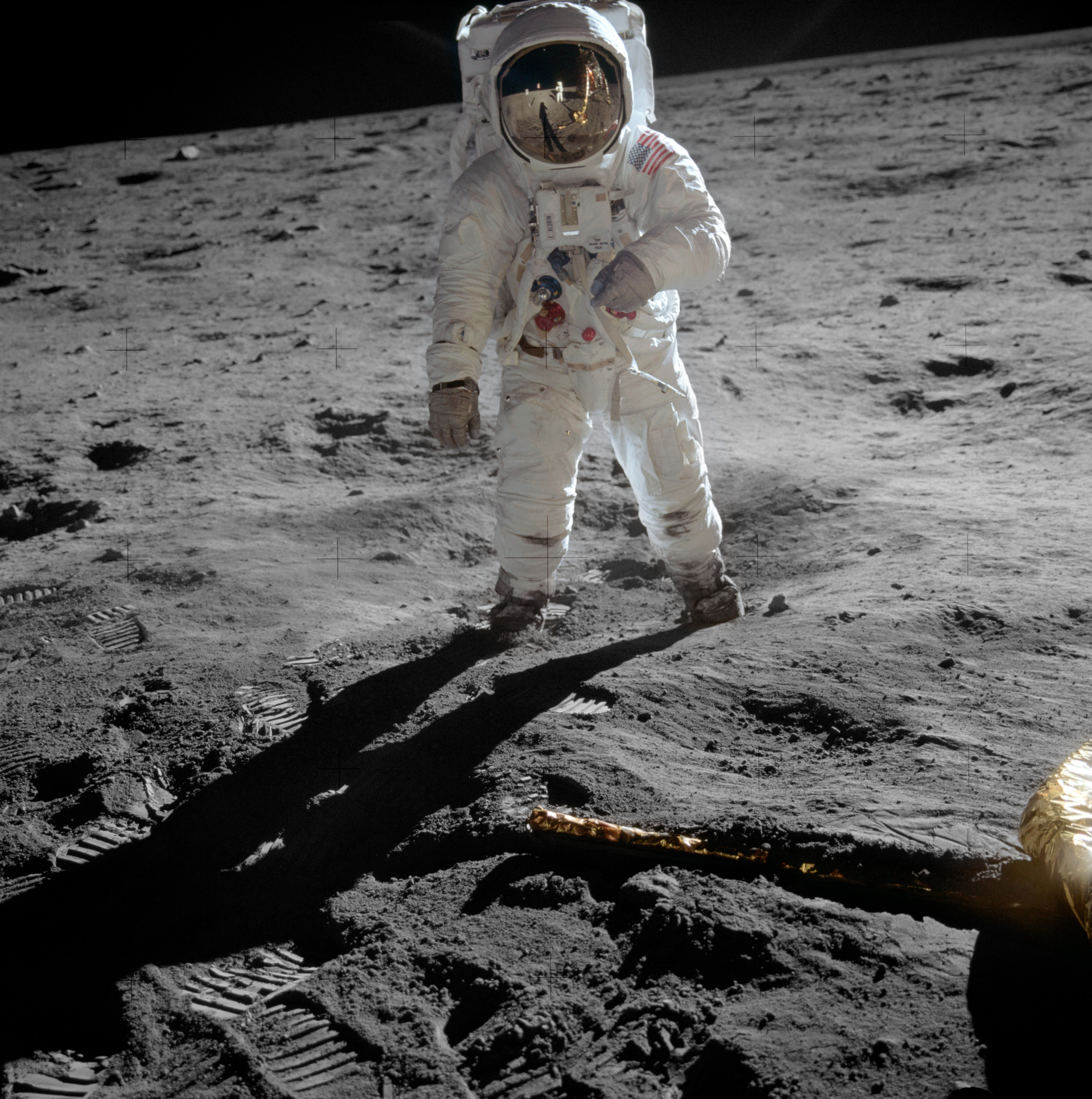
Astronaut Buzz Aldrin on the moon.
You can see Neil Armstrong in the reflection of his visor.
 NASA [Public Domain].

Tuesday, June 11, 2019

LGBTQ Pride Month

June is Lesbian, Gay, Bisexual, Transgender and Queer (LGBTQ) Pride Month. 

You can celebrate by reading one of "The 25 Best LGBT Novels of All Time" according to the Advocate magazine. 

1. Giovanni's Room by James Baldwin
2. The Color Purple by Alice Walker
3. The Price of Salt by Patricia Highsmith
4. Orlando by Virginia Woolf
5. Maurice by E.M Forster
6. Middlesex by Jeffrey Eugenides
7. The Line of Beauty by Alan Hollinghurst
8. Rubyfruit Jungle by Rita Mae Brown
9. Zami by Audre Lorde
10. A Single Man by Christopher Isherwood
11. The City and the Pillar by Gore Vidal
12. The Picture of Dorian Gray by Oscar Wilde
13. City of Night by John Rechy
14. Stone Butch Blues by Leslie Feinberg
15. Tales of the City by Armistead Maupin
16. A Boy's Own Story by Edmund White
17. Well of Loneliness by Radclyffe Hall
18. Fun Home by Allison Bechdel 
19. Death in Venice by Thomas Mann
20. Under the Udala Trees by Chinelo Okparanta
21. Oranges Are Not the Only Fruit by Jeanette Winterson
22. The Hours by Michael Cunningham
23. A Little Life by Hanya Yanagihara
24. Tipping the Velvet by Sarah Waters
25. Faggots by Larry Kramer

A hyperlinked title above means that the book is in our collection, click on the link to find its location. 
You can request to borrow items not in our collection through our interlibrary loan service. 

Wednesday, June 5, 2019

Librarians

Did you know that not everyone who works in a library is a librarian?

Librarians are required to obtain a Master's of Library and Information Science before they can be employed.  This degree can cover a variety of courses (such as information organization, information classification, and information systems) and specialties ( archives, computer science, children's literature and more).  Their responsibilities can range from creating summer reading programs to cataloging library items to marketing the library.

Below are some of the different types of librarians.

Public Librarians.  There are 116, 867 public libraries in the United States. Most of these libraries require a card for you to check out books and other items.  Cards can usually be obtained by bringing in proof that you reside in the geographic area  the library serves. Public librarians manage libraries, order books, determine when damaged or irrelevant items are removed from the collection, plan and hold reading programs and public events, oversee budgets, track statistics, answer questions, help people with research, and more.

                                                         Image from Pixabay.com


School Librarians. School librarians include librarians at K-12 public and private schools. Many school librarians are required to have teacher certification, and to teach in a classroom for three years.  This requirement can vary by state. This is in addition to having a Bachelor's degree and a Master's degree. Some of a school librarian's duties include assisting students with research, managing the library budget, planning programs, evaluating and acquiring new resources, and teaching classes.

                                                                Image from Pixabay.com

Academic Librarians.  These can include law school librarians, a third of whom have a law degree. It also includes librarians at community colleges and four-year universities.  Many academic librarians have a second Master's degree.  Many colleges and universities require their librarians to pursue a tenure track. Requirements for this track can include teaching a for-credit information literacy course, doing research, and publishing in journals. Academic librarians can also help students, staff, and faculty with research, and are often members of university committees.

Image from Pixabay.com


Special librarians.  These are librarians who don't fit into other categories.  These can include media librarians, corporate librarians, government librarians, solo librarians who work in small libraries, and more.

Image from Pixabay.com

Curious about the world of libraries? Check out the American Library Association website, or look up more information about library-related professions at the Occupational Outlook Handbook website.

Thursday, May 23, 2019

Searching Scholarly Databases

All of us have been in that situation as an undergraduate student -- where we have found ourselves lost in the maze of research when needing to locate a peer-reviewed article. We then arrive to the realization that the World Wide Web does not in fact possess the solution to all our academic problems. Well I’m here to tell you it does not have to be that way if you are an active Tarleton student. Tarleton Libraries provide access to multiple databases. They are even organized by subject, labeled as “Subject Guides” on the library home page (www.tarleton.edu/library). Many of these databases are scholarly databases and include peer-reviewed sources.

Where are scholarly databases located? 

Scholarly databases can be found among those listed at the “Databases A-Z” link on the library home page.


Scholarly databases deal only with published information, therefore resources are characterized by authority and trustworthiness. Such databases have features that allow the user to search by publication type, date, language, document format, scholarly/peer-reviewed status, and more.

Various times a year, the Dick Smith Library hosts database sessions to help students learn how to navigate scholarly databases. To learn about these sessions, stay tuned to the library calendar found in the library home page, or follow us on social media. We encourage you to attend and learn about effectively searching scholarly databases. Information seeking skills are worth acquiring, they will not only lighten the load in your journey to academic success, but they will prove to be useful in your professional and personal lives as well.

by Yeidi Rios

Tuesday, May 7, 2019

Asian Pacific American Heritage Month

May is Asian Pacific American Heritage Month. You can celebrate by checking out these titles from our library.

Becoming American, Being Indian: An Immigrant Community in New York City by Madulika S. Khandelwal.
"In her fascinating account of Indian immigrants. . .[the author] explores the ways in which their world has evolved over four decades" from publisher. 

Beyond the Shadow of Camptown: Korean Military Brides in America by Ji-Yeon Yuh. 
"Since. . .1950, nearly 100,000 Korean women have immigrated to the US as the wives of American soldiers. Based on extensive oral interview and archival research [this book] tells the stories of these women" - from publisher. 

Colors of Confinement: Rare Kodachrome Photographs of Japanese American Incarceration in World War II ed. by Eric L. Muller. 
". . .showcases 65 stunning images from this extremely rare collection of color photographs, presented along with three interpretive essays by leading scholars..." - from publisher.


Driven Out: The Forgotten War Against Chinese Americans by Jean Pfaelzer. 
". . .exposes a shocking story of ethnic cleansing in California and the Pacific Northwest when the first Chinese Americans were rounded up and purged from more than 300 communities by lawless citizens and duplicitous politicians" - from publisher. 

From Canton Restaurant to Panda Express: A History of Chinese Food in the United States by Haiming Liu. 
". . .takes readers on a compelling journey from the California Gold Rush to the present, letting readers witness. . .the evolution of many distinct American-Chinese iconic dishes from chop suey to General Tso's chicken" - from publisher. 

Japanese Americans: The History and Culture of a People ed. by Jonathan H.X. Lee.
"This book provides a comprehensive description of the complicated and rich story of the Japanese American experience. . ." - from publisher.


Little Saigons: Staying Vietnamese in America by Karin Aguilar-San Juan. 
"Explores how Vietnamese refugees and immigrants retain their identities in the United States" - from publisher. 

A New History of Asian America by Shelley Sang-Hee Lee.
". . .a fresh up-to-date history of Asians in the United States from the late eighteen century to the present" - from publisher.

Soundtracks of Asian America: Navigating Race Through Musical Performance by Grace Wang.
"Explores how Asian Americans use music to construct narratives of self, race, class, and belonging. . ." - from publisher. 

Typical American: A Novel by Gish Jen.
". . .a darkly humorous account of Chinese immigrants encountering America" - from Publishers Weekly.

Thursday, April 25, 2019

Authorship and Copyright

When you create a work, you own the copyright. However, if you submit that work for publication typically you agree to give up your copyrights to the publisher. Depending on the wording of the agreement you sign with the publisher, you may not have the right to:
  • post your work on your personal website,
  • archive your work in a repository,
  • or (if you're a teacher) distribute multiple copies of it to your classes over multiple semesters.
If you plan to submit an article to a scholarly journal, then it's a good idea to find out what rights that journal allows authors to retain. SHERPA RoMEO is a website that "aggregates and analyses publisher open access policies from around the world." It contains information on over 2000 journals, and classifies them based on how restrictive they are on author rights. 


SHERPA RoMEO's classification system. Green is most lenient, and white is most restrictive. 

One option an author has to retain some rights is to negotiate with the publisher. The Scholarly Publishing and Academic Resources Coalition (SPARC) is an international organization that "works to enable the open sharing or research outputs and educational materials in order to democratize access to knowledge." SPARC encourages authors to add the SPARC Addendum to any contract they sign with a publisher. This addendum allows the author to retain some of their copyrights. 

If you have questions about copyright, then you should check out the library's copyright information web page or email your question to mylibrary@tarleton.edu. 

Tuesday, April 23, 2019

World Book and Copyright Day

World Book and Copyright Day takes place on April 23 in many parts of the globe. It's a day that promotes reading and publishing that's been celebrated worldwide since 1995 but goes back to the late 1920s in Catalonia. It is sponsored by the United Nations Educational Scientific and Cultural Organization.

You can find out much more information about World Book Day, including their mission to get more books directly into the hands of children and young people at https://www.worldbookday.com/
The website also includes many resources and book suggestions on what to read!


Monday, April 15, 2019

Keep Up With Us Through Our Social Media

Did you know that you can follow the library on a wide variety of social networks?


The blog that you're reading right now has hundreds of entries dating back to 2007.  
Subjects run the gamut from library resources to glimpses of Tarleton history.


This is still the world's largest social network, with over a billion users worldwide.  
The Tarleton Libraries have been on it since 2009.  
Keep up with the latest news and events by liking our page.

A screenshot of the library's Facebook page.

Flickr is a free photo sharing service.  
Though it may not be as popular as it once was,
 it's still a terrific destination for hobbyists and professional photographers alike.
You can also find sample pictures from various camera models. 
The Tarleton Libraries have over four thousand pictures on the site. 
Our account is filled with great pictures that we didn't have room for 
in our other social media posts. Our account is like a giant photo album.

The Tarleton Libraries' Flickr page.
Instagram has over 77 million users.  Our Insta account has great pictures and videos 
that will give you a quick "snapshot" of what we're doing. 
For example, the three pictures below, from left to right, feature:
  • a call to donate on Giving Day
  • a picture of some of our great student workers, for Student Worker Appreciation Day
  • some of our library employees wearing teal shirts for Sexual Assault Awareness Month.

A screenshot of the library's Instagram account.


We have over 1800 followers on Twitter, the microblogging service. 
Following us on Twitter is a great way to get bite-sized library news, 
tips for succeeding at Tarleton, and maybe even a re-tweet if you 
mention the library (don't worry, we'll ask your permission first).

A screenshot of the Tarleton Libraries' Twitter account.


Our YouTube account is a great place to go for library tutorials.

A screenshot of our YouTube account.

If you've never tried Pinterest, think of it as a collection of online bulletin boards, organized by subject.  Some of our boards include:

....and lots more.

A screenshot of our Pinterest account.
We hope you'll join us by following one or more of our social media accounts.  By the way, the best place to get research help is still our Reference desk. You can also call  (254) 968-9249 for the Stephenville campus, or (817) 968-3315 for Texan Hall in Fort Worth. Lastly, you can email us at reference@tarleton.edu.