All of us have been in that situation as an undergraduate student -- where we have found ourselves lost in the maze of research when needing to locate a peer-reviewed article. We then arrive to the realization that the World Wide Web does not in fact possess the solution to all our academic problems. Well I’m here to tell you it does not have to be that way if you are an active Tarleton student. Tarleton Libraries provide access to multiple databases. They are even organized by subject, labeled as “Subject Guides” on the library home page (www.tarleton.edu/library). Many of these databases are scholarly databases and include peer-reviewed sources.
Where are scholarly databases located?
Scholarly databases can be found among those listed at the “Databases A-Z” link on the library home page.
Scholarly databases deal only with published information, therefore resources are characterized by authority and trustworthiness. Such databases have features that allow the user to search by publication type, date, language, document format, scholarly/peer-reviewed status, and more.
Various times a year, the Dick Smith Library hosts database sessions to help students learn how to navigate scholarly databases. To learn about these sessions, stay tuned to the library calendar found in the library home page, or follow us on social media. We encourage you to attend and learn about effectively searching scholarly databases. Information seeking skills are worth acquiring, they will not only lighten the load in your journey to academic success, but they will prove to be useful in your professional and personal lives as well.
by Yeidi Rios
Add your comments! Give your opinions. Tell us how we can make Tarleton Libraries better!
Thursday, May 23, 2019
Tuesday, May 7, 2019
Asian Pacific American Heritage Month
May is Asian Pacific American Heritage Month. You can celebrate by checking out these titles from our library.
Becoming American, Being Indian: An Immigrant Community in New York City by Madulika S. Khandelwal.
"In her fascinating account of Indian immigrants. . .[the author] explores the ways in which their world has evolved over four decades" from publisher.
Beyond the Shadow of Camptown: Korean Military Brides in America by Ji-Yeon Yuh.
"Since. . .1950, nearly 100,000 Korean women have immigrated to the US as the wives of American soldiers. Based on extensive oral interview and archival research [this book] tells the stories of these women" - from publisher.
Colors of Confinement: Rare Kodachrome Photographs of Japanese American Incarceration in World War II ed. by Eric L. Muller.
". . .showcases 65 stunning images from this extremely rare collection of color photographs, presented along with three interpretive essays by leading scholars..." - from publisher.
Driven Out: The Forgotten War Against Chinese Americans by Jean Pfaelzer.
". . .exposes a shocking story of ethnic cleansing in California and the Pacific Northwest when the first Chinese Americans were rounded up and purged from more than 300 communities by lawless citizens and duplicitous politicians" - from publisher.
From Canton Restaurant to Panda Express: A History of Chinese Food in the United States by Haiming Liu.
". . .takes readers on a compelling journey from the California Gold Rush to the present, letting readers witness. . .the evolution of many distinct American-Chinese iconic dishes from chop suey to General Tso's chicken" - from publisher.
Japanese Americans: The History and Culture of a People ed. by Jonathan H.X. Lee.
"This book provides a comprehensive description of the complicated and rich story of the Japanese American experience. . ." - from publisher.

Little Saigons: Staying Vietnamese in America by Karin Aguilar-San Juan.
"Explores how Vietnamese refugees and immigrants retain their identities in the United States" - from publisher.
A New History of Asian America by Shelley Sang-Hee Lee.
". . .a fresh up-to-date history of Asians in the United States from the late eighteen century to the present" - from publisher.
Soundtracks of Asian America: Navigating Race Through Musical Performance by Grace Wang.
"Explores how Asian Americans use music to construct narratives of self, race, class, and belonging. . ." - from publisher.
Typical American: A Novel by Gish Jen.
". . .a darkly humorous account of Chinese immigrants encountering America" - from Publishers Weekly.
Becoming American, Being Indian: An Immigrant Community in New York City by Madulika S. Khandelwal."In her fascinating account of Indian immigrants. . .[the author] explores the ways in which their world has evolved over four decades" from publisher.
Beyond the Shadow of Camptown: Korean Military Brides in America by Ji-Yeon Yuh.
"Since. . .1950, nearly 100,000 Korean women have immigrated to the US as the wives of American soldiers. Based on extensive oral interview and archival research [this book] tells the stories of these women" - from publisher.
Colors of Confinement: Rare Kodachrome Photographs of Japanese American Incarceration in World War II ed. by Eric L. Muller.
". . .showcases 65 stunning images from this extremely rare collection of color photographs, presented along with three interpretive essays by leading scholars..." - from publisher.
Driven Out: The Forgotten War Against Chinese Americans by Jean Pfaelzer.
". . .exposes a shocking story of ethnic cleansing in California and the Pacific Northwest when the first Chinese Americans were rounded up and purged from more than 300 communities by lawless citizens and duplicitous politicians" - from publisher.
From Canton Restaurant to Panda Express: A History of Chinese Food in the United States by Haiming Liu.
". . .takes readers on a compelling journey from the California Gold Rush to the present, letting readers witness. . .the evolution of many distinct American-Chinese iconic dishes from chop suey to General Tso's chicken" - from publisher.
Japanese Americans: The History and Culture of a People ed. by Jonathan H.X. Lee.
"This book provides a comprehensive description of the complicated and rich story of the Japanese American experience. . ." - from publisher.

Little Saigons: Staying Vietnamese in America by Karin Aguilar-San Juan.
"Explores how Vietnamese refugees and immigrants retain their identities in the United States" - from publisher.
A New History of Asian America by Shelley Sang-Hee Lee.
". . .a fresh up-to-date history of Asians in the United States from the late eighteen century to the present" - from publisher.
Soundtracks of Asian America: Navigating Race Through Musical Performance by Grace Wang.
"Explores how Asian Americans use music to construct narratives of self, race, class, and belonging. . ." - from publisher.
Typical American: A Novel by Gish Jen.
". . .a darkly humorous account of Chinese immigrants encountering America" - from Publishers Weekly.
Thursday, April 25, 2019
Authorship and Copyright
When you create a work, you own the copyright. However, if you submit that work for publication typically you agree to give up your copyrights to the publisher. Depending on the wording of the agreement you sign with the publisher, you may not have the right to:
- post your work on your personal website,
- archive your work in a repository,
- or (if you're a teacher) distribute multiple copies of it to your classes over multiple semesters.
If you plan to submit an article to a scholarly journal, then it's a good idea to find out what rights that journal allows authors to retain. SHERPA RoMEO is a website that "aggregates and analyses publisher open access policies from around the world." It contains information on over 2000 journals, and classifies them based on how restrictive they are on author rights.
SHERPA RoMEO's classification system. Green is most lenient, and white is most restrictive.
One option an author has to retain some rights is to negotiate with the publisher. The Scholarly Publishing and Academic Resources Coalition (SPARC) is an international organization that "works to enable the open sharing or research outputs and educational materials in order to democratize access to knowledge." SPARC encourages authors to add the SPARC Addendum to any contract they sign with a publisher. This addendum allows the author to retain some of their copyrights.
If you have questions about copyright, then you should check out the library's copyright information web page or email your question to mylibrary@tarleton.edu.
Tuesday, April 23, 2019
World Book and Copyright Day
World Book and Copyright Day takes place on April 23 in many parts of
the globe. It's a day that promotes reading and publishing that's been
celebrated worldwide since 1995 but goes back to the late 1920s in
Catalonia. It is sponsored by the United Nations Educational Scientific
and Cultural Organization.
You can find out much more information about World Book Day, including their mission to get more books directly into the hands of children and young people at https://www.worldbookday.com/
The website also includes many resources and book suggestions on what to read!
You can find out much more information about World Book Day, including their mission to get more books directly into the hands of children and young people at https://www.worldbookday.com/
The website also includes many resources and book suggestions on what to read!
Monday, April 15, 2019
Keep Up With Us Through Our Social Media
Did you know that you can follow the library on a wide variety of social networks?
The blog that you're reading right now has hundreds of entries dating back to 2007.
Subjects run the gamut from library resources to glimpses of Tarleton history.
This is still the world's largest social network, with over a billion users worldwide.
The Tarleton Libraries have been on it since 2009.
Keep up with the latest news and events by liking our page.
![]() |
| A screenshot of the library's Facebook page. |
Flickr is a free photo sharing service.
Though it may not be as popular as it once was,
it's still a terrific destination for hobbyists and professional photographers alike.
You can also find sample pictures from various camera models.
The Tarleton Libraries have over four thousand pictures on the site.
Our account is filled with great pictures that we didn't have room for
in our other social media posts. Our account is like a giant photo album.
Instagram has over 77 million users. Our Insta account has great pictures and videos
that will give you a quick "snapshot" of what we're doing.
For example, the three pictures below, from left to right, feature:
- a call to donate on Giving Day
- a picture of some of our great student workers, for Student Worker Appreciation Day
- some of our library employees wearing teal shirts for Sexual Assault Awareness Month.
![]() |
| A screenshot of the library's Instagram account. |
We have over 1800 followers on Twitter, the microblogging service.
Following us on Twitter is a great way to get bite-sized library news,
tips for succeeding at Tarleton, and maybe even a re-tweet if you
mention the library (don't worry, we'll ask your permission first).
![]() |
| A screenshot of the Tarleton Libraries' Twitter account. |
Our YouTube account is a great place to go for library tutorials.
![]() |
| A screenshot of our YouTube account. |
If you've never tried Pinterest, think of it as a collection of online bulletin boards, organized by subject. Some of our boards include:
....and lots more.
![]() |
| A screenshot of our Pinterest account. |
We hope you'll join us by following one or more of our social media accounts. By the way, the best place to get research help is still our Reference desk. You can also call (254) 968-9249 for the Stephenville campus, or (817) 968-3315 for Texan Hall in Fort Worth. Lastly, you can email us at reference@tarleton.edu.
Friday, April 12, 2019
A Grassburr Love Story
Our special collections and archives staff has being going through all the print copies of the Grassburr yearbooks (also online) that we have, to figure out which ones we should keep. We came across two from 1933 that have an interesting story and connection. Click on all images throughout this post to view them larger.
The first book belonged to James Byron "Mississippi" Gregory, who graduated from Tarleton in 1933. Besides his name and nickname inside the front cover, we found a couple loose items - his diploma, and a valentine.
Here's the inside of the valentine. It is signed simply, "Jo."
Another yearbook from 1934 belonged to a Josephine "Jo" Coleman, who listed her address inside the front cover as 4709 Pershing in Fort Worth. It had an envelope pasted inside the front cover, with a handwritten paper titled "Advice for girl" (with some pretty bad puns) folded inside it:

Paging through Byron's yearbook to the page with Jo's picture, among the many signatures there is "Yo te amo. Jo," next to journalism major Josephine Coleman's name and picture. Yo te amo is, of course, Spanish for "I love you." Jo served as a proofreader on the J-TAC.
There was also a paper John Tarleton Agricultural College pennant (scanned here against the reverse side of Byron's diploma, to provide adequate contrast).

Mary Josephine "Jo" Coleman Gregory was born in Shreveport, Louisiana, on March 13, 1913, the oldest of two daughters. She died October 21, 1994, in Fort Worth. The couple is buried in Greenwood Memorial Park in Fort Worth.
The first book belonged to James Byron "Mississippi" Gregory, who graduated from Tarleton in 1933. Besides his name and nickname inside the front cover, we found a couple loose items - his diploma, and a valentine.
Here's the inside of the valentine. It is signed simply, "Jo."
Another yearbook from 1934 belonged to a Josephine "Jo" Coleman, who listed her address inside the front cover as 4709 Pershing in Fort Worth. It had an envelope pasted inside the front cover, with a handwritten paper titled "Advice for girl" (with some pretty bad puns) folded inside it:

Paging through Byron's yearbook to the page with Jo's picture, among the many signatures there is "Yo te amo. Jo," next to journalism major Josephine Coleman's name and picture. Yo te amo is, of course, Spanish for "I love you." Jo served as a proofreader on the J-TAC.
Further on in Byron's yearbook (on the blank page opposite the beginning of the Athletics section), Jo wrote a long message to "my darling" Byron, including these sentences:
"You are a part of Tarleton - it will never be complete without you. Tarleton gave me a lot of things - things both in and out of books, these things I shall never be able to forget. You are the most important."
Paging through Jo's yearbook to the page with Byron's senior picture, you can see he was from Thaxton, Mississippi (hence the nickname), and majored in Agricultural Education. He was a member of the Hired Hands club, the Glee Club, the basketball team, and the "T" Association. To the right of the picture, he wrote this message for Jo: "just a crazy boy what's very fond of you. Try to love Mississippi a little bit always."
Byron's yearbook included a number of loose items tucked among the pages, including these photographs. They may not all be from his time at Tarleton. Unfortunately none of the photographs has any identifying information, although the headshot is clearly of Byron. There was also a calling card from Jo (whose given first name was actually Mary), with a handwritten note wishing him a happy birthday.
There was also a paper John Tarleton Agricultural College pennant (scanned here against the reverse side of Byron's diploma, to provide adequate contrast).

Jo's yearbook had a number of glued-in items, particularly clippings from the J-TAC newspaper. There weren't as many loose items, but one was a negative, which I scanned to produce this lovely image. It wasn't immediately clear if this was Jo, though.
There was another loose item proved to be significant - a graduation program for the 1930 class of W. C. Stripling High School.
What was Stripling High School from 1927 to 1937 is now Stripling Middle School in Fort Worth. The school is just a few blocks from Jo's Pershing street home address. A little more searching turned up Josephine's picture in the high school's 1931 yearbook, and it looks just like the picture of the graduate above.
According to his obituary in the July 30, 1998 Fort Worth Star Telegram (page 8), James Byron "Mississippi" Gregory was born December 18, 1910, in Thaxton, Mississippi, one of 13 children. After graduating from Tarleton in 1933, he attended what was them Oklahoma A&M (now Oklahoma State) in Stillwater. (He is in their 1934 and 1935 yearbooks, and also attended the 1934 summer session).
In the 1940 Census, Byron and Jo are living in Idabel, McCurtain County, Oklahoma, and are listed as married. J. B. (Byron) is a county agent and has had five years of college. Josephine (Jo) has one year of college, so it appears she did not return to Tarleton after the 1932-1933 school year. In 1935, Byron was living in Stillwater and Jo in Fort Worth, so they must have married sometime between 1935 and 1940.
Byron served in the Oklahoma National Guard, and then joined the Army, serving in World War II. He and Jo lived in Texas, Germany, Kansas, Indiana, Virginia, and Taiwan during his service, according to the Alumni J-TAC. He retired from the military in 1962 as a colonel with the Army adjutant general's office in Washington, D.C., and the U.S. Military Academy in West Point. After retirement, he became a real estate broker and retired again in 1982. He died July 27, 1998, in Fort Worth.
Mary Josephine "Jo" Coleman Gregory was born in Shreveport, Louisiana, on March 13, 1913, the oldest of two daughters. She died October 21, 1994, in Fort Worth. The couple is buried in Greenwood Memorial Park in Fort Worth.
They had no children, and Byron was a Diamond Century Club member in the 1996-97 Tarleton Alumni Association, so that is perhaps how these two lovebirds' yearbooks ended up back at Tarleton.
Monday, April 1, 2019
Sexual Assault Awareness Month
Eighteen years ago, the National Sexual Violence Resource Center established April as Sexual Assault Awareness Month (SAAM) in order to raise awareness of sexual assault instances, harassment, and abuse and to educate others on how to prevent it.
Since then, college campuses have joined the cause of raising awareness and prevention by holding gatherings, spreading the need for consent, and providing a platform where survivors can be heard.
Tarleton's Student Counseling Services has created a Sexual Assault Awareness Month Resources web page that is filled with various resources pertaining to being an active bystander, consent awareness, and other helpful resources.
Student Counseling Services is also hosting a variety of events, both on Tarleton's campus as well as within the Stephenville community, to help raise awareness. These include:
- April 2nd SAAM Kickoff
- What: Learn about SAAM, grab swag, and learn how to be part of the solution during the SAAM Kickoff.
- When: 11AM - 2PM
- Where: TSC Dining Patio.
- April 9th Guest Speaker
- What: CL Lindsey presents on "Sex and the Law", consent, and more.
- When: 6PM - 8PM
- Where: TSC Ballrooms.
- April 11th Stop The Silence
- What: Hear local speakers, listen to survivor stories, and show your commitment.
- When: 5:30PM
- Where: Cowboy Capital Plaza
- April 24th Denim Day
- What: Join the International protest by wearing your jeans to show your support for survivors.
- When: All Day
- Where: On campus and online
Library Display
Lastly, the Dick Smith Library has created a small display of books pertaining to sexual assault awareness. This display is located on the Upper Level, near the Copy Room. Feel free to check any of the books out to read at your leisure. Other resources can be found in our databases and catalog as well.
If you need assistance in finding resources, be sure to contact us at reference@tarleton.edu or 254-968-9249.
Tuesday, March 26, 2019
Historical New York Times
| Headline from April 15, 1865, the day after the assassination |
The New York Times newspaper has been in continuous operation since 1851. If you're looking for primary sources on a significant event in US or world history after that year, then the New York Times probably has an article about it.
The Dick Smith Library has access to the historical New York Times from 1851 through 2014 via the ProQuest database, which can be found here.
When you first open the database you'll see the basic search screen. If you know the exact title of the article you're looking for, then this screen might work for you. If not, then you should click on the advanced search link.
| Basic search screen. |
The advanced search page gives you the ability to search with multiple key words connected with Boolean operators, search within a specific date range, and select the type of document you're looking for (article, advertisement, etc.).
| Advanced search screen |
Wednesday, March 20, 2019
John Tarleton's Land Patent
About a month ago, the library's archives received some documents from the President's Vault pertaining to the history of Tarleton State University.
This is the 1861 patent for some of the land that became part of Tarleton's estate, the sale of which helped create John Tarleton Agricultural College . This describes a 1605-acre parcel in Erath and Palo Pinto Counties (click on all images to view them larger):
The certificate describes the boundaries of the "Nine and 060.000/1000.000 labors of land, situated and described as follows: In Palo Pinto County, on the waters of Buck and Sunday Creeks. Tributaries of the Brazos River, about 18 ½ miles S. 19° E. from the Town of Palo Pinto. Known as Survey No. 36." Actually, though, most of the land is in Erath County.
A labor was a Spanish land unit measuring 177.1 acres, so 9.06 labors is equal to 1604.526 acres.
Here is a map of the land it refers to - it's the part outlined in purple. There are two parcels in Survey #36, 1407 acres (designated G. W. Treighen A-758 on the map) in Erath County, and a smaller 198-acre parcel (designated G. W. Treighen A-1937 on the map) in Palo Pinto County. This map was created using the Land/Lease Mapping Viewer of the Texas General Land Office.
Glued to the bottom-right edge of the certificate pictured above is a Certificate of Record, showing that the information on the patent certificate "was duly and correctly recorded...., on the 9th day of May 1877...., in [Deed] Record Book H Page 415" of Erath County.
The land grant process in Texas (both as a Republic and in early statehood) involved three basic steps.
First, individuals received a land certificate for a specified amount of land if certain qualifications were met. Texas created a variety of programs with different qualifications for land. Land grant certificates were not issued for a specific tract of land. After a certificate was issued, it was the responsibility of the certificate holder to find vacant public land, obtain a survey, and apply for the patent.
A grantee (the person who was originally awarded the land certificate) could transfer (assign) the land certificate to another individual (called the assignee), by sale or gift. As a result, many people who received land certificates did not actually settle on the tract of land which bears their name, as those tracts were named for the original grantee.
Next, the grantee or the assignee would locate available land from the public domain. It did not have to be in the same county where the certificate was issued. Using the certificate, a grantee or assignee could have the desired land surveyed. The field notes were sent to the Texas General Land Office and filed.
Finally, after fulfilling any conditions of the particular land grant program, such as making improvements to the land, and paying any required fees, the individual could then apply for a patent from the Texas General Land Office. Once that patent was issued, this person was referred to as the patentee.
So George W. Treighen was the original grantee, but the certificate was apparently "transferred by said Treighen to C. S. Brown May 1st 1845, by him transferred to Jno. D. Brown January 3rd 1854, by him transferred to said Tarleton March 24, 1859." John Tarleton was the final assignee, who found available land, had it surveyed, and then did what he needed to do by September 20, 1861, to get the land patent.
This is the 1861 patent for some of the land that became part of Tarleton's estate, the sale of which helped create John Tarleton Agricultural College . This describes a 1605-acre parcel in Erath and Palo Pinto Counties (click on all images to view them larger):
The certificate describes the boundaries of the "Nine and 060.000/1000.000 labors of land, situated and described as follows: In Palo Pinto County, on the waters of Buck and Sunday Creeks. Tributaries of the Brazos River, about 18 ½ miles S. 19° E. from the Town of Palo Pinto. Known as Survey No. 36." Actually, though, most of the land is in Erath County.
A labor was a Spanish land unit measuring 177.1 acres, so 9.06 labors is equal to 1604.526 acres.
Here is a map of the land it refers to - it's the part outlined in purple. There are two parcels in Survey #36, 1407 acres (designated G. W. Treighen A-758 on the map) in Erath County, and a smaller 198-acre parcel (designated G. W. Treighen A-1937 on the map) in Palo Pinto County. This map was created using the Land/Lease Mapping Viewer of the Texas General Land Office.
Glued to the bottom-right edge of the certificate pictured above is a Certificate of Record, showing that the information on the patent certificate "was duly and correctly recorded...., on the 9th day of May 1877...., in [Deed] Record Book H Page 415" of Erath County.
The land grant process in Texas (both as a Republic and in early statehood) involved three basic steps.
First, individuals received a land certificate for a specified amount of land if certain qualifications were met. Texas created a variety of programs with different qualifications for land. Land grant certificates were not issued for a specific tract of land. After a certificate was issued, it was the responsibility of the certificate holder to find vacant public land, obtain a survey, and apply for the patent.
A grantee (the person who was originally awarded the land certificate) could transfer (assign) the land certificate to another individual (called the assignee), by sale or gift. As a result, many people who received land certificates did not actually settle on the tract of land which bears their name, as those tracts were named for the original grantee.
Next, the grantee or the assignee would locate available land from the public domain. It did not have to be in the same county where the certificate was issued. Using the certificate, a grantee or assignee could have the desired land surveyed. The field notes were sent to the Texas General Land Office and filed.
Finally, after fulfilling any conditions of the particular land grant program, such as making improvements to the land, and paying any required fees, the individual could then apply for a patent from the Texas General Land Office. Once that patent was issued, this person was referred to as the patentee.
So George W. Treighen was the original grantee, but the certificate was apparently "transferred by said Treighen to C. S. Brown May 1st 1845, by him transferred to Jno. D. Brown January 3rd 1854, by him transferred to said Tarleton March 24, 1859." John Tarleton was the final assignee, who found available land, had it surveyed, and then did what he needed to do by September 20, 1861, to get the land patent.
Tuesday, February 19, 2019
Top Ten Tuesday
Top Ten Tuesday: Top Ten Books About Presidents
Yesterday was Presidents' Day, a day were we celebrate U.S. current and past presidents. Being in a celebratory mood, I thought it would be interesting to find a Top Ten list for biographical books about past presidents. Here are 10 books that were listed in an article by The New York Times:
1.) Washington: A Life by Ron Chernow
2.) John Adams by David McCullough
3.) American Sphinx: The Character of Thomas Jefferson by Joseph Ellis
4.) American Lion: Andrew Jackson in the White House by Jon Meacham
5.) Lincoln by David Herbert Donald
6.) The Triumph of William Mckenley: Why the Election of 1896 Still Matters by Karl Rove
7.) A Thousand Days: John F. Kennedy in the White House by Arthur M. Schlesiger Jr.
8.) Master of the Senate: The Years of Lyndon Johnson by Robert A. Caro
9.) Nixon Agonists: The Crisis of the Self-Made Man by Garry Wills
10.) Dreams From My Father: A Story of Race and Inheritance by Barack Obama
So what are your Top Ten biographical books for current and past presidents that you want to read? And remember, if it isn't in the library's catalog then you can request it through InterLibrary Loan.
Happy Reading!!
Thursday, February 14, 2019
Library Loves Copyright
Copyright law can be a tricky, especially in the educational context. However, the library loves copyright, because it protects the legal rights of authors, artists, and all creators of intellectual property.
Your library has a Copyright Taskforce. The taskforce works to answer any copyright questions you may have. The taskforce has recently created a presentation about copyright as it relates to showing videos in the classroom; in online classrooms; and in public. You can watch it here:
Contact the taskforce at mylibrary@tarleton.edu with any copyright questions you may have.
Monday, February 4, 2019
Streaming videos on Overdrive
You may be familiar with our Overdrive database. It is a great resource for e-books to download onto your mobile device. There is also a wide variety of audio books that you can stream or download.
But did you know that Overdrive also has a growing streaming video collection?
Here's how to access the videos (note: you must be a Tarleton student or a staff or faculty member to use Overdrive. If you are not a student, you may have access through your local library).
Note: the screenshots below were taken from a desktop computer.
HOW TO ACCESS STREAMING VIDEOS ON OVERDRIVE
1. Go to the library's home page at www.tarleton.edu/library.
2. Click on Databases A-Z.
3. Under N-O, click on Overdrive.
4. You will be asked to sign in with your NTNET credentials.
You will then be taken to Overdrive's home page.
5. If you are on a desktop or laptop computer, click Collections on the top left of the screen and go to Videos.
If you are on a smartphone, click the three horizontal lines on the top right of the screen. They will open a drop-down menu. Scroll down the menu section until you reach Videos.
6. Under Videos, you can click on Available Now, New Video Additions, Most Popular or See All.
7. Click on a video title to get information.
8. You can click Borrow on an individual title. A pop up window will confirm that you are borrowing the movie. You then have 3 days to view it on your browser (laptop or desktop computer) or on your mobile device. You can also click Sample to view a movie trailer.
Currently there are 286 streaming videos available on Overdrive, with more being added all the time.
But did you know that Overdrive also has a growing streaming video collection?
Here's how to access the videos (note: you must be a Tarleton student or a staff or faculty member to use Overdrive. If you are not a student, you may have access through your local library).
Note: the screenshots below were taken from a desktop computer.
HOW TO ACCESS STREAMING VIDEOS ON OVERDRIVE
1. Go to the library's home page at www.tarleton.edu/library.
![]() |
| screenshot of library's homepage. |
2. Click on Databases A-Z.
3. Under N-O, click on Overdrive.
![]() |
| Screenshot of Databases A-Z page. |
4. You will be asked to sign in with your NTNET credentials.
You will then be taken to Overdrive's home page.
![]() |
| Screenshot of Overdrive's main screen. Retrieved Feb 2, 2019. |
If you are on a smartphone, click the three horizontal lines on the top right of the screen. They will open a drop-down menu. Scroll down the menu section until you reach Videos.
6. Under Videos, you can click on Available Now, New Video Additions, Most Popular or See All.
![]() |
| Screenshot of Overdrive videos. Retrieved Feb 2, 2019. |
8. You can click Borrow on an individual title. A pop up window will confirm that you are borrowing the movie. You then have 3 days to view it on your browser (laptop or desktop computer) or on your mobile device. You can also click Sample to view a movie trailer.
![]() |
| Screenshot of information for Silver Linings Playbook. Retrieved Feb 2, 2019. |
Monday, January 28, 2019
2019 American Library Association Youth Media Awards
Pictured above are just a few of the winners of various American Library Association Youth Media Awards for 2019, announced this morning. Check out the link above for a list of all the winners. Watch for many of these titles to be added to the Tarleton Libraries' collections!
Clockwise from upper left:
- Merci Suarez Changes Gears, winner of the John Newbery Medal for the most outstanding contribution to children's literature;
- Hello Lighthouse, winner of the Randolph Caldecott Medal for the most distinguished American picture book for children;
- Rescue & Jessica: A Life-Changing Friendship, winner of the Schneider Family Book Award for young children (ages 0-10), for "embodying an artistic expression of the disability experience," and
- The Fox on the Swing, winner of the Mildred L. Batchelder Award for an outstanding children’s book originally published in a language other than English in a country other than the United States (it was originally published in Lithuanian as Laime Yra Lape).
Monday, January 21, 2019
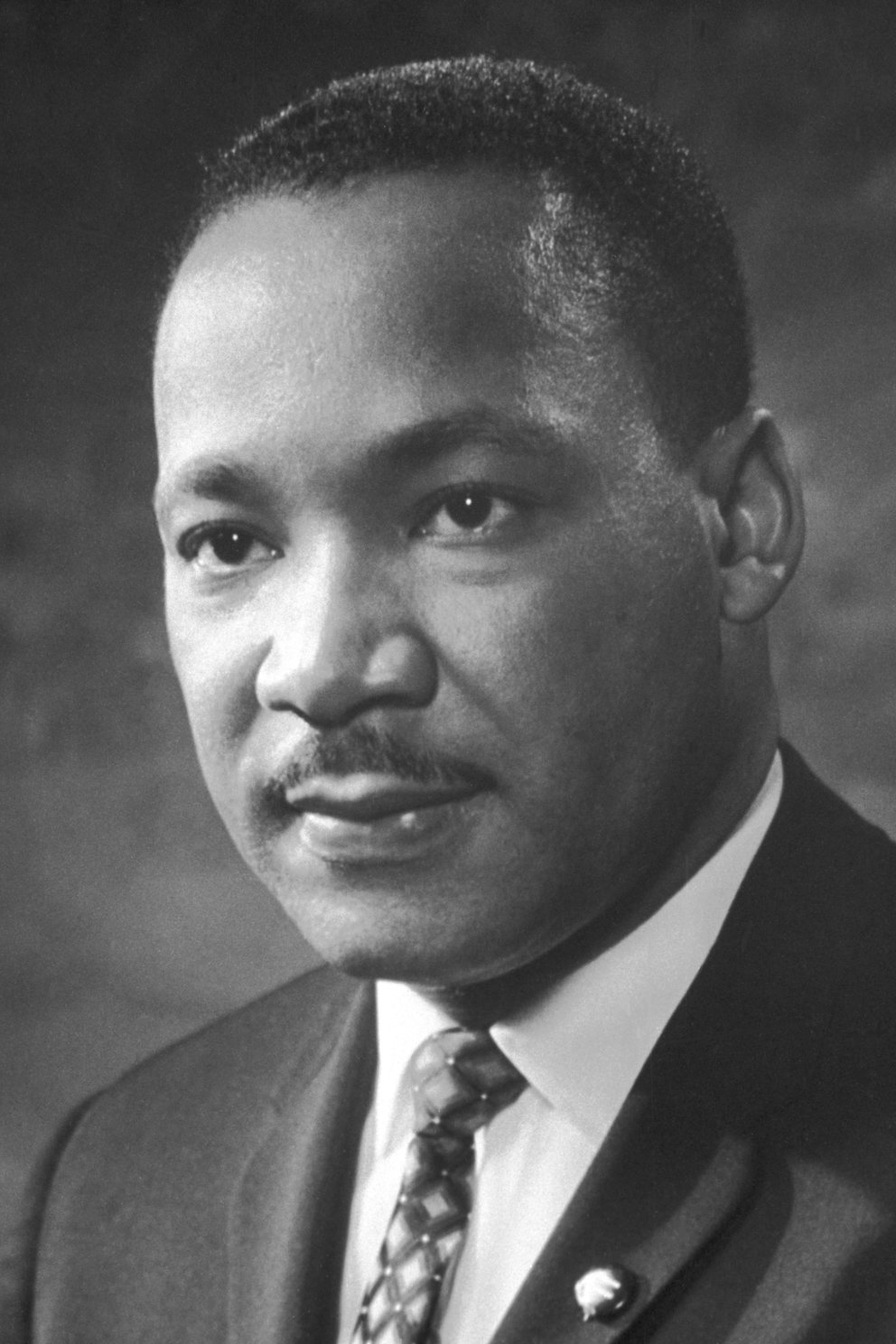
Martin Luther King Jr. Day
![]() |
| Martin Luther King Jr. 1964 Nobel Foundation [Public domain] via Wikimedia Commons |
The push to make this a national holiday was contentious. The first bill was introduced in the US House of Representatives in 1968, just four days after King's assassination. However, it was not brought up for a full vote of the House until 1979, where it lost by 5 votes. The bill finally became law in 1983, and the first MLK Day was celebrated in 1986.
Tarleton's Dick Smith Library has a wealth of resources by and about Martin Luther King Jr. such as these titles:
![]() |
| King at the March on Washington in 1963, where he gave his famous "I Have a Dream Speech." [Public domain], via Wikimedia Commons |
The Papers of Martin Luther King, Jr.
The Radical King
A Lasting Prophetic Legacy
Waking from the Dream
Misremembering Dr. King
Selma to Saigon
Extremist for Love
The Speech
The King Years
Martin's Dream
The Awful Grace of God
Behind the Dream
Hellhound on His Trail
The Trumpet of Conscience
Where Do We Go from Here?
Subscribe to:
Posts (Atom)