As you know from a previous blog post done in January, the library has several outlets of social media. We have a Facebook page, Twitter, Pinterest, and Flickr, to name a few. You can find out when the library's upcoming events, hours, and resources that are available.
Did you know that we've had a Facebook page and Twitter since 2009, Flickr since 2007 and we just added Pinterest a few months ago. Makes you wonder how the library managed without social media before!
Tarleton Libraries Joined Facebook on October 16, 2009
Have any of our social media outlets ever helped you out? Let us know how we can better help you with your academic needs. As always, feel free to comment, like us, tweet or email us!
Call (254) 968-9249 or Email reference@tarleton.edu for help.
We love to help.
The recent glitch in Amazon's cloud storage that knocked out several popular websites is a timely reminder that backing up materials is usually best practice.
Now that we're all storing so many items on social media, we often forget that digital storage doesn't equal permanent storage (not sure what does) and forget to make backups. Then, when something does go wrong, all we can do is mourn the loss of those files, pictures, papers, etc.
To help us avoid that situation, the tutorial "How To: Back Up Your Social Media Presence Before the Ball Drops" by Brenna Ehrlich at Mashable provides great tips for downloading and backing up many types of online content. The tutorial is organized into four parts, so finding just what's needed should be a snap:
-- Back Up Your Facebook -- Back Up Your Tweets -- Back Up Your Blog -- Back Up Your Photos
In a recent post here, Janie mentioned fore-edge paintings, something I’ve wanted to blog about for a long time! It's easier to show how fore-edge paintings work than write/talk about them, so I've included some very-short videos (with no audio) below.
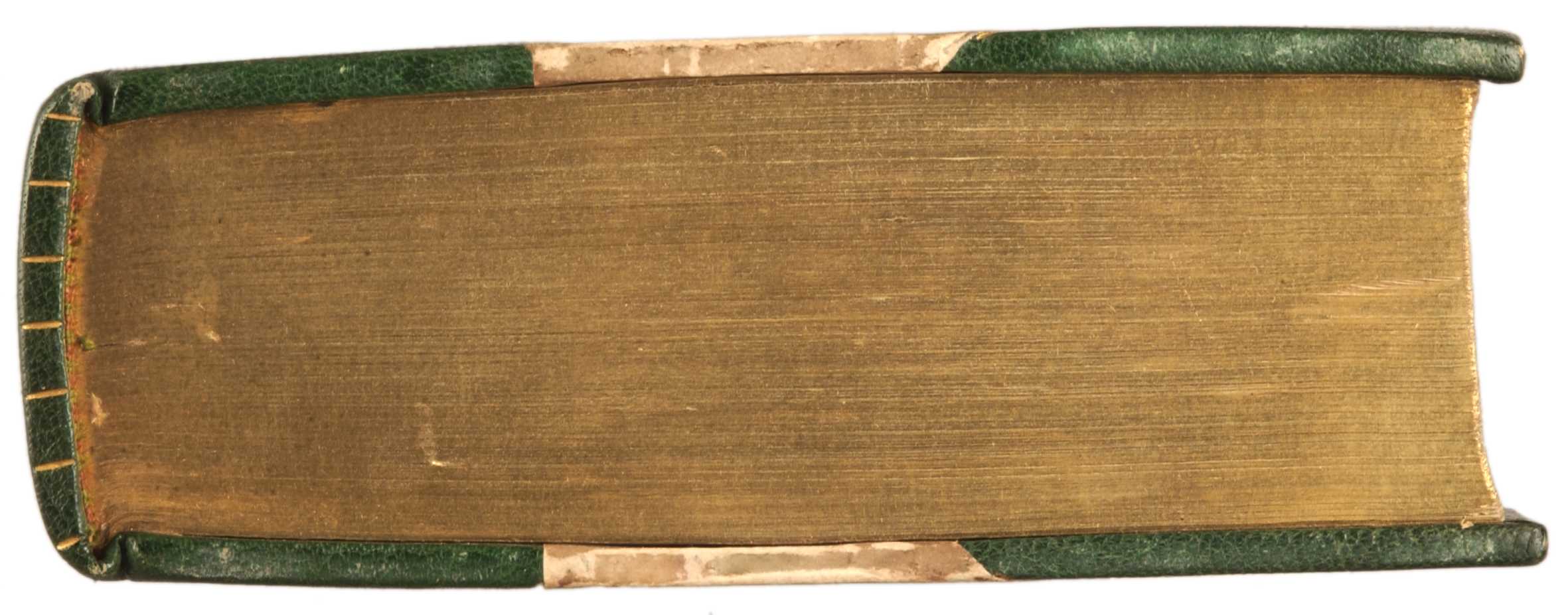
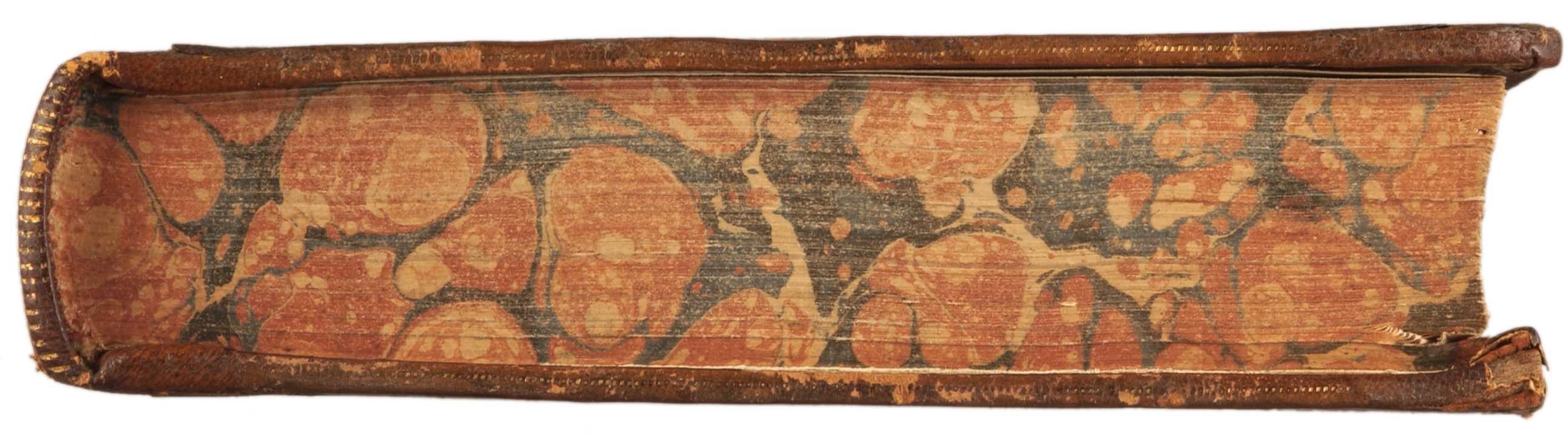
If you are holding a book in your hand, then the fore-edge is the long edge of the pages that you can turn or fan out. Fore-edge painting refers to any painted decoration of this fore-edge. Some are visible when the book is closed, but most are only visible when the pages are slightly fanned. The painting is further hidden when the book is closed by applying gilt (gold-leaf) or marbling to the edge. The most common type is a single fore-edged painting:
There are also split and panoramic fore-edge paintings. Split fore-edge paintings can be done on thick books, where each half of the book’s fore-edge has a different illustration (here’s an example). Panoramic fore-edge paintings occur not only on the book’s main fore-edge, but on the fanned-out top and/or bottom edges of the book as well, giving a near-270-degree panoramic view:
The most rare type are double fore-edge paintings, which show one image when the fore-edge is fanned out the usual way, and a completely different picture when the pages are fanned out in the opposite direction:
There are even triple fore-edge paintings, where the edge is not gilded or marbled and instead has an illustration visible when the book is closed. As far as I know, there are no fore-edge paintings on any books in the Dick Smith Library. However, I will be checking books with gilt or marbled edges in our Special Collections just to make sure!
Fore-edge paintings date back to the 10th century and were a popular art form in the 18th and 19th centuries. The detail on these miniature paintings is incredible! There are some great examples in the Boston Public Library Flickr set. For more information, check out these Delicious links.
Tomorrow, February 12, is the 200th anniversary of the birth of Abraham Lincoln, the sixteenth President of the United States, from 1861 through his untimely assassination in April 1865. The Abraham Lincoln Bicentennial Commission has put together a website that collects information on events across the country honoring this occasion, as well as an “Honest Abe Quiz,” data on Lincoln, and even teacher resources.
The Library of Congress in Washington, DC, opens a new exhibit on the 12th called With Malice Toward None: The Abraham Lincoln Bicentennial Exhibition. It will include on-site exhibits with online features, with some Lincoln-related artifacts available digitally, at on-site kiosks as well as on the Library’s website.
There’s even a blog about Lincoln and food! Author Rae Katherine Eighmey spent three years researching Lincoln’s eating habits and food interests for an upcoming book. Her blog, What Lincoln Enjoyed Eating, will run for 10 weeks, from Lincoln’s 200th birthday to the anniversary of his assassination, featuring authentic recipes with historical background, adapted for modern kitchens.